



About Yours Pizza
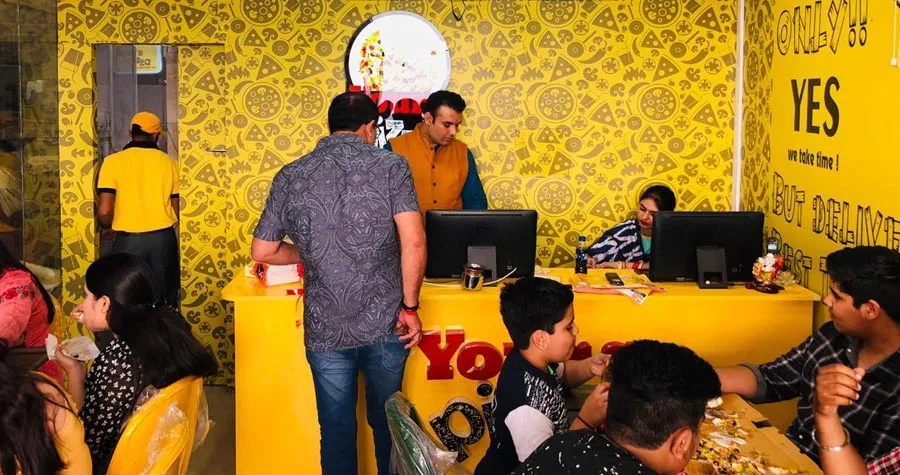
Yours Pizza sells hand-tossed, in-house dough pizza through a chain format aimed at value-conscious individual and family diners across dine-in, takeaway, and delivery channels. The brand sources its menu development around fresh dough prepared on-site rather than centrally pre-made, a production choice that shapes both the kitchen layout a franchisee needs and the daily prep routine staff must follow. The fact most relevant to an investor evaluating this brand is operating longevity: a brand that has been franchising for sixteen years and is still adding units, even at a modest pace, has had enough time for early operational mistakes to surface and be corrected, which is a different risk profile from a brand still in its first few years of franchising.
The Revenue Model in Practice
Revenue at a Yours Pizza unit flows through four channels that behave differently from a cash flow perspective: dine-in, where margins are typically stronger but volume depends on footfall and seating turnover; takeaway, which requires less staffing per order but depends on location visibility; delivery, which extends reach beyond walking distance but carries platform commission costs that reduce per-order margin; and beverages or add-on items, which tend to carry higher margin than the core pizza product and meaningfully affect overall unit economics when sold consistently alongside the main order. A franchisee controls staffing efficiency, local marketing execution, upselling discipline at the counter, and how tightly food cost is managed day to day. What the franchisee does not control includes menu pricing structure, core recipe specifications, and the commission rates set by third-party delivery platforms, all of which are determined at the brand or platform level and simply have to be operated within.
Understanding the Investment: What INR 5 Lac – 10 Lac Actually Buys
At this investment tier, the capital outlay typically covers kitchen and seating area fit-out appropriate to the format size, pizza ovens and food preparation equipment, an opening inventory of ingredients and packaging, the brand licence fee, initial staff training, and a working capital buffer to cover the first few months of operating expenses before revenue stabilises. Given the wide area range this brand operates across, from compact delivery-focused setups to larger dine-in formats, the proportion of capital spent on fit-out versus equipment shifts considerably depending on which format size a franchisee selects within this investment band.
On a monthly basis, the franchisee carries royalty payments to the franchisor, raw material costs for dough, cheese, toppings, and packaging, staff salaries, rent, and delivery platform commissions on any order routed through a third-party app. Raw material cost is the most volatile of these line items month to month, since cheese and wheat-based input prices fluctuate, while rent and staff costs remain comparatively fixed. Platform commissions, often in the range of 18 to 30 percent of order value depending on the platform and any promotional terms, represent a real and recurring deduction from delivery revenue that needs to be priced into menu margins rather than treated as an afterthought.
Break-Even and Return Timeline
The nine to eighteen month break-even range reflects how much variability exists across individual units rather than a single typical outcome, and the gap between the two ends of that range is explained by a fairly identifiable set of factors. Within a franchisee’s control: how quickly the outlet builds a repeat customer base through consistent quality and local marketing, how disciplined staff scheduling is against actual order volume rather than overstaffing slow periods, and how tightly food cost and wastage are managed from day one. Outside a franchisee’s control: how much direct competition exists within the immediate catchment, how strong footfall is at the chosen location independent of anything the franchisee does, and broader factors like local economic conditions or unexpected rent escalation. A franchisee who lands toward the nine-month end of the range typically combines a well-chosen location with tight early cost discipline; one who drifts toward eighteen months is usually dealing with either a weaker site than anticipated or slower-than-expected customer base building, sometimes both at once.
What the Franchisor Provides and What They Do Not
Before opening, the franchisor typically supports site evaluation, initial staff training, and provision of the standardised recipes and operating procedures that define the brand’s product consistency. At launch, support generally extends to initial marketing materials and guidance on local promotional activity to build early awareness. On an ongoing basis, the franchisor maintains brand standards, recipe updates, and the overall system the franchisee operates within. What remains the franchisee’s responsibility throughout is day-to-day staff management, local supplier relationships for fresh ingredients, handling lease negotiations and renewals directly with the landlord, and managing the practical realities of daily operations, customer complaints, staff scheduling, and cash flow management, that no franchise system handles remotely. The boundary is consistent across most food franchise models: the franchisor provides the system and the standards; the franchisee provides the daily execution.
Financial Risk Factors Specific to This Category
Food spoilage is a constant cost risk in pizza retail given the perishable nature of cheese, dough, and fresh toppings; a standardised recipe and portion specification from the franchisor helps limit over-ordering, but day-to-day inventory discipline still rests with the franchisee. Delivery platform dependency is a structural risk the brand does not fully offset, since commission rates and platform policies are set externally and can shift with little notice, directly affecting delivery channel margins regardless of how well an individual outlet operates. Staff turnover, common across QSR formats, creates recurring retraining costs and short-term quality dips that the franchisor’s training materials can shorten but not eliminate. FSSAI compliance is mandatory and non-negotiable, and while the franchisor’s standard operating procedures support meeting these requirements, the legal responsibility and any penalty for lapses sits with the franchisee. Lease renegotiation risk, particularly relevant given how widely this brand’s space requirements range, means a franchisee should evaluate lease terms and renewal conditions carefully before signing, since a rent increase at renewal can materially affect unit economics that were calculated against the original rate.
Who This Investment Suits and Who It Does Not
A franchisee who reaches break-even toward the lower end of the timeline typically has prior food service or retail management experience, is present in the outlet daily during the first several months rather than managing remotely, and treats cost control and local marketing as active, ongoing tasks rather than one-time setup steps. Small business owners, career changers with hands-on retail experience, and graduate entrepreneurs willing to work the floor themselves in the early stages tend to fit this profile. Conversely, investors who treat the Yours Pizza franchise as a passive income source, expecting the brand name and a hired manager to sustain performance without their own regular involvement, consistently underperform relative to those who stay operationally engaged, since the gap between a well-run and poorly-run unit in this category shows up directly in food cost control and staff consistency, both of which require active daily attention.
Accepting franchise applications in 35 states & UTs
How much does a Yours Pizza franchise cost in India?
The investment range is INR 5 lakh to 10 lakh, covering fit-out, equipment, opening inventory, brand licence fee, training, and initial working capital, with the exact figure depending on the format size selected.
What is the expected monthly revenue from a Yours Pizza outlet?
Monthly revenue depends on the mix of dine-in, takeaway, and delivery sales along with location footfall; prospective franchisees can request specific revenue figures directly from the brand during inquiry.
Does Yours Pizza provide territory exclusivity to franchisees?
Territory terms vary by agreement and should be confirmed directly with the franchisor before signing, as exclusivity provisions materially affect long-term competitive exposure within a given catchment.
What licenses are required to open a Yours Pizza franchise?
An FSSAI food safety license and an Eating House License are required to legally operate a food service outlet under this format in India.
Is prior food business experience required to open a Yours Pizza franchise?
It is not strictly mandatory, but franchisees with a food entrepreneurship background or prior retail management experience tend to reach break-even faster than those entering without any operational food service exposure.
Disclaimer: All scores, rankings, and estimates on ForeFind are independently produced editorial assessments using publicly available data and validated brand-submitted information. They are not verified facts, financial advice, or investment recommendations. Full Disclaimer.
