



Xtragenius Learning System Franchise: Running an Education Centre and What Daily Operations Look Like
For anyone seriously considering the Xtragenius Learning System franchise, the most useful starting point is not the investment figure but what a functioning centre actually demands week to week. This is a hands-on, community-embedded operation where the franchisee’s personal involvement — particularly in the first year — has a direct bearing on how quickly enrolment grows and how long students stay. Eighteen years of franchising history and 400 centres across India provide a reliable reference point for what works and what typically trips up new operators.
What Xtragenius Learning System Teaches and Who Attends
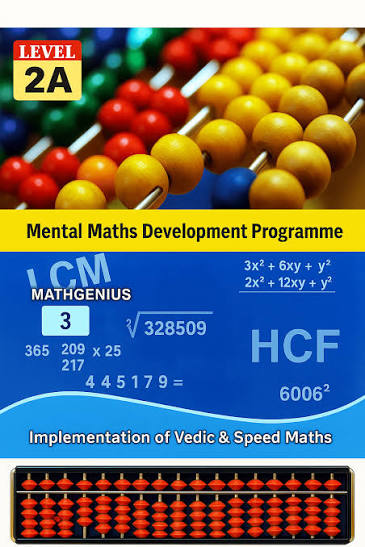
Xtragenius centres deliver mathematics skill development through five distinct programmes: Vedic Maths, Speed Maths, Abacus Maths, Math Genius, and Mind Dart. The combination of classical abacus technique with Vedic mathematics principles is the curriculum’s distinguishing characteristic — it addresses both the visual-spatial calculation skills abacus training develops and the shortcut reasoning methods Vedic maths provides, giving enrolled students exposure to two complementary approaches rather than a single methodology.
The primary student profile is children between 5 and 14 years old, though individual programme entry points vary by skill level rather than strictly by age. A student typically enters at a foundational level following an initial assessment, progresses through structured stages, and sits for level examinations at defined intervals. The journey from entry to programme completion spans multiple years for most students, which is important from a revenue perspective: a child who enrols at age 7 and advances through multiple levels represents recurring monthly income well into their early secondary school years.
Running a Xtragenius Learning System Centre Day to Day
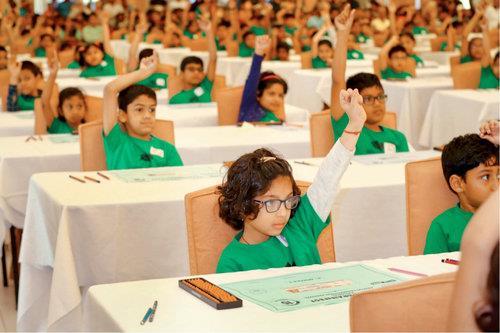
A typical operating week at an Xtragenius centre runs across six days, with sessions scheduled to catch students before and after school hours. Morning batches serve younger children on weekends, while weekday afternoon and early evening slots — typically between 3 pm and 7 pm — are the primary revenue-generating hours for school-age children. Each session runs for 45 to 60 minutes, with a teacher managing a group of 8 to 15 students working at similar levels.
The franchisee’s daily attention is divided across three areas that rarely resolve themselves without active management. First is session logistics: confirming teacher attendance, managing batch sizes when enrolment fluctuates, and substituting when a teacher is absent without disrupting student schedules. Second is fee and enrolment administration — tracking which students are current on payments, following up on renewals, and logging new enquiries. Third, and most time-intensive in the early months, is parent communication: answering progress questions, managing expectations after assessments, and converting trial attendees into paying enrolments. Franchisees who underestimate this third category typically find their early revenue growth slower than the model’s financials suggest it should be.
Student Acquisition: How Parents Find and Choose Xtragenius Learning System
Filling a centre’s batches is the work that precedes everything else, and it does not happen passively. Xtragenius provides promotional support, marketing assistance, and advertising resources — but translating these into local enrolments requires the franchisee to be visible in the community where their target families actually live. School gate conversations, residential society notice boards, WhatsApp parent groups, and free demonstration classes are the channels through which a new centre builds its first cohort.
A realistic month-one expectation for a new Xtragenius franchisee who has run at least two free trial sessions and actively engaged a local school network is 20 to 30 enrolled students. By month six, a centre on track for sustainable revenue will carry 60 to 80 active students across multiple batches — a number that requires consistent outreach throughout, not just at launch. School tie-ups, where the centre runs awareness sessions or provides demonstration classes on school premises, are among the more effective early acquisition channels in Tier 2 cities, because they give the franchise access to concentrated groups of target families with implicit institutional endorsement.
Teacher Hiring, Training, and the Retention Challenge
Starting with two teachers is the practical minimum for a centre running multiple batches across different time slots. As enrolment grows past 60 students, a third teacher becomes necessary to maintain batch quality without overloading individual instructors. The qualification requirement is not a formal teaching degree — candidates with a strong mathematics background, comfort working with children, and reasonable communication ability are what the role actually demands. In a Tier 2 city, this pool typically includes recent mathematics graduates, school teachers seeking supplementary income, and candidates from local coaching institute backgrounds.
The Xtragenius training programme prepares new teachers in both the abacus methodology and the Vedic maths curriculum before they take independent charge of a batch. A candidate with good subject knowledge can typically manage an entry-level batch independently within three to four weeks of training. The retention challenge is real: teachers who develop strong student rapport become operationally critical, and their departure mid-term disrupts enrolled children’s progress in ways that parents notice immediately. Offering slightly above-market salaries and maintaining predictable scheduling are the two most effective retention levers available to a franchisee at this scale.
Infrastructure, Technology, and Centre Setup
The Xtragenius model lists zero mandatory area, which in practice means the space requirement is determined by the number of students the franchisee intends to accommodate simultaneously rather than by a fixed specification. A centre running two parallel batches of 12 students each needs a functional classroom space of roughly 300 to 500 square feet — enough for individual work tables arranged for focused individual practice, a clear teacher circulation path, and a small reception area where parents can wait or enquire.
The physical fitout is straightforward: student tables and chairs, a teacher’s work station, printed curriculum materials storage, and a basic digital setup for progress tracking and parent communication. The franchisor supplies curriculum content, examination materials, and the brand’s operating documentation. The franchisee’s responsibility during setup covers the physical space preparation, furniture procurement, and coordination with the franchisor on teacher training scheduling before the first batch opens. With moderate setup complexity and no requirement for specialised equipment, most centres are operational within five to seven weeks of signing.
Ongoing Support After the Centre Opens
Past the first 90 days, Xtragenius support continues through marketing assistance, promotional guidance, and access to curriculum updates as the programme material evolves. For a franchisee managing 50-plus students, the most practically useful ongoing support is the marketing refresh cycle — updated materials for seasonal admission campaigns and guidance on running local digital outreach — because the pressure to acquire new students does not diminish after the centre is established.
When an operational issue arises — a teacher resignation in the middle of a term, a parent dispute over a child’s progress assessment, a question about adapting a programme level for a student at the boundaries of the age range — the franchisor’s accessibility determines how quickly the franchisee can resolve it without it affecting enrolment. Franchisees in networks of this scale typically report resolution through phone and email within 24 to 48 hours for most operational questions, with curriculum-specific queries occasionally taking longer.
Who Runs a Xtragenius Learning System Centre Successfully
Consistent high performers in this model tend to be people who were already trusted in their local parent community before the centre opened — not through business reputation, but through personal relationships built around children’s education, school activities, or neighbourhood involvement. This existing trust converts into early enrolment more reliably than any paid marketing campaign at the scale a new centre can afford. A young professional with strong local connections, a family-backed investor with a parent’s personal stake in children’s development, or a first-time entrepreneur who has spent time in educational settings all bring a credibility advantage that accelerates the critical first six months.
The franchisee who consistently underperforms in this model is the one who treats enrolment as the franchisor’s responsibility and waits for the brand to generate demand without putting in sustained personal outreach effort on the ground.
Accepting franchise applications in 34 states & UTs


How much space is required to open a Xtragenius Learning System centre?
There is no fixed minimum space requirement. In practice, a centre running two to three simultaneous batches of 10 to 15 students each functions well in 300 to 500 square feet. The space should allow for individual work tables, clear teacher movement between students, and a small parent-facing reception area.
How long does it take to set up and open a Xtragenius Learning System franchise?
Most franchisees complete setup and open within five to seven weeks of signing. The timeline is governed by how quickly the physical space is ready, when the initial teacher training cohort completes the programme, and how promptly curriculum materials are received and organised. Delays typically come from space readiness rather than franchisor processes.
What curriculum and teaching materials does Xtragenius Learning System provide?
The franchisor provides the full curriculum framework across all five programmes — Vedic Maths, Speed Maths, Abacus Maths, Math Genius, and Mind Dart — along with structured worksheets, level examination papers, and assessment tools. These materials are updated as part of the ongoing franchise relationship, so franchisees receive revised content without needing to develop or source it independently.
Can a Xtragenius Learning System centre be run without the owner being present daily?
Part-time owner involvement is possible once a reliable centre coordinator or senior teacher is managing day-to-day operations. In the first six to nine months, however, reduced owner presence almost always correlates with slower enrolment growth, because student acquisition at this stage depends heavily on the owner's personal engagement with the parent community rather than the teaching staff's.
How many Xtragenius Learning System centres are operating in India currently?
The Xtragenius Learning System franchise network has grown to 400 centres across India over its eighteen years of franchising, averaging more than 22 new openings per year. Despite this scale, significant geographic white space remains in Tier 2 and Tier 3 cities where organised maths skill development programmes are underrepresented relative to the density of school-age children in those markets.
Disclaimer: All scores, rankings, and estimates on ForeFind are independently produced editorial assessments using publicly available data and validated brand-submitted information. They are not verified facts, financial advice, or investment recommendations. Full Disclaimer.
