



About Thyrocare
Thyrocare occupies a specific niche within India’s diagnostics economy: high-volume, low-cost pathology testing delivered through a decentralised collection network rather than large hospital-style labs. The model relies on a hub-and-spoke processing structure, where samples collected at neighbourhood centres travel to centralised labs for automated testing. This is precisely why a Thyrocare franchise outlet does not need to look or function like a full-service diagnostic centre — it is essentially a collection and customer-service point feeding into industrial-scale processing infrastructure. With franchise count sitting in the 500-1000 range after roughly a decade and a half in the market, the brand has achieved a density that signals something beyond aggressive expansion: it reflects sustained, repeat consumer demand for affordable preventive testing across both metro and non-metro India, a segment that grew sharply once home collection became a normalised consumer habit rather than a pandemic-era convenience.
Revenue Model: Walk-In, Membership, or Subscription
Unlike salons or wellness chains where revenue splits across walk-ins, memberships, and retail products, a Thyrocare franchise earns almost entirely on a per-transaction basis — each blood draw or sample collection is billed individually, with margin coming from the spread between what the franchisee charges the customer and the B2B processing rate paid to the central lab. There is no subscription layer in the conventional sense, but there is a strong quasi-recurring component: health-conscious households and corporate wellness tie-ups tend to order the same profile tests (thyroid, lipid, diabetes panels) on a six-to-twelve-month cycle. This means revenue is technically transactional but behaviourally recurring — a meaningful share of monthly billings in a mature centre comes from repeat households rather than first-time walk-ins, which is what separates a centre that merely survives from one that compounds.
Investment Breakdown and Ongoing Cost Structure
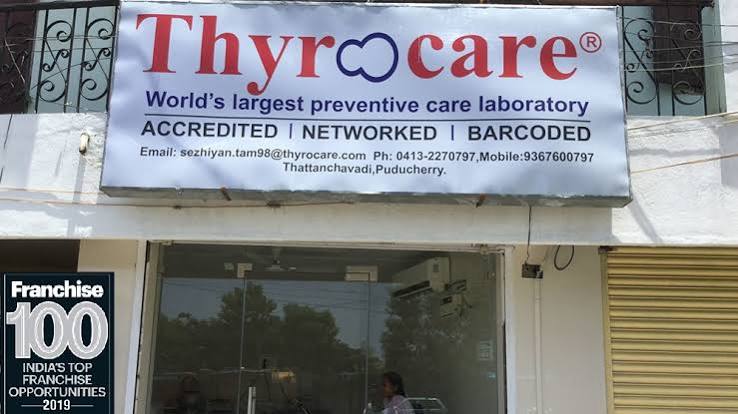
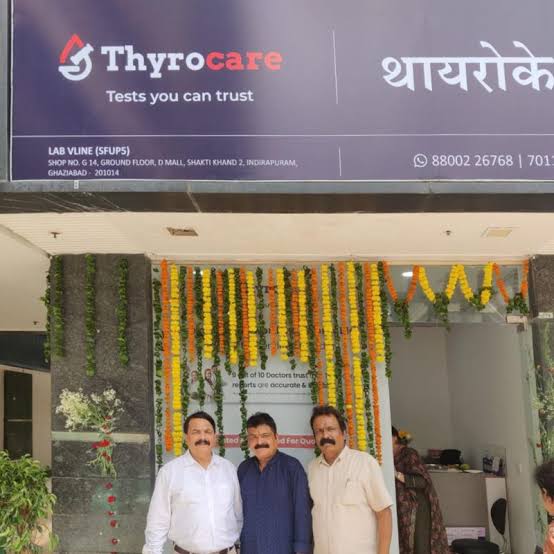
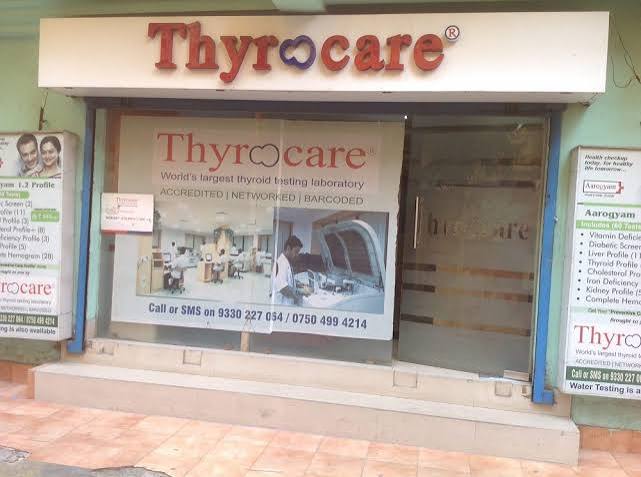
At the low end of the franchise spectrum, the capital outlay is built around setting up a functional collection point rather than a diagnostic facility. The bulk of the opening investment typically goes toward basic furnishing of the 200-400 sq ft space, a centrifuge and sample-storage refrigeration unit, a computer and printer for report generation and billing, signage carrying the brand identity, and an initial training and onboarding fee paid to the franchisor. Because actual testing happens off-site, there is no need to fund expensive diagnostic machinery at the franchise level, which is the main reason this category sits in the low-investment tier compared to full-format labs.
Once operational, the recurring cost structure is dominated by three lines: a per-test processing fee paid to the central lab (this functions like a royalty embedded into the cost of goods rather than a flat percentage), the lease or maintenance cost of the collection point, and staff wages for technicians and front-desk personnel. Technology and software access for report generation and order routing is usually bundled into the per-test fee rather than charged separately, which keeps the fixed monthly outflow relatively predictable even when test volumes fluctuate.
Client Retention and Lifetime Value
In diagnostics, unlike beauty or fitness, retention is driven less by loyalty programmes and more by clinical necessity and convenience. A patient with a chronic condition such as thyroid dysfunction or diabetes does not choose a lab out of brand affinity alone — they return because the previous experience was accurate, fast, and free of friction at the collection point. This makes turnaround time and phlebotomy skill the real retention levers, far more than pricing. A franchisee who builds a base of doctors who consistently refer patients, and households who default to the same centre for annual check-ups, converts a one-time test into a recurring relationship worth several visits a year. Over a multi-year horizon, this referral-and-repeat dynamic is what determines whether a centre’s revenue trajectory flattens after the first year or continues climbing as the surrounding neighbourhood ages and develops more chronic-care testing needs.
Staffing Costs and the Quality-Margin Tension
A Thyrocare franchise needs a small but specifically skilled team — typically a trained phlebotomist or lab technician for sample collection, a front-desk staff member for billing and report coordination, and in busier centres a second technician to manage peak morning hours when most fasting tests are scheduled. Qualified phlebotomists command a real, non-negotiable salary even in smaller cities, because a single botched draw or mislabeled sample can cost the centre a client permanently. This creates the central staffing tension in this business: cutting corners on technician quality lowers wage costs in the short term but directly damages the repeat-visit economics described above. Franchisors typically support recruitment by specifying minimum qualification standards and offering structured training on sample collection protocol, but the hiring itself, and the ongoing wage negotiation in a tight local labour market, remains the franchisee’s responsibility. In Tier 2 and Tier 3 cities, this often means recruiting through paramedical training institutes and offering performance-linked incentives tied to test volume, since fixed salaries alone struggle to retain trained technicians once they gain experience.
Regulatory and Compliance Considerations
Diagnostic franchising sits in a more regulated bracket than most low-investment retail formats. Centres typically need to operate under the framework of the relevant state Clinical Establishments Act where applicable, maintain biomedical waste handling and disposal protocols in line with local pollution control norms, and ensure that the collection point itself meets basic hygiene and storage standards expected for handling biological samples. NABL accreditation governs the testing labs in the network rather than the individual collection franchise, but franchisees benefit indirectly since referring doctors and corporate clients place weight on accreditation when choosing where to send patients. CGHS empanelment, where applicable, opens access to government employee referrals but comes with its own documentation and pricing compliance requirements. The franchisor generally provides the protocol documentation and compliance checklists, but local registration, biomedical waste contracts, and municipal approvals are filed and renewed by the franchisee.
Who This Investment Suits
This format tends to work best for individuals who can personally manage day-to-day operations — homemakers, salaried professionals seeking a side income stream, or science and medical background candidates who understand the clinical sensitivity of the business — rather than purely passive investors looking for a hands-off return. Because the category carries high seasonality and very high capital sensitivity at this investment tier, even small missteps in technician hiring or local pricing can meaningfully compress already-thin per-test margins. Investors who treat staffing as an afterthought, assuming any front-desk hire can double as a sample collector, consistently underperform centres run by owners who actively manage technician quality and doctor referral relationships from day one.
Accepting franchise applications in 35 states & UTs
How much does it cost to open a Thyrocare franchise?
The investment for a Thyrocare franchise falls in the low tier, broadly in the range of roughly INR 10,000 to 50,000 for initial setup-related costs, covering basic fit-out, equipment, and onboarding, since the model is built around a collection point rather than a full diagnostic lab.
What is the expected monthly revenue from a Thyrocare centre?
Indicative monthly revenue for an operating centre typically falls between INR 1.0 lakh and 4.0 lakh, with the variance largely explained by local population density, the strength of doctor referral relationships, and how well the centre captures repeat chronic-care testing demand.
How many clients does a Thyrocare centre need to reach break-even?
Break-even is generally estimated between 8 and 16 months, and the spread mostly comes down to how quickly a franchisee builds a stable base of repeat households and referring doctors versus relying solely on walk-in footfall in the early months.
What staff qualifications does Thyrocare require?
Centres need at least one trained phlebotomist or lab technician capable of sample collection to clinical standard, supported by front-desk staff for billing and report coordination, with team size generally ranging from three to ten depending on centre volume.
What licenses are required to open a Thyrocare franchise in India?
Franchisees typically need to comply with applicable state clinical establishment regulations, biomedical waste disposal norms, and local municipal approvals, while NABL accreditation and CGHS empanelment operate at the processing-lab and network level and support the franchise's clinical credibility rather than requiring separate franchisee-level certification.
Disclaimer: All scores, rankings, and estimates on ForeFind are independently produced editorial assessments using publicly available data and validated brand-submitted information. They are not verified facts, financial advice, or investment recommendations. Full Disclaimer.
