



PC Jeweller Ltd. Franchise: Store Investment, Margins and Return Timeline in India
About PC Jeweller Ltd.
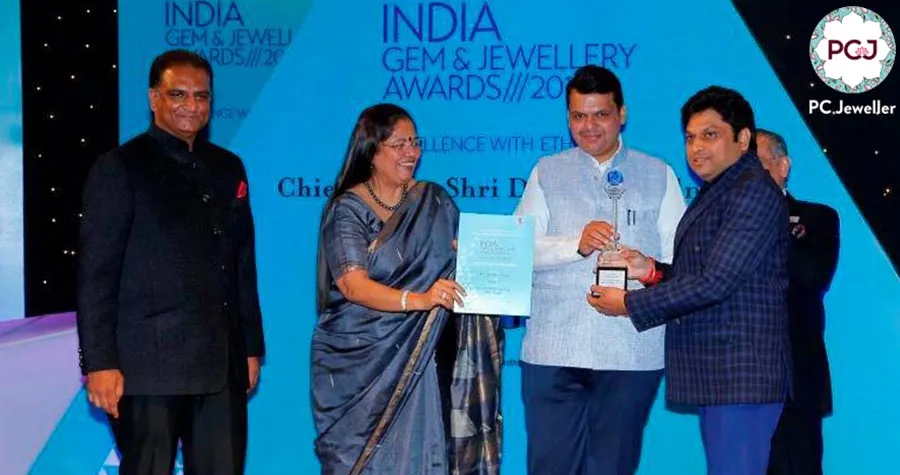
PC Jeweller started from a single showroom in Karol Bagh, New Delhi in 2005 and built a national retail presence spanning 87 stores across 71 cities and 19 states — a footprint that places it among the more widely distributed jewellery retail chains in India by physical outlet count. The brand sells gold, diamond, and silver jewellery, with an increasing concentration on diamond and hallmarked pieces, across a price range that serves both everyday buyers and high-value wedding and gifting customers. All product is hallmarked and diamond jewellery is certified, which is a meaningful differentiator in a market where a significant portion of consumer complaints in the jewellery category relate to purity and valuation disputes. For a franchise investor, the brand’s domestic turnover history and CRISIL A/A1 stable rating — recorded as of 2016 — indicate a business with an established financial track record, though current ratings should be independently verified before any investment decision is made.
The Margin and Inventory Model
Gold and diamond jewellery retail operates on a fundamentally different margin structure from fashion or imitation jewellery. Gross margins in organised gold jewellery retail in India typically range from 12% to 20% on gold-based product, with making charges adding 8% to 25% on top depending on design complexity. Diamond jewellery margins are structurally higher — often 30% to 45% at retail — which is one reason PC Jeweller has increased its diamond assortment over time. For a franchisee, inventory economics are the central financial variable: precious jewellery inventory requires significant capital lock-up, and whether the franchisor provides product on consignment, sale-or-return, or outright purchase terms determines how much of the total investment is tied up in non-liquid stock at any point. These inventory supply terms are among the most important commercial questions to resolve during due diligence. Markdown risk in hallmarked gold jewellery is low because the metal retains commodity value regardless of design obsolescence — which is a meaningful working capital advantage compared to fashion categories where unsold inventory can become a near-total write-off.
Store Economics: Revenue Per Square Foot and Monthly Fixed Costs
At the store size this format requires — 1,200 to 2,500 square feet in mall or high street locations — the monthly fixed cost base is substantial. Prime high street rental in a Tier 1 Indian city for this footprint runs between INR 3 Lac and INR 10 Lac per month depending on city and specific location. Add eight staff members at salaries appropriate for trained jewellery sales personnel, security, insurance on high-value inventory, utilities, and any royalty or marketing contribution, and the monthly fixed cost floor for a PC Jeweller franchise is likely to sit between INR 8 Lac and INR 20 Lac. Revenue per square foot benchmarks for organised hallmark jewellery retail in India vary widely by location quality: a well-positioned showroom in a high-footfall area can generate INR 800 to INR 2,000 per sq.ft. per month, while underperforming locations fall below INR 400. The break-even calculation over 18 to 36 months is primarily a function of location quality, average transaction value, and the speed at which the store builds a repeat customer base — the last being the variable that a franchisee controls most directly.
The Investment Breakdown and What It Covers
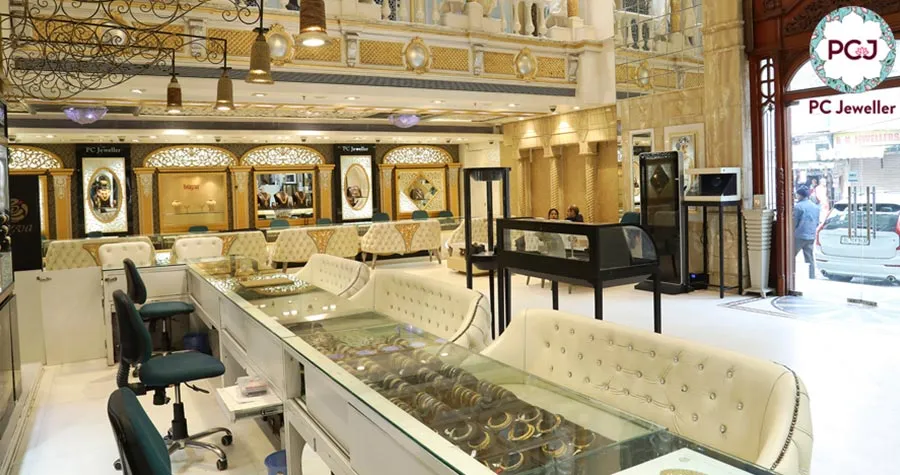
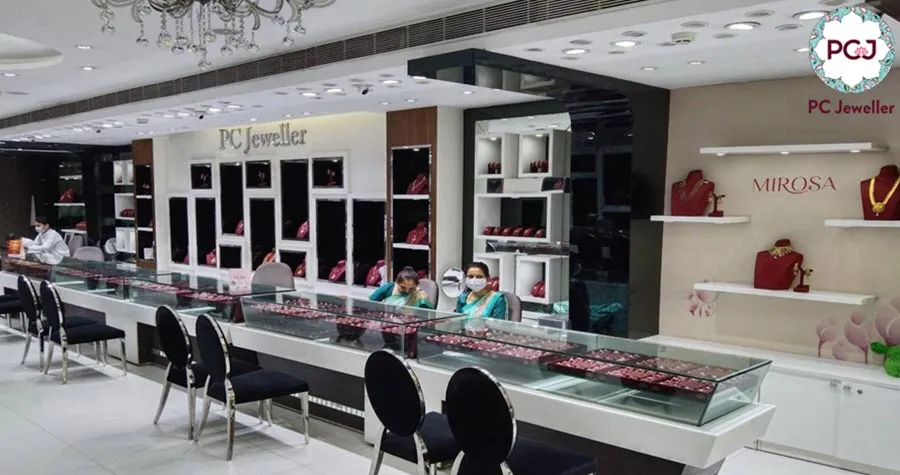
The INR 5 Cr to 10 Cr investment range for a PC Jeweller franchise reflects the economics of high-value jewellery retail more than the cost of the franchise licence itself. Store fit-out for a premium jewellery showroom — custom display cases, security infrastructure including CCTV and alarm systems, vault storage, insurance-grade fixtures, and brand-consistent interior design — accounts for a significant share of the setup cost. Opening inventory in a gold and diamond format is the largest single capital requirement: stocking a 1,200 to 2,500 sq.ft. showroom with sufficient product depth across gold, diamond, and silver categories requires meaningful upfront procurement. The franchise fee and brand licence, training for the franchisee and their core team, and technology for POS and inventory management complete the setup package. Monthly ongoing costs — rent, staff, security, inventory insurance, restocking, and any franchisor fee — are the variables the franchisee manages to protect margin. Working capital reserves of three to six months of fixed costs are advisable given the 18 to 36 month break-even window.
Seasonality and Demand Peaks in This Category
Precious jewellery retail in India follows a demand calendar that is more predictable than most retail categories, which helps with inventory and staffing planning. The October to December window — covering Navratri, Dhanteras, Diwali, and the onset of the peak wedding season — is the single highest-revenue period for most jewellery retailers in India, with some stores generating 30% to 40% of their annual turnover in this stretch alone. A second significant peak runs through February to May, covering Akshaya Tritiya (historically the highest single-day gold purchase occasion in India) and the pre-monsoon wedding season. Franchisees should plan inventory build-up six to eight weeks before these peaks and staff up to full capacity well before demand arrives. In genuinely lean months — typically July and August — transaction volumes fall, but the average ticket size on purchases that do happen tends to remain stable, as buyers in this category are not primarily motivated by promotional pricing.
Online Competition and the Omnichannel Reality
PC Jeweller operates with both physical showrooms and an online presence, which means franchisees are part of a brand that has already navigated the question of how to position physical retail alongside digital channels. For high-value hallmarked and certified jewellery, e-commerce faces a structural limitation: consumers buying gold or diamond pieces above INR 50,000 predominantly want to see, touch, and verify the product before purchase — and they want a local point of accountability if a quality issue arises post-sale. Online players in the jewellery category have gained traction primarily in fashion, lightweight, and lower-value segments rather than in the hallmarked precious category where PC Jeweller operates. The brand’s online catalogue serves as a discovery channel that drives showroom visits rather than as a competing sales avenue, which is the omnichannel dynamic that benefits physical franchise locations when managed correctly.
Who This Retail Investment Suits
A PC Jeweller franchise at this investment level is structured for ultra HNI investors, family offices, and corporate groups who can deploy INR 5 Cr to 10 Cr into a retail asset without compromising their liquidity position. Within that capital profile, the franchisees who generate consistently stronger same-store performance are those who treat the showroom as an active business rather than a managed investment — which means direct involvement in local relationship building, community marketing, and the customer trust-building that drives repeat purchases in high-value jewellery retail. Investors who deploy capital, hire a store manager, and expect the brand framework to carry revenue generation without owner-level engagement consistently find that the break-even timeline extends toward the outer edge of the projected range, because in jewellery retail, customer loyalty is built through personal relationships that a junior store team cannot establish with the same speed or depth as an engaged owner.
Accepting franchise applications in 34 states & UTs

How much does it cost to open a PC Jeweller Ltd. franchise store?
The investment range for a PC Jeweller franchise runs from INR 5 Cr to 10 Cr, with the franchisor offering tiered store models at different size and investment thresholds — starting at approximately INR 3 Cr for a 400 to 500 sq.ft. format and scaling to above INR 7 Cr for a 1,000 to 1,200 sq.ft. showroom. The total cost includes store fit-out, security infrastructure, opening inventory, brand licence, and working capital reserves.
What is the expected monthly revenue from a PC Jeweller Ltd. store?
Monthly revenue figures are provided by the brand on direct inquiry and vary significantly by location quality, city tier, and store size. Organised hallmark jewellery showrooms in well-chosen high street or mall locations in India typically generate INR 800 to INR 2,000 per sq.ft. per month in established operation — but these are category benchmarks, not PC Jeweller guarantees. Prospective franchisees should request location-specific revenue modelling from the franchisor during due diligence.
Does PC Jeweller Ltd. provide inventory on credit or consignment to franchisees?
Inventory supply terms — including whether product is provided on consignment, credit, or outright purchase — are among the most commercially significant aspects of the PC Jeweller franchise agreement and should be confirmed in writing before any commitment is made. The structure of inventory financing directly determines how much of the total investment is liquid versus locked in stock at any given time.
What is the PC Jeweller Ltd. franchise territory and exclusivity policy?
Territory protection and exclusivity radius terms vary by city, format, and the specific agreement negotiated with the franchisor. Investors targeting high-footfall markets with multiple viable showroom sites should clarify exclusivity boundaries explicitly, as this affects the long-term competitive position of the franchise investment. Territory terms should be reviewed by a commercial lawyer before the franchise agreement is signed.
How many PC Jeweller Ltd. stores are currently operating in India?
PC Jeweller has historically operated 87 showrooms across 71 cities and 19 states under its company-owned retail model. The franchise programme represents a newer expansion channel, and the current count of franchise-specific units and their locations should be confirmed directly with the brand, as the network composition may have evolved since the figures cited in brand communications were last updated.
Disclaimer: All scores, rankings, and estimates on ForeFind are independently produced editorial assessments using publicly available data and validated brand-submitted information. They are not verified facts, financial advice, or investment recommendations. Full Disclaimer.
