



MV Education Franchise: Education Market Opportunity, Brand Position and Growth Potential
Evaluating an MV Education franchise means looking at where vocational and skills-based learning sits within India’s much larger education economy, and whether an organised network captures more of that opportunity than an independent operator working alone. The honest answer is that scale changes the economics of this category in ways that are easy to underestimate from outside.
MV Education in the Context of India’s Education Franchise Market
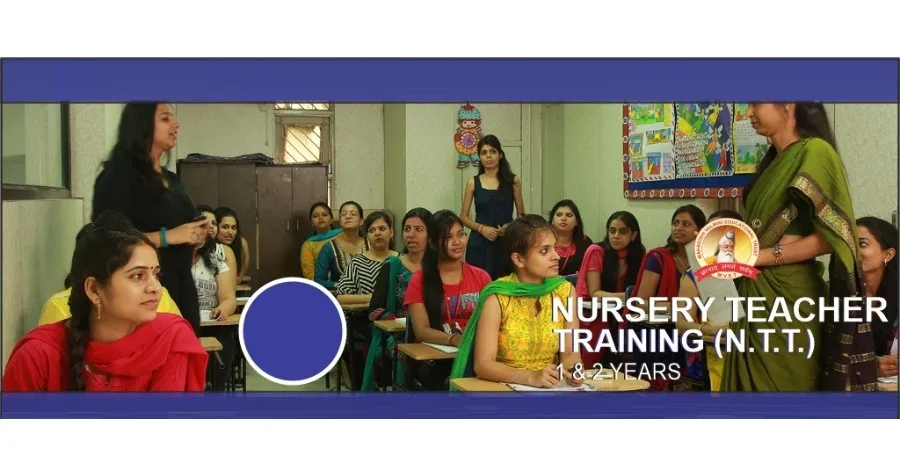
MV Education occupies the vocational and job-oriented training segment within the broader higher education category — a space distinct from school tutoring chains or test-prep brands, and closer in spirit to skill-development institutes that prepare students for direct employment or self-employment rather than for a university entrance exam. Its course spread across teacher training, computer applications, design, and trade skills like electrical work or mobile repair places it firmly in a segment that draws from lower-middle and middle-income households across both urban and semi-urban India, where a job-ready certificate matters more than a prestige degree.
An independent operator entering this same space has to build curriculum, secure recognition pathways, and earn local trust from scratch, all while competing against an established name doing the same thing with a head start. That gap is precisely where a franchise relationship is supposed to earn its fee.
Why Demand for This Education Format Is Growing in India
Several structural shifts are pushing more students toward vocational and skill-based learning at the same time. The National Education Policy’s emphasis on vocational exposure starting earlier in a student’s academic life, the government’s continuing push under Skill India to formalise informal trade skills into certified competencies, and a steady rise in household spending on supplemental and career-oriented education outside the regular school system are all converging on the same segment MV Education serves.
Post-pandemic shifts in how families think about employability — favouring shorter, skill-specific certifications that can be completed alongside or instead of a long degree — have only accelerated this. Organised networks benefit disproportionately from these trends because parents weighing an unfamiliar vocational course want some signal of credibility, and a recognised brand with a multi-year track record provides that signal far more easily than a single-location institute can.
What MV Education Gives a Franchisee That They Cannot Build Alone
The most transferable asset in this franchise relationship is the curriculum itself: course content across teacher training, computer applications, design, and a dozen vocational trades, already structured into deliverable modules, rather than something a new operator would need years to assemble and validate. Layered on top of that is the recognition the brand already carries in communities where it has operated for over a decade, which shortens the trust-building period a brand-new institute would otherwise have to go through.
With a network in the 100-to-200 centre range built over roughly thirteen years of franchising, MV Education also has institutional experience in registration processes, examination administration, and certification logistics that a standalone operator has to learn through trial and error — often at the cost of a delayed or rejected first batch.
The MV Education Network: Growth Rate and Geographic White Space
An average expansion pace of roughly eleven to twelve new centres a year, sustained over more than a decade, points to a franchisor that grows deliberately rather than opportunistically — adding territory at a rate it can support operationally instead of saturating markets faster than it can service them. For a prospective franchisee, that pacing matters because it usually means fewer centres competing within the same catchment area.
The realistic geographic opportunity for a brand of this kind lies less in metro markets, which are typically already covered by multiple vocational training players, and more in Tier 2 and Tier 3 towns where formal skill-training options remain thin and where vocational courses tied to local trade demand — electrical work, mobile repair, beautician training, computer literacy — find an audience with comparatively little organised competition. Territory allocation in this category is generally exclusivity-based by catchment population rather than by city tier alone, which rewards franchisees who can correctly judge local trade and employment patterns before signing.
Competitive Positioning: Why Parents Choose MV Education Over Alternatives
A parent or student comparing options in a Tier 2 city is rarely choosing on brand prestige; they are choosing on perceived employability outcome and certificate credibility. MV Education’s differentiator is the breadth of its course catalogue under one roof — teacher training, design, computer courses, and vocational trades together — which lets a single centre serve multiple household needs across different family members rather than requiring separate institutes for each skill.
Against an independent local institute, the franchise’s standing under its operating trust and its multi-state operating history function as a credibility shortcut. Against a competing franchise in the same niche, the deciding factor usually comes down to which course catalogue better matches the specific employment patterns of that town’s economy, which is a judgment the local franchisee, not the franchisor, ultimately has to make well.
Policy and Regulatory Risk in the Indian Education Sector
Operating within the higher education and vocational training bracket means staying current with UGC and AICTE-linked compliance norms, NAAC-related quality expectations where applicable, and the broader regulatory direction set by national education policy. The franchisor’s role is generally to keep course content and certification pathways aligned with current recognition requirements so that individual centres are not left to interpret regulatory change on their own.
The investor’s exposure here is real: any tightening of recognition or accreditation norms for vocational certificate providers, or a shift in which qualifications the job market values, can affect enrollment demand for specific courses faster than a single centre can adapt. Diversification across multiple course lines, which this brand’s catalogue allows for, is one practical hedge against that risk.
Who Captures the Most Value From a MV Education Franchise
Capital alone does not determine success in this category. The franchisee who extracts the most value is typically someone already woven into the local community — known to schools, employers, and households — who can read which vocational courses the local job market actually rewards, and who has the operational patience to manage a multi-course, multi-batch campus rather than a single-product business. An MV Education franchise rewards that local fit and administrative discipline as much as it rewards the size of the initial cheque.
Accepting franchise applications in 30 states & UTs



How does MV Education compare to other education franchises at this investment level?
Within the low-investment higher education bracket, MV Education differentiates primarily through the breadth of its vocational and professional course catalogue rather than through a single flagship course, which is not always the case with narrower competitors in this tier.
Is MV Education suitable for Tier 2 and Tier 3 cities?
Yes — the brand's course mix of trade skills, computer training, and teacher-training programs aligns closely with employment patterns common in smaller cities, where formal vocational options are often limited.
What is MV Education's student outcome track record?
Outcomes vary by course and by the local employment market a given centre serves, since vocational certifications are evaluated by employers on a course-by-course basis rather than as a single uniform metric.
How does MV Education handle changes in education policy or curriculum?
The franchisor is responsible for tracking shifts in recognition and certification norms and updating course frameworks centrally, so that individual centres are not left to interpret regulatory changes independently.
What is the MV Education franchise expansion plan for India?
Growth has historically proceeded at a measured pace of roughly a dozen new centres annually, with the clearest remaining opportunity concentrated in Tier 2 and Tier 3 towns that currently lack organised vocational training options.
Disclaimer: All scores, rankings, and estimates on ForeFind are independently produced editorial assessments using publicly available data and validated brand-submitted information. They are not verified facts, financial advice, or investment recommendations. Full Disclaimer.
