



Moksha Wellness Pvt Ltd. Franchise: Investment, Membership Model and Return on Capital in India
Established in 2012 and now operating across fifty to a hundred locations in India, the Moksha Wellness Pvt Ltd. franchise has built a presence in the organised beauty salon and wellness segment by averaging nearly six new units per year over thirteen years of franchising. For a financially oriented investor evaluating this category, the brand’s sustained expansion rate across more than a decade signals something concrete: the business model has worked across varied markets and operator profiles, not just in the conditions of a single favourable period.
About Moksha Wellness Pvt Ltd.
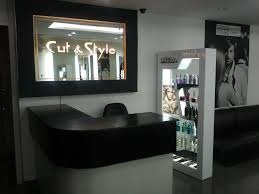
Moksha Wellness operates full-service beauty and wellness centres in residential high-street locations, targeting a broad middle-to-upper-middle-income consumer base seeking professional hair, skin, and personal care services in a reliable, quality-consistent environment. The format — 800 to 1,200 square feet — is large enough to offer a complete service menu across simultaneous stations without the operational complexity of a spa-scale facility. The primary customer is the neighbourhood regular: an individual or family within convenient distance who visits monthly for services they have come to rely on from a specific centre. What distinguishes a well-run Moksha Wellness centre from its competitors in the same catchment is not novelty but the depth of its client relationships — a centre with fifty mature regular clients generates more stable revenue than one chasing two hundred occasional visitors.
Revenue Model: Walk-In, Membership, or Subscription
Revenue flows from three sources: individual service appointments, prepaid packages or membership bundles, and retail product sales. The proportion of recurring versus acquisition-dependent revenue is the most important financial variable a franchisee manages. Walk-in and booked appointments form the primary stream, particularly in the first year. Membership packages — where clients prepay for a set number of treatments — convert irregular visitors into committed regulars and provide the centre with a predictable monthly revenue floor that buffers the volatility of new-client acquisition. Centres that actively sell packages to first-time clients, rather than treating each visit as standalone, build financial stability measurably faster. Retail adds a third layer: products recommended during service consultations carry margins of thirty to fifty percent and create a daily brand touchpoint between appointments. The combined effect of mature memberships and active retail — in a centre operating for two or more years — is a revenue structure that is significantly less dependent on footfall variability than in the first year of operation.
Investment Breakdown and Ongoing Cost Structure
The initial investment of INR 30 Lac to 50 Lac covers the principal setup requirements: interior fit-out for 800 to 1,200 square feet, professional equipment across hair, skin, and nail service stations, opening product inventory, the brand licence fee, and the initial training programme for the franchisee and their staff team. Within this range, the primary cost variable is real estate — lease deposit requirements and fit-out costs differ substantially between premium urban locations and mid-market Tier 2 catchments, which accounts for most of the spread between the lower and upper figures.
Monthly operating costs are structured around four main lines. Staffing is the largest: a team of three to eight, calibrated to actual footfall, includes senior stylists, junior technicians, and front-desk staff. Lease payments are the second-largest variable, again differentiated significantly by city and neighbourhood. Product procurement from approved suppliers and royalty or brand support fees complete the monthly cost profile. Because the revenue model operates on low margins at the unit level, operational discipline on these cost lines — particularly staffing levels relative to actual demand — has a direct and disproportionate effect on monthly profitability. Centres that staff generously before the client base justifies it consistently underperform those that build staffing incrementally alongside revenue growth.
Client Retention and Lifetime Value
The financial case for a salon franchise rests almost entirely on retention arithmetic. A client who visits monthly for three years generates thirty-six service appointments; a client who visits three times and does not return generates three. The cost of serving the loyal client in year two is effectively zero on the acquisition side, while a replacement new client requires marketing expenditure, staff time in consultation, and a relationship-building period before they spend at the same rate as a comfortable regular. In Moksha Wellness’s category, the variables that determine whether a client stays are consistent: outcome reliability across visits, the quality of their relationship with a specific technician, and the ease of rebooking. Franchisees who track visit frequency and proactively contact clients approaching a six-week gap — before the habit of returning has faded — consistently outperform those who wait for the client to initiate. The break-even window of nine to eighteen months is primarily determined by how quickly this retention layer builds, not by initial footfall volume.
Staffing Costs and the Quality-Margin Tension
Skilled staff are simultaneously the largest cost and the primary quality determinant in a wellness salon. A typical Moksha Wellness centre requires one or two senior stylists with full-service capability across hair and skin, two to three junior technicians at varying stages of development, and a receptionist managing appointments, client communication, and retail. In Tier 1 cities, experienced stylists command monthly salaries between INR 30,000 and 55,000 depending on their client following and technical range; in Tier 2 cities, compensation is lower but the qualified talent pool is thinner, often requiring franchisees to develop staff through structured on-the-job training over six to twelve months. The franchisor supports both initial recruitment and ongoing training, reducing but not eliminating the difficulty of finding and keeping capable people.
The quality-margin tension is structural and permanent. Reducing staff costs by hiring less qualified technicians produces service inconsistency, which damages client retention — the financial metric the entire model depends on. The discipline is maintaining the right staffing level for current demand, not anticipated demand, and investing in staff development as a retention tool for the centre’s own personnel, not just for client service reasons.
Regulatory and Compliance Considerations
A Moksha Wellness Pvt Ltd. franchise operates under a contained compliance framework. A trade licence from the local municipal authority is the primary requirement, accompanied by Shops and Establishments Act registration in the relevant state. Because the services are personal care rather than clinical or pharmaceutical in nature, the more complex licensing requirements associated with medical aesthetics or AYUSH treatment centres do not apply to this format. GST registration is required once annual turnover crosses the applicable threshold. Compliance requirements vary between states and between municipal jurisdictions within the same state, and franchisees should confirm the specific conditions at their chosen location during the setup phase rather than assuming uniformity across markets.
Who This Investment Suits
The investor who builds a profitable Moksha Wellness Pvt Ltd. centre typically brings either direct experience managing a customer-facing service business or a genuine willingness to be operationally present through the first two years while the client base and staff team are being established. Experienced entrepreneurs who have previously managed staff, client relationships, and service delivery economics adapt to the salon model with relatively few surprises. Senior professionals transitioning from employment can succeed but need to engage with the operational reality early — this is not a format where the franchise system replaces the owner’s involvement; it reduces the risk of that involvement going in the wrong direction. Investors who underestimate the complexity of managing skilled service staff — particularly the retention, scheduling, and performance dynamics that directly determine client experience — consistently find that their centre earns less than its location and brand affiliation would otherwise support.
Accepting franchise applications in 35 states & UTs


How much does it cost to open a Moksha Wellness Pvt Ltd. franchise?
The total initial investment falls between INR 30 Lac and 50 Lac. This covers interior fit-out, equipment, opening product inventory, the brand licence fee, and initial training. The variance within the range is driven primarily by location — lease deposit requirements and fit-out costs in Tier 1 urban markets are higher than in Tier 2 cities. Investors evaluating specific locations should model at the upper end of the range for premium residential high-street catchments and toward the lower end for smaller city markets where real estate costs are more moderate.
What is the expected monthly revenue from a Moksha Wellness Pvt Ltd. centre?
Indicative monthly revenue runs from INR 1.8 Lac to 9.0 Lac, a range that reflects the significant difference between a recently opened centre still building its client base and a mature outlet with strong membership penetration, high retention, and a full appointment calendar. Most franchisees operating for twelve to eighteen months in a well-chosen location reach the midpoint of this range, assuming active client retention management rather than purely footfall-dependent revenue generation.
How many clients does a Moksha Wellness Pvt Ltd. centre need to reach break-even?
Break-even is estimated between nine and eighteen months. The pace is almost entirely determined by client retention rather than raw new-client acquisition. A centre with sixty to ninety regular monthly clients — depending on average service spend and the local cost structure — will typically cover monthly operating expenses and begin returning the initial investment. Franchisees who convert walk-in clients to membership packages in the first three months of operation consistently reach this threshold at the faster end of the range because their monthly revenue base becomes progressively less dependent on acquiring new clients to replace those who have lapsed.
What staff qualifications does Moksha Wellness Pvt Ltd. require?
Senior technicians need formal cosmetology qualifications and demonstrated experience across the full service menu. Junior technicians typically hold diplomas in hair or beauty and develop additional capability through structured on-the-job training. The receptionist role requires customer service competence and comfort with booking systems and retail, rather than technical beauty skills. In Tier 2 cities where the formal cosmetology pipeline is thinner, franchisees often supplement direct recruitment with apprenticeship arrangements — hiring candidates with foundational qualifications and building their capability to brand standard over six to twelve months, supported by the franchisor's training framework.
What licenses are required to open a Moksha Wellness Pvt Ltd. franchise in India?
A trade licence from the relevant municipal corporation is the primary compliance requirement. Shops and Establishments Act registration applies in most states. Because the Moksha Wellness format delivers personal care services rather than clinical or pharmaceutical treatments, the heavier licensing frameworks associated with medical aesthetics or Ayurvedic treatment centres are not triggered. GST registration becomes mandatory once annual revenue crosses the applicable threshold. Specific requirements vary by state and municipal jurisdiction, so franchisees should confirm local conditions at the time of site selection rather than relying on generalisations from other markets.
Disclaimer: All scores, rankings, and estimates on ForeFind are independently produced editorial assessments using publicly available data and validated brand-submitted information. They are not verified facts, financial advice, or investment recommendations. Full Disclaimer.
