


Millie’s Cookies Franchise: How the Business Works and What to Expect as an Owner
What Millie’s Cookies Is and How It Got Here
Millie’s Cookies franchise brings a UK-origin specialty cookie and bakery brand to India, built on a concept that has been commercially operational since 1985. The brand’s core offer is gourmet cookies baked fresh in-store daily, alongside muffins, milkshakes, and hot beverages — a focused menu that has remained deliberately concentrated rather than expanding into the broader food service territory that many international bakery brands eventually enter. The compact 250 to 700 square foot store format reflects the brand’s boutique positioning: not a full café, not a patisserie, but a specialty treat destination where the freshly baked cookie is the anchor product and the ambient experience of cookies being made in-store is part of what the customer is paying for. In India, the brand operates 50 to 100 outlets and has grown at 4.7 new units per year across 16 years — a sustained expansion pace that indicates the format has found a commercial foothold beyond its initial metro launch markets.
A Franchisee’s Typical Operating Day
The Millie’s Cookies operating day is structured around the baking schedule. Because cookies are baked fresh throughout the day rather than produced in a morning batch and displayed until sold, the kitchen activity is continuous rather than front-loaded. This means a franchisee opening their store is not just preparing a display — they are managing an ongoing production rhythm that needs to stay ahead of sales without creating large volumes of unsold product at closing. The balance between baking too little (resulting in empty display cases during peak hours) and too much (resulting in end-of-day waste) is the daily operational judgment that separates well-run Millie’s outlets from underperforming ones.
Peak hours in a specialty cookie format typically align with mall traffic peaks — late morning, post-lunch, and weekend afternoons — where impulse purchase and gifting occasions drive the highest transaction volumes. The franchisee’s personal time is concentrated on production rhythm management, staff coordination during busy periods, and the customer-facing interactions that build the repeat visit relationships the brand depends on. A Millie’s outlet is a high-touch retail experience, and the franchisee who is present and engaged during peak hours maintains a floor quality that an understaffed or absentee-managed outlet consistently fails to replicate.
The Kitchen, the Menu, and the Supply Chain
Fresh daily baking is the operational core of the Millie’s Cookies model — it is the product’s primary quality claim and the consumer experience that differentiates the brand from packaged cookie alternatives. This means every franchisee operates a live kitchen within their 250 to 700 square foot space, baking to the brand’s specifications throughout the trading day. The franchisor’s 10-day training program covers baking techniques in detail, because the fresh-baked quality is both the brand’s commercial advantage and its daily operational requirement. Supply chain for Millie’s ingredients follows the brand’s specification standards — quality consistency of the final product depends on ingredient consistency at the input level.
In a Tier 2 city, the supply chain question centers on whether the brand’s specified ingredients — specific butter grades, flour types, flavoring components — are reliably available from local suppliers or require sourcing from the brand’s authorized supply chain with lead times the franchisee must plan around. This is a practical due diligence point for prospective franchisees outside major metros: confirming ingredient availability and delivery reliability in their specific market before committing to a location removes a supply chain risk that can otherwise emerge as a daily operational headache.
Location: What Works and What Kills the Business
Millie’s Cookies as a specialty impulse and gifting treat performs best where consumers are already in a shopping or leisure mindset — premium malls, active high streets with discretionary foot traffic, and commercial districts where young professional and family demographics are concentrated. The freshly baked cookie proposition is an impulse purchase driver: the consumer who smells cookies being made and is drawn to the outlet was not necessarily planning to buy before they arrived. This means that locations generating passive consumer awareness through smell and visual appeal capture demand that a non-visible location with technically equivalent footfall cannot.
Competition within 500 metres matters differently for specialty cookies than for general bakery formats. A competing cookie brand is a direct threat; a general bakery or café is less directly competitive because the consumer who wants a freshly baked gourmet cookie is making a specific choice that a standard bakery counter does not satisfy. Delivery rider access is commercially relevant if the franchisee pursues delivery platform orders, but the Millie’s model’s fresh-baked product means delivery quality depends on transit time — a warm cookie eaten in-store delivers the full product experience in a way that a delivered cookie cannot always match.
Staff: Hiring, Training, and the Retention Problem
Three to ten staff covers the range from a small single-shift operation to a team managing multiple production and service roles across extended trading hours. The minimum functional team for a Millie’s outlet is typically two people per shift: one managing baking production and one managing customer service and sales. In a Tier 2 city, candidates for the baker role need to be trained from scratch in the Millie’s baking methodology rather than arriving with transferable cookie production experience — the brand’s 10-day training program provides the technique foundation, but the franchisee needs to be realistic about the timeline before a new hire reaches consistent production quality independently.
Turnover in food service retail is structurally high across India, and in a fresh-bake format the cost of turnover is not just the replacement recruitment effort — it is the product quality inconsistency during the period when a new baker is learning the technique. A customer who receives a noticeably worse cookie on their third visit than on their first is a customer who may not return for a fourth. Franchisees who invest in creating stable working conditions — predictable schedules, fair compensation, skill development recognition — reduce their turnover rate and the associated quality disruption risk that turnover introduces in a production-dependent format.
What the Franchisor Handles So You Do Not Have To
Millie’s Cookies delivers a structured 10-day training program conducted by a brand expert within an operational outlet — not a classroom exercise, but a live environment training that covers baking techniques, health and safety, brand standards, beverage preparation, shift management, staff training, and by the end of the program, independent store operation capability. This training investment is one of the franchise’s substantive operational contributions: the franchisee does not need prior baking expertise to enter the format because the brand’s training system provides it. A dedicated point of contact for ongoing questions provides the franchisee with a reference resource after training concludes.
The franchisee’s independent responsibilities are equally defined: daily production oversight once trained, staff management and recruitment, lease negotiation and management, local marketing and community presence building, FSSAI compliance at the outlet level, and delivery platform management where applicable. The brand provides the product system, the training, and the international brand identity; the franchisee provides the day-to-day commercial execution in their specific market.
Who Runs a Millie’s Cookies Franchise Successfully
The Millie’s Cookies franchise reaches break-even at the 9-month end of the range for franchisees who combine location quality with active personal presence during the outlet’s first year — attending during peak hours, maintaining the baking rhythm discipline that the brand’s freshness proposition requires, and building the regular gifting and treat-occasion customer relationships that convert first-time visitors into repeat buyers. Experienced entrepreneurs and senior professionals entering the format bring the operational management instincts that consistent daily quality requires; family businesses diversifying into food service bring the capital stability and local community relationships that support early customer acquisition. Absentee investors who delegate all operations from the outset consistently underperform in the Millie’s Cookies format because the fresh-bake production standard, floor presentation quality, and customer relationship warmth that drive repeat purchase all require the franchisee’s engaged presence to sustain consistently through the break-even period.
Accepting franchise applications in 35 states & UTs

How much space does a Millie's Cookies franchise require?
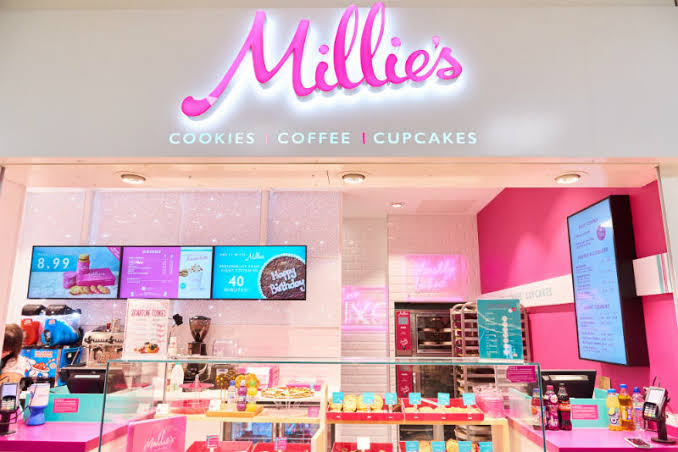
A Millie's Cookies franchise requires between 250 and 700 square feet of retail space, with the appropriate size depending on the location format — mall inline units typically operate at the smaller end, while standalone high-street formats may use the full range. The space must accommodate an in-store baking area, product display, and customer service counter. Millie's Cookies provides store design guidance to ensure the space configuration supports both production efficiency and the sensory customer experience that fresh baking in-store creates.
How long does it take to set up and open a Millie's Cookies outlet?
Setup for a Millie's Cookies franchise typically takes eight to twelve weeks from confirmed site, covering store fitout to brand standards, baking equipment installation, FSSAI licensing, and the 10-day training program before opening. Franchisees who complete regulatory requirements in parallel with physical setup rather than sequentially reduce the pre-opening delay. The training program should be scheduled in the final weeks of the setup period so that the trained team and completed outlet are ready simultaneously on opening day.
What training does Millie's Cookies provide before opening?
Millie's Cookies provides a 10-day training program conducted by a brand expert within an operational Millie's outlet, covering brand standards, baking techniques, beverage preparation, health and safety protocols, shift management, staff training methodology, operational standards, and marketing. By the end of the program, the franchisee has independently operated a live Millie's store under trainer supervision. Performance is evaluated during training, and additional support is provided for franchisees who need extended preparation before the evaluation standard is met.
Can a Millie's Cookies franchise operate without the owner being present daily?
Daily owner presence is the standard that produces the strongest performance in this format during the first year. The fresh-bake production rhythm, customer experience quality, and team management require active oversight that a newly trained staff team cannot sustain to the brand's standards without the franchisee's direct involvement during the formative period. Once a reliable, trained team is in place and operational systems are embedded, reduced daily presence becomes more viable — but full absentee management from the outset consistently produces below-standard product quality and customer experience in a format where both are the commercial foundation of every repeat visit.
How many Millie's Cookies outlets are currently operating in India?
The Millie's Cookies franchise network in India has between 50 and 100 active locations, with approximately 4.7 new outlets added annually across 16 years of franchising. This network scale reflects an established brand with operational experience across multiple Indian markets — giving new franchisees access to a system that has worked through market cycles and competitive pressures rather than a concept being tested for the first time. Significant territory remains available in most Indian cities, and prospective franchisees should discuss specific location availability and exclusivity provisions directly with the brand during evaluation.
Disclaimer: All scores, rankings, and estimates on ForeFind are independently produced editorial assessments using publicly available data and validated brand-submitted information. They are not verified facts, financial advice, or investment recommendations. Full Disclaimer.
