


Metro Soaps & Detergents Franchise: Market Position, Consumer Demand and Competitive Advantage in Indian Retail
The Metro Soaps & Detergents franchise operates in one of the most structurally dependable segments of Indian consumer retail: household cleaning and personal care products that households repurchase on a fixed cycle regardless of economic conditions. Rooted in manufacturing history dating to 1986 under Sri Ram Balaji Chemicals in Salem, Tamil Nadu, the brand has built a multi-state retail presence across South India and is now expanding its franchise network at a pace of over thirteen new stores per year — a rate that reflects genuine consumer pull rather than speculative expansion.
Metro Soaps & Detergents’s Position in the Indian Retail Landscape
Within the crowded FMCG retail space, Metro Soaps & Detergents occupies a value-anchored position: quality household cleaning products — detergent cakes, washing powder, dishwash formulations — priced accessibly for middle-income urban and semi-urban households. The brand does not compete in the premium personal care segment occupied by multinational beauty chains, nor does it sit at the commodity unbranded end of the market. It sits between those two extremes, which is exactly where the majority of Indian household spending on home care lands.
The target demographic is the practical household buyer — someone purchasing for the family rather than as a discretionary or aspirational act. This positioning gives the franchise a consumer base that is both large and consistent in purchasing behaviour, which matters significantly for a retailer evaluating revenue predictability across seasonal and economic cycles.
The Consumer Demand Case for This Product Category in India
India’s FMCG sector has been shaped over the last decade by two parallel forces: urbanisation bringing more households into the formal retail orbit, and rising incomes in Tier 2 and Tier 3 cities pushing consumers away from loose, unbranded products toward packaged, labelled alternatives they perceive as safer and more consistent. Both forces benefit a branded household care retailer directly. The consumer who previously bought washing powder from a local kirana by weight is now seeking branded, quantity-specified products from a recognisable retail format.
This shift is structural, not cyclical. It is driven by rising female workforce participation, smaller household sizes requiring more frequent purchases, and health awareness accelerated by the pandemic period around the cleanliness of home surfaces and laundry. Each of these trends increases the frequency and deliberateness of household product purchasing — and each of them benefits a franchisee who can offer a curated, trusted range in a clean retail format that an unorganised competitor cannot match.
Why a Branded Metro Soaps & Detergents Store Outperforms Independent Retail in This Category
An independent retailer stocking comparable household cleaning products faces a recurring structural disadvantage: procurement at prices that do not reflect bulk manufacturing economics, no brand marketing working in their favour, and no product development pipeline to refresh the range. Metro Soaps & Detergents, backed by an in-house manufacturing operation running since 1986, gives franchisees access to products developed, quality-tested, and priced at the manufacturer’s own margin structure.
That supply chain integration is harder to replicate than it appears. An independent shop owner sourcing from distributors absorbs multiple margin layers before products reach the shelf. A Metro Soaps & Detergents franchisee buys closer to source, which directly affects the retail margin available per unit sold. Add national brand marketing and a retail identity that consumers can recognise across cities, and the structural gap between a branded franchise store and an independent home care retailer becomes difficult for the independent to close without a capital investment that a franchise fee would have covered more efficiently.
Geographic Opportunity and Where Metro Soaps & Detergents Is Expanding
With 100 to 200 stores currently operational, Metro Soaps & Detergents has a meaningful network but remains significantly under-distributed relative to India’s retail geography. The brand’s South Indian roots — with existing strength in Tamil Nadu, Karnataka, Andhra Pradesh, Kerala, and Pondicherry — means that expansion into Maharashtra, Gujarat, Rajasthan, and the northern and eastern states represents genuine white space where the brand has manufacturing credibility but limited retail presence.
Within any expansion market, the location format matters considerably. Mall and high street retail, the specified formats for this franchise, attract foot traffic that is already in a purchasing mindset — particularly relevant for a household replenishment product where impulse and reminder purchasing are common triggers. Franchisees entering cities where modern retail formats are expanding but have not yet reached saturation will find the most favourable positioning. Territory allocation terms are best confirmed directly with the franchisor, as exclusivity radius arrangements vary by city density and existing network proximity.
E-Commerce, Quick Commerce, and the Threat to Physical Retail
The honest assessment of e-commerce risk in household cleaning products is nuanced. Quick commerce platforms have made significant inroads in urban India for replenishment categories — and detergent, dishwash, and soap are exactly the kind of items that consumers order through Blinkit or Zepto when they run out. That presents a genuine consideration for a physical retailer in this category, particularly in large metros where quick commerce penetration is highest.
Two factors partially offset this pressure for a Metro Soaps & Detergents franchisee. First, the brand’s value positioning means consumers who are price-conscious and brand-loyal have reason to visit a physical store where they can assess pack sizes and formulations directly — a tactile evaluation that quick commerce does not support. Second, retail formats on high streets and in malls attract walk-in traffic that is already out and purchasing; a customer who notices the store while shopping for something else and picks up a month’s supply of washing powder is not a customer quick commerce was likely to capture anyway. Tier 2 and Tier 3 cities, where quick commerce penetration remains low, present the lowest online substitution risk.
Competitive Differentiation: Why Consumers Choose Metro Soaps & Detergents
The differentiation case for Metro Soaps & Detergents rests on manufacturing heritage rather than marketing positioning. A brand that has been producing household detergent products for nearly four decades carries a formulation consistency that newer entrants cannot credibly claim. Consumers in markets where the brand has been present for years make their repurchase decisions based on product performance, not advertising recall. That loyalty, once built, is durable — which is why the brand’s recession resistance rating is high relative to other consumer categories where discretionary purchases can be deferred.
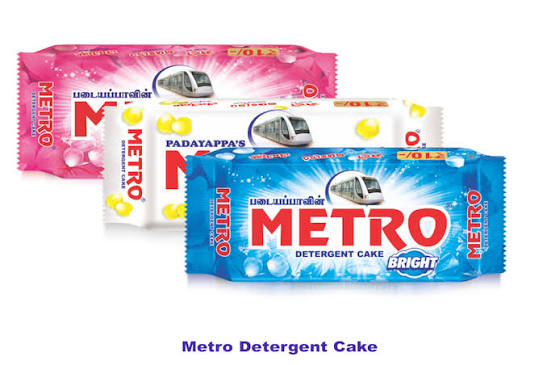
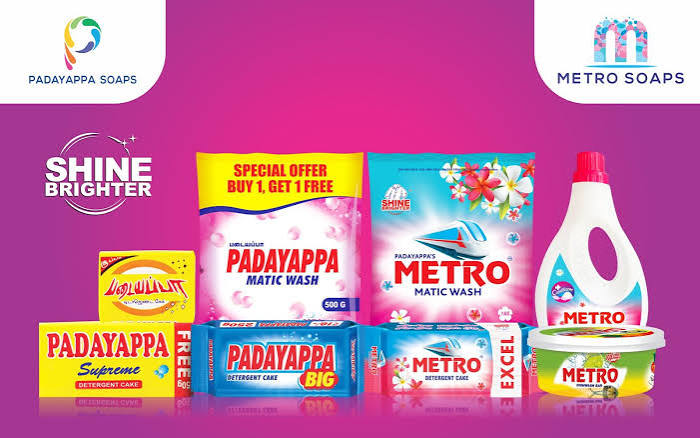
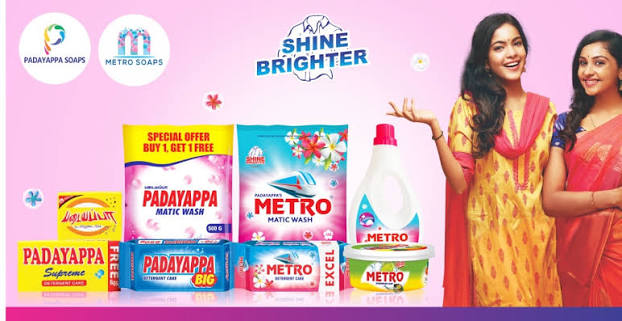
The portfolio breadth — spanning multiple product lines including XL, Sola, Metro, and Padayappa — allows a franchisee to serve households across different income levels and usage preferences within the same store format, increasing the average basket size and reducing the risk of losing a customer entirely if one product line faces competitive pressure.
Who Builds a Profitable Metro Soaps & Detergents Store
Retail in a replenishment category rewards operators who understand that repeat customers are the business. The franchisee who builds a Metro Soaps & Detergents store that consistently performs within its estimated revenue range is someone actively engaged in the local consumer relationship — knowing which products move fastest in their specific neighbourhood, managing stock levels to avoid the out-of-stock situations that push customers to competitors, and maintaining a store environment that makes routine replenishment purchasing frictionless.
Capital alone does not determine outcome in this Metro Soaps & Detergents franchise. Two franchisees investing the same amount in identical locations will diverge in performance based on how well they know their local consumer and how consistently they show up to manage the operation. The franchisee who treats this as a passive income vehicle from day one will find the break-even timeline stretching; the one who is present, attentive to merchandising, and active in local community visibility will compress it.
Accepting franchise applications in 25 states & UTs
How does a Metro Soaps & Detergents franchise compare to other retail franchises in this investment range?
At ₹5 lakh to ₹10 lakh, this franchise competes with general FMCG retail and personal care store formats. Metro Soaps & Detergents differentiates through its own manufacturing base — a structural advantage that independent retailers and some competing franchise models lack. The category's recession resistance also makes it more defensible during economic downturns than discretionary retail formats at similar investment levels.
Is a Metro Soaps & Detergents store viable in Tier 2 and Tier 3 Indian cities?
Yes, and these markets currently represent the strongest growth opportunity for the network. Consumer shift from unbranded to branded household care is most active in Tier 2 and Tier 3 cities where organised retail is expanding but branded home care options remain limited relative to demand. Quick commerce competition is also lower in these markets, which reduces the online substitution pressure that urban franchise operators face.
How does Metro Soaps & Detergents handle competition from e-commerce in this product category?
The brand's physical retail format, combined with its value pricing and product consistency, gives in-store customers a reason to purchase that online channels do not fully replicate — particularly for consumers who want to assess product variants directly or who prefer purchasing household staples during regular shopping trips rather than managing recurring deliveries. The threat is real in large metro markets but manageable for franchisees in locations with strong walk-in traffic.
What is Metro Soaps & Detergents's national marketing strategy and how does it benefit franchisees?
As a manufacturer-backed brand with multi-state consumer presence, Metro Soaps & Detergents carries brand equity that reduces the local marketing burden on individual franchisees. National marketing activity builds category awareness and consumer trust that translates into store footfall. Franchisees benefit from a recognised brand name at the point of sale — an advantage that new independent retailers spend years and significant budgets attempting to build from zero.
What is the Metro Soaps & Detergents store expansion plan for the next two years?
With a network currently between 100 and 200 stores and a historical addition rate above thirteen units per year, the brand is in active expansion mode. The stated intent to pursue a Pan India footprint means geographic markets outside the South Indian core — particularly Maharashtra, central India, and northern states — are likely priority areas. Investors considering markets in these regions have an opportunity to establish a presence ahead of network density building in their city.
Disclaimer: All scores, rankings, and estimates on ForeFind are independently produced editorial assessments using publicly available data and validated brand-submitted information. They are not verified facts, financial advice, or investment recommendations. Full Disclaimer.
