



Lore Academy Franchise: Education Market Opportunity, Brand Position and Growth Potential
Lore Academy in the Context of India’s Education Franchise Market
The Indian supplemental education sector splits broadly into two operating types: independent tuition centres run by individual educators, and structured franchise networks offering replicable curriculum and operational systems. Lore Academy sits firmly in the second category, operating as both a B2B and B2C business — supplying educational methodology to schools and institutions while simultaneously enrolling children directly through franchised centres. This dual revenue architecture is uncommon at the sub-₹2 lakh entry point, where most competing brands restrict themselves to a single channel.
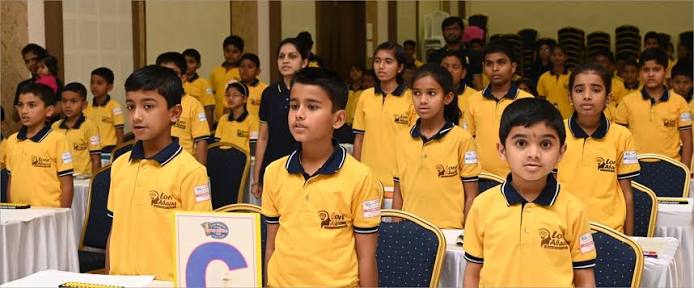
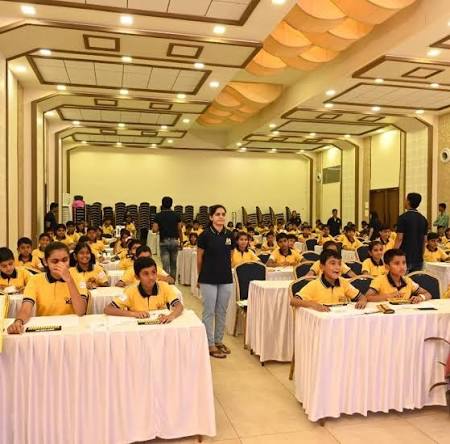
In terms of market segment, Lore Academy targets children between the ages of 6 and 14 — a cohort that parents across income brackets actively spend on regardless of economic conditions. The brand’s format is viable across location types, from high-street commercial clusters in Tier 1 cities to neighbourhood storefronts in Tier 2 and Tier 3 towns, requiring between 400 and 700 sq.ft of operational space. That footprint is small enough to keep occupancy costs manageable without limiting classroom capacity for a centre running sessions across the day.
For someone weighing this against starting an independent centre, the calculation is essentially about upfront brand equity versus long-term curriculum development cost. An independent operator must build everything — learning materials, teaching frameworks, parent-facing credibility — from scratch, typically spending two to four years before the centre earns meaningful referrals. A franchisee enters that market with a structured offering already tested across several dozen locations.
Why Demand for This Education Format Is Growing in India
Three structural forces are converging to expand the addressable market for supplemental learning programmes. The National Education Policy 2020 formally shifted India’s curricular focus away from rote memorisation toward competency-based learning — a change that creates parental anxiety about whether school instruction alone will prepare children adequately. When schooling changes in ways parents do not fully understand, they spend on supplemental support. This is the commercial opening that structured enrichment programmes fill.
Parental education spend is also rising independently of policy. Household survey data consistently shows Indian middle-class families treating education expenditure as non-discretionary. Even during periods of income stress, spending on children’s learning tends to contract later and recover faster than discretionary categories. For a franchisee, this translates to a demand base that is more stable than most consumer categories at this investment level.
Post-COVID learning patterns have further expanded the rationale for structured enrichment outside school hours. Gaps in foundational literacy and numeracy identified during the pandemic years are still being addressed, and parents who once assumed school was sufficient are now actively supplementing. Organised franchise networks — with standardised assessments, progress tracking, and parent communication protocols — are better positioned than independent centres to demonstrate measurable outcomes, which is what anxious parents now expect before committing enrolment fees.
What Lore Academy Gives a Franchisee That They Cannot Build Alone
The central asset is the curriculum itself. Lore Academy’s whole-brain development programmes are designed around the integrated functioning of both cerebral hemispheres — a methodology that draws on established cognitive science and has been refined over the brand’s 16 years of operation. Building an equivalent programme independently would require not just educational expertise but also investment in testing, iterating, and validating outcomes across enough students to make the offering credible to parents. The franchise transfers that accumulated development cost into the franchisee’s hands on day one.
Beyond curriculum, the brand carries recognition in parent communities — particularly among families who encountered Lore Academy in a previous city or who heard about it through school networks. That word-of-mouth infrastructure, built over a decade and a half, is not replicable by an independent operator regardless of how good their teaching staff is. In the supplemental education category, referrals from satisfied parents are the primary growth mechanism, and they travel faster inside a network with consistent quality than across independent centres with variable delivery.
Franchisees also receive training for the two to eight staff members a centre requires, which matters in Tier 2 markets where trained education professionals may be available but unaccustomed to structured franchise operating procedures. The operational playbook reduces the learning curve for a first-time business owner managing staff and student scheduling simultaneously.
The Lore Academy Network: Growth Rate and Geographic White Space
With between 50 and 100 operational centres and a history stretching back to 2009, the network’s expansion rate of approximately 4.7 new units per year reflects disciplined rather than aggressive growth — a pattern typically associated with franchisors who screen franchisees carefully and support each opening rather than maximising unit count at the cost of quality.
That rate also implies significant geographic headroom. India has over 4,000 cities and towns with populations above 50,000, and a brain development programme targeting children aged 6 to 14 has a viable customer base in any urban cluster with an active middle class. Even at the upper end of the current network size, Lore Academy has covered a fraction of its serviceable geography. Tier 2 cities in states like Madhya Pradesh, Rajasthan, Odisha, and the northeastern metros represent clusters where supplemental education demand is rising but organised brands are underrepresented.
Territory allocation by the franchisor is a key due diligence question for prospective investors. Understanding whether the brand grants exclusive geographic zones or allows overlapping coverage affects the long-term value of a specific centre and should be confirmed during the franchise agreement review process.
Competitive Positioning: Why Parents Choose Lore Academy Over Alternatives
The supplemental education space in India includes large franchise networks focused on mathematics enrichment, coding, phonics, and general academic tutoring. Lore Academy’s differentiator is its explicit focus on whole-brain development as a foundational layer beneath subject-specific learning. A parent choosing between a maths enrichment centre and Lore Academy is not making the same decision — Lore’s proposition is that improving how a child processes and retains information produces gains across all subjects, not just one.
In a Tier 2 city, where the competitive landscape is typically thinner, this positioning is a practical advantage. Parents who cannot afford multiple supplemental programmes simultaneously are more likely to spend on a programme that promises cross-domain benefits. The age range of 6 to 14 also means a child enrolled at age seven can remain a student for several years, providing the franchisee with a longer revenue relationship per family than subject-specific programmes that are outgrown quickly.
Policy and Regulatory Risk in the Indian Education Sector
Education franchise operators in India require a Trade License and GST registration — both of which are standard small-business requirements rather than sector-specific hurdles. The investment profile here does not include NSDC affiliation or formal school board recognition, which means franchisees are operating in the supplemental enrichment segment rather than the formally accredited schooling segment. This distinction matters: the regulatory environment for enrichment centres is considerably less complex than for institutions offering board-recognised curricula.
That said, state governments periodically introduce guidelines on fees, advertising, and operating standards for private education providers. A brand operating across multiple states for 16 years will have navigated several such regulatory cycles and should have compliance documentation and guidance built into its franchise support structure. Prospective investors should ask the franchisor specifically what policy changes have affected centres in the past five years and how those were managed at the network level.
Who Captures the Most Value From a Lore Academy Franchise
The franchisee profile the brand identifies — first-time entrepreneurs, salaried professionals, and retired individuals — points toward investors who bring community presence rather than sector expertise. In the supplemental education category, this is a genuinely valuable asset. A parent choosing where to enrol their child is making a trust decision, and local credibility accelerates that trust in ways that no amount of national advertising can replicate at the individual centre level.
A retired school principal or a mid-career professional who is known and respected in their neighbourhood will convert enquiries to enrolments faster than an operator who is new to a market, regardless of how strong the curriculum is. The capital sensitivity of this investment — flagged as very high in the brand profile — means that centre-level revenue must ramp efficiently to cover fixed costs. Franchisees who already have social capital in their target geography are better positioned to achieve that ramp within the six to twelve month break-even window. The Lore Academy franchise, in this sense, rewards the investor who brings community standing to the relationship as much as capital.
Accepting franchise applications in 35 states & UTs


How does Lore Academy compare to other education franchises at this investment level?
Most supplemental education franchises in the sub-₹2 lakh category are single-subject programmes — maths enrichment, phonics, or coding. Lore Academy's whole-brain development methodology covers foundational cognitive skills that affect learning across subjects, which positions it differently for parents seeking broader academic improvement. The B2B channel, where centres supply programmes to schools directly, also provides a revenue stream that most competitors at this price point do not offer.
Is Lore Academy suitable for Tier 2 and Tier 3 cities?
The format is well suited to smaller urban markets. The space requirement of 400 to 700 sq.ft is achievable at commercially viable rents in Tier 2 and Tier 3 towns, and the target demographic — families with school-age children who are willing to spend on supplemental education — exists across India's secondary cities. The brand's operational history suggests centres in these markets can reach break-even within the indicated timeline when the franchisee has existing community relationships.
What is Lore Academy's student outcome track record?
The programmes are built around measurable improvement in learning skills — concentration, memory retention, and information processing — in children aged 6 to 14. Parents evaluating the brand should ask franchise support staff for centre-level assessment data and request to speak with existing franchisees about student progress reporting. Outcome documentation from operational centres is the most reliable evidence available at the due diligence stage.
How does Lore Academy handle changes in education policy or curriculum?
Because Lore Academy operates in the supplemental enrichment segment rather than the formally accredited schooling segment, its curriculum is not directly tied to state board syllabi. Policy changes affecting board-recognised schools have limited direct impact on the programme content. Where broader policy trends — such as NEP 2020's shift toward competency-based learning — affect what parents are seeking, the franchisor's curriculum team has the flexibility to align programme messaging and content accordingly without the constraints faced by institutions tied to government frameworks.
What is the Lore Academy franchise expansion plan for India?
The network has grown at roughly 4.7 new centres per year since franchising began. Whether the franchisor plans to accelerate that pace, enter new states, or deepen coverage in existing markets is a question best addressed directly with the brand's franchise development team. What the current network size confirms is that the franchisor has capacity and experience to onboard new operators, which matters for franchisees who want responsive support during the set-up phase.
Disclaimer: All scores, rankings, and estimates on ForeFind are independently produced editorial assessments using publicly available data and validated brand-submitted information. They are not verified facts, financial advice, or investment recommendations. Full Disclaimer.
