


Leap Robots LLP Franchise: Education Market Opportunity, Brand Position and Growth Potential
Evaluating a Leap Robots LLP franchise means looking past the robotics-kit novelty and understanding where it sits within India’s much larger supplemental education economy, a category where after-school enrichment has steadily moved from optional hobby to expected investment for middle and upper-middle income households.
Leap Robots LLP in the Context of India’s Education Franchise Market
Robotics and STEM enrichment occupies a specific niche inside the broader tuition and skill-development sector: it does not compete with academic tutoring for exam scores, but with other forms of discretionary, future-skills spending such as coding classes, abacus programs, and creativity labs. This segment skews toward urban and semi-urban households with disposable income earmarked for a child’s “extra edge,” which makes catchment selection more about school density and household income than raw population. Building such a centre independently means an operator has to design curriculum from scratch, source robotics hardware vendors, and establish credibility with schools with no prior brand signal, a process that typically takes years longer than launching under an already-recognised name with existing kits, lesson plans, and a track record of student competition participation already in place.
Why Demand for This Education Format Is Growing in India
Several structural shifts are pushing more families toward formats like this one. The National Education Policy’s emphasis on experiential and skill-based learning has given schools and parents a vocabulary and policy mandate for activities like robotics and IoT exposure that previously sat outside the mainstream curriculum. Parallel government efforts under Skill India have normalised the idea that technical literacy should start early rather than at the undergraduate level, which feeds directly into demand for after-school labs. Post-pandemic, many parents also became more comfortable with structured supplemental programs running alongside regular school hours, having grown used to hybrid schedules during the disruption years. None of these tailwinds automatically favour an independent operator, because schools and parents evaluating an unfamiliar program have no easy way to verify quality; a franchise with a multi-state presence and a recognisable name carries an implicit credibility signal that an independent lab has to earn slowly, one batch at a time.
What Leap Robots LLP Gives a Franchisee That They Cannot Build Alone
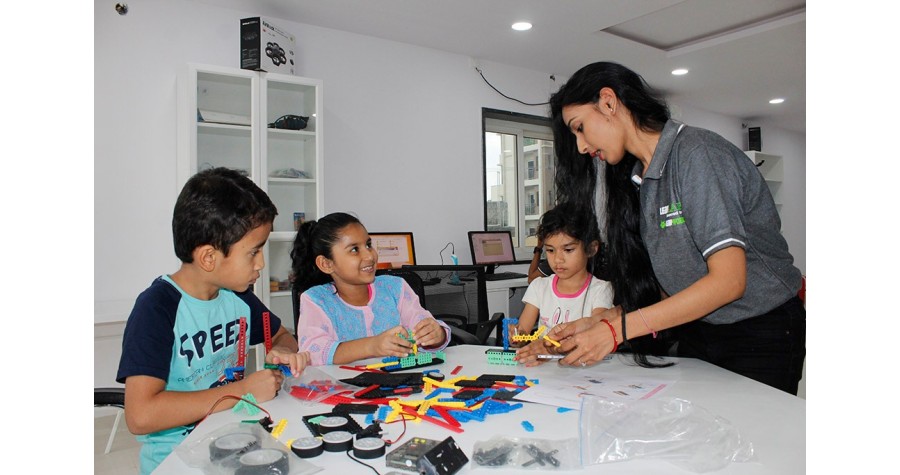
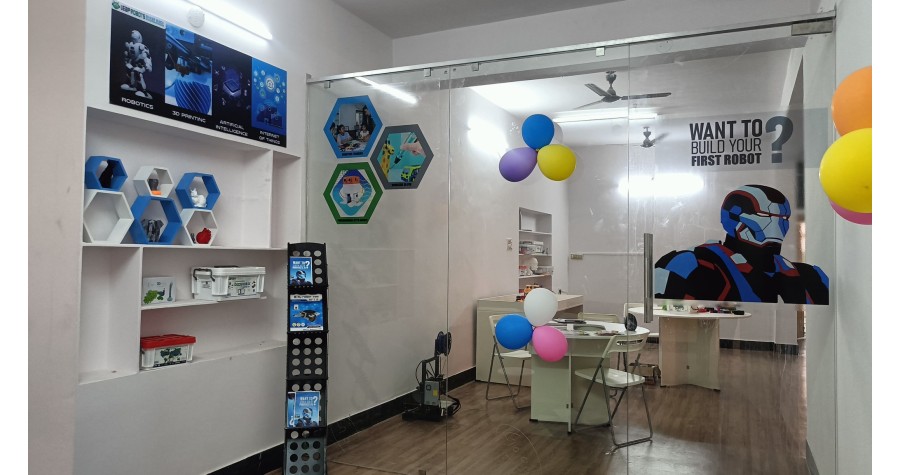
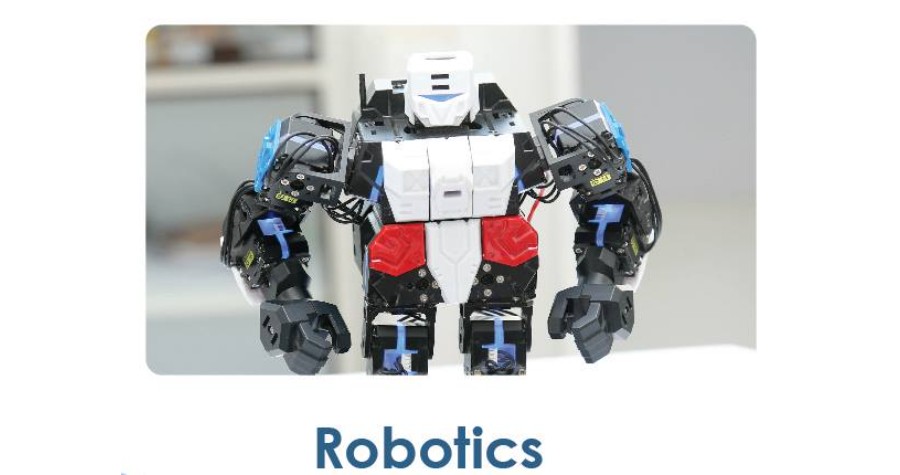
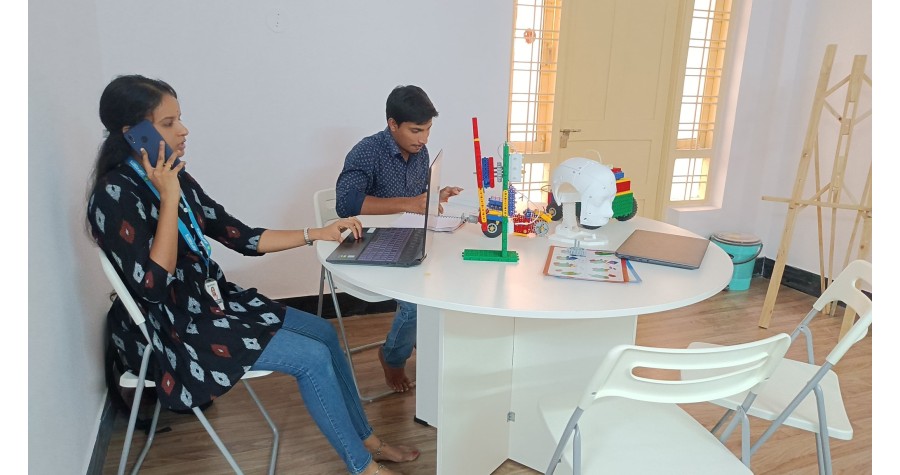
The most tangible asset a franchisee inherits is a ready curriculum spanning robotics kits, 3D printing modules, and IoT starter projects, built and iterated over roughly three decades of the parent company’s operating history, rather than something assembled in a few months before launch. Proprietary hardware lines reduce a franchisee’s dependency on sourcing components from multiple vendors and standardise what a student experiences across locations, which matters when parents compare notes across cities or when students from different centres compete in the same state or national-level events. Beyond curriculum, the franchisee gains access to a brand that already has some visibility in robotics education circles, which shortens the trust-building cycle with schools considering tie-ups, even though local relationship-building still does the bulk of the enrollment work.
The Leap Robots LLP Network: Growth Rate and Geographic White Space
A network expanding by roughly one new centre every three years, currently sitting in the low double digits nationally, signals a franchisor that is being selective about partners and locations rather than scaling aggressively for unit count. For a prospective investor, this translates into two things worth noting: territory exclusivity is more likely to be honoured because saturation risk is low, and most mid-sized and smaller Indian cities remain genuinely open. Tier 2 cities with a strong base of private schools and growing household incomes represent the most logical next wave of expansion, since metro markets tend to already have multiple STEM-enrichment options competing for the same families. Franchisors operating at this pace typically allocate territory based on a combination of school density, competing centres already present, and the franchisee’s own local network, rather than opening centres purely on a first-come basis.
Competitive Positioning: Why Parents Choose Leap Robots LLP Over Alternatives
In a Tier 2 city, a parent comparing a Leap Robots LLP centre against a generic coding academy or an unbranded robotics class is usually weighing tangible product differences: proprietary kit lines like the Booyaka series and the open-source robotic-arm platform give the centre something demonstrably different to show in a trial class, rather than a generic curriculum repackaged under a new name. The ability to point to state and national-level competition participation as a pathway for advanced students also matters to parents seeking more than a casual hobby class, since it signals a structured progression rather than a single fixed course.
Policy and Regulatory Risk in the Indian Education Sector
Because this format operates as supplemental, after-school enrichment rather than formal schooling, it sits largely outside Right to Education compliance and state board recognition requirements that govern full-time schools, which simplifies the regulatory burden considerably compared to opening an actual school. The NSDC affiliation referenced for this brand category does carry weight, however, since it links the curriculum to a nationally recognised skilling framework, which can matter when centres pursue partnerships with schools or government-linked skill initiatives. A trade license remains the baseline operational requirement at the local level. The franchisor typically guides new partners through this documentation as part of onboarding, though the franchisee retains direct responsibility for renewals and local compliance, meaning future shifts in state-level education policy around technical literacy programs are more likely to create opportunity than obligation for a centre already positioned in this space.
Who Captures the Most Value From a Leap Robots LLP Franchise
The investors who extract the most value from this model are rarely just well-capitalised; they are individuals with an existing foothold in the local education or technical training ecosystem, whether as a former educator, an engineering professional, or someone already known to area schools. Geographic fit matters as much as the investment cheque, because a centre placed in a market with a thin concentration of private schools and STEM-aware households will struggle regardless of how well-run it is internally. Operational discipline, particularly around batch scheduling and instructor consistency, compounds this advantage once the centre is open, turning early credibility into a durable local reputation rather than a one-season novelty.
Accepting franchise applications in 34 states & UTs
How does Leap Robots LLP compare to other education franchises at this investment level?
At a mid-tier investment range, it sits above basic tutoring franchises but below large-format skill academies, distinguished mainly by its proprietary robotics and IoT product line rather than a licensed third-party curriculum.
Is Leap Robots LLP suitable for Tier 2 and Tier 3 cities?
Yes, and these markets currently represent the more open growth opportunity, given that metro cities already host denser competition among STEM-enrichment providers.
What is Leap Robots LLP's student outcome track record?
Outcomes are best assessed through participation in the brand's state and national-level robotics competitions, which serve as a visible benchmark of student progression rather than a standardised test score.
How does Leap Robots LLP handle changes in education policy or curriculum?
As an after-school enrichment format aligned with NSDC-linked skilling frameworks, the brand has flexibility to adapt curriculum modules in response to evolving state and national STEM education priorities without the compliance load a formal school would face.
What is the Leap Robots LLP franchise expansion plan for India?
Given a historical pace of under one new centre per year network-wide, expansion is deliberate rather than rapid, prioritising Tier 2 cities and locations with strong private-school density over broad national saturation.
Disclaimer: All scores, rankings, and estimates on ForeFind are independently produced editorial assessments using publicly available data and validated brand-submitted information. They are not verified facts, financial advice, or investment recommendations. Full Disclaimer.
