



Jugnoo Franchise: Platform Operations, Daily Management and What Owning This Business Requires
What Jugnoo Does and Which Markets It Serves
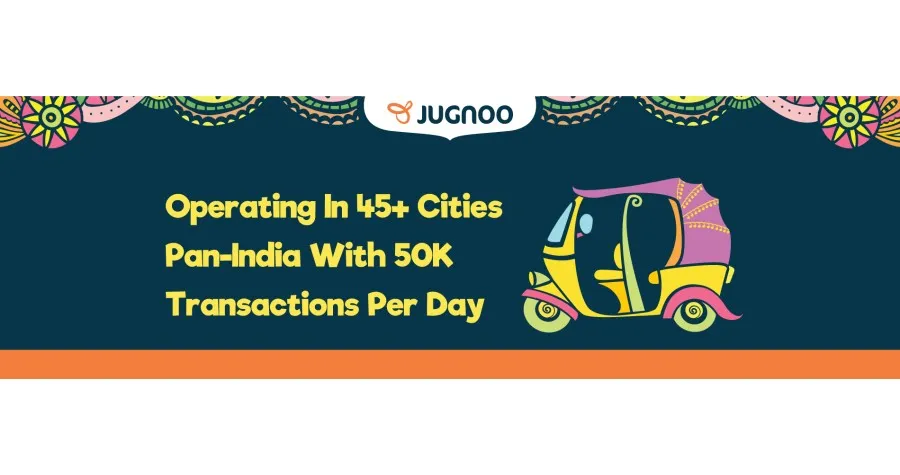
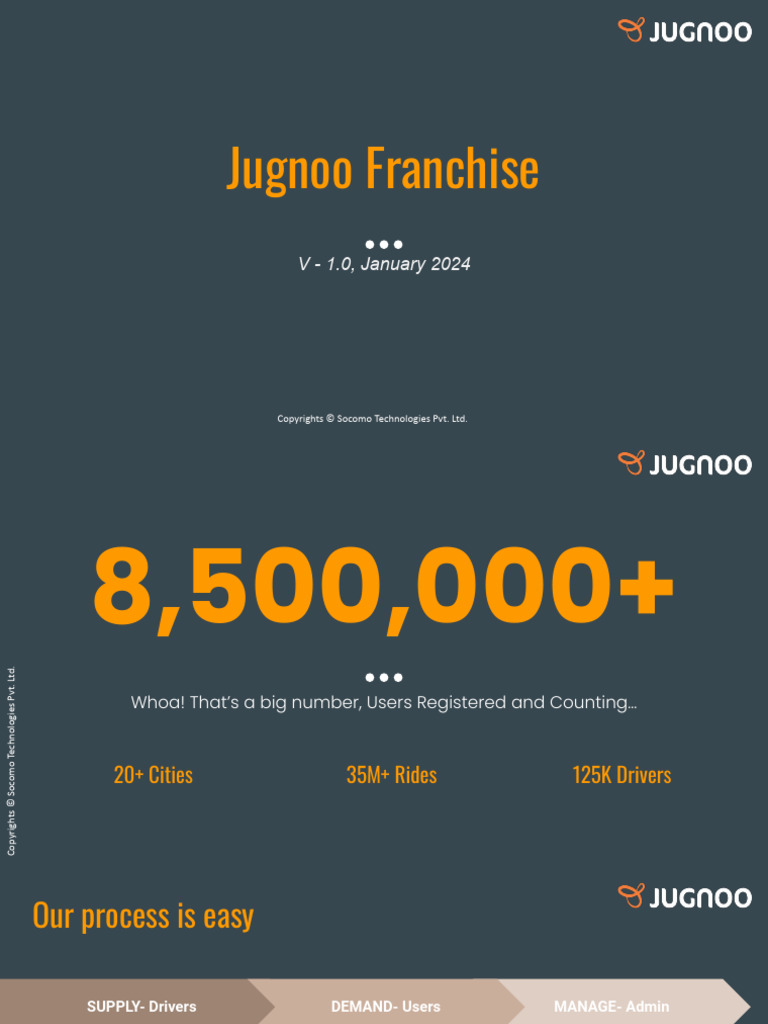
A Jugnoo franchise operates as a city-level unit of India’s on-demand aggregator platform — one that began as an auto-rickshaw booking service and has expanded into cab rides, bike deliveries, grocery fulfilment, food delivery, and last-mile logistics across more than 45 cities. Founded in 2001 and backed by institutional investors including Paytm and Rocketship.VC, the platform has processed over 29 million rides and handles more than 1.2 million monthly transactions nationally. A Jugnoo franchise franchisee takes operational ownership of this platform’s presence in a defined geography: onboarding driver-partners and delivery associates, managing service quality, driving local rider and customer acquisition, and ensuring the platform performs reliably for both supply and demand sides in their market. The business is B2C at its core — the end customers are individual riders and service users — but the franchisee’s daily operational focus is as much on the supply side (driver-partner management) as on the consumer side.
Platform Operations: A Typical Operating Day
Running a Jugnoo franchise day-to-day is an operations and people management role rather than a technical one. Mornings typically involve reviewing the previous day’s ride and delivery metrics: completed trips, cancellation rates, driver-partner availability during peak hours, and any service complaints that need resolution. Driver-partner communication — addressing availability gaps, handling earnings disputes, onboarding new associates — runs throughout the day and is the activity that most directly determines whether the platform has adequate supply to meet demand. Customer-facing issues, such as ride quality complaints or failed deliveries, are handled at the franchisee level rather than escalated centrally for routine cases. Business development activity — reaching out to local businesses for delivery tie-ups, promoting the platform among regular commuters, and managing local marketing — fits around the operational core. Unlike a retail or service outlet, there is no fixed customer queue to manage; demand arrives through the app and the franchisee’s job is to ensure supply is ready to meet it.
Driver-Partner Recruitment, Onboarding, and Retention
The supply side of a ride-hailing franchise is its most operationally demanding dimension. A franchisee needs a sufficient base of active driver-partners to provide acceptable wait times for riders — too few drivers and cancellation rates climb, rider satisfaction drops, and demand migrates to competing platforms. In Tier 2 cities, where Jugnoo’s expansion focus is concentrated, auto and cab drivers are often transitioning from informal arrangements and value the earnings predictability and trip volume that an organised platform can offer. Franchisee recruitment efforts typically focus on existing auto and cab operators in the territory, community word-of-mouth, and partnerships with vehicle financing companies whose customers need income streams to service loans. Retention depends on earnings consistency: driver-partners who get regular trips stay active; those who experience long idle periods between bookings drift to competing apps or return to informal work. Franchisees who invest in driver-partner relationships — transparent earnings communication, prompt issue resolution, and steady trip supply — build a more stable supply base than those who treat driver acquisition as a one-time exercise.
Customer Acquisition and Building Ride Volume
Rider acquisition for a Jugnoo franchise works across two channels: the national brand and app infrastructure the franchisor maintains, and the local marketing and community outreach the franchisee drives independently. The Jugnoo app’s presence on app stores and its national brand recognition provide a baseline of inbound discovery, particularly in cities where the platform already has some footprint. Local franchisee efforts — distributing referral offers, building relationships with offices, hotels, hospitals, and institutions that generate regular transport demand, and activating hyperlocal promotions — convert platform awareness into habitual usage. Corporate and institutional accounts are the most valuable local customer relationships a franchisee can build: a hospital with shift workers needing regular transport, or a tech company booking employee commutes through a managed account, generates predictable daily ride volume that smooths out the consumer demand variability. Franchisees who focus exclusively on organic consumer downloads without building any local institutional relationships take significantly longer to reach the ride density needed for break-even.
Technology, Reporting, and Operational Infrastructure
The technology infrastructure for a Jugnoo franchise is provided centrally: the consumer app, driver app, dispatch algorithm, and payment processing are all managed at the platform level. The franchisee’s operational toolkit consists of a dashboard that surfaces local metrics — active driver count, daily trip volume, peak hour performance, cancellation rates, and earnings by driver-partner — which forms the basis of daily management decisions. Understanding how to read and act on these metrics is the primary technology learning curve for new franchisees; the tools themselves are designed for non-technical users. When technical issues arise — app outages, payment failures, driver app malfunctions — the franchisor’s central support team handles resolution, though franchisees are responsible for communicating with affected driver-partners and riders during downtime. The aggregator registration and trade licence required to operate are the franchisee’s compliance obligations, not the franchisor’s.
Multi-Service Expansion: Beyond Rides
Jugnoo’s evolution from auto aggregator to multi-service platform — adding groceries, food delivery, and logistics alongside transport — creates a meaningful revenue diversification opportunity for franchisees. A territory where ride volume is moderate can supplement income through delivery transactions, and the same driver-partner network that handles rides can be deployed for last-mile delivery during off-peak hours. This multi-service model is one structural distinction between a Jugnoo franchise and a single-service cab aggregator franchise: the addressable transaction base is broader, which reduces dependence on any single service category and provides a buffer during periods when ride demand softens. Franchisees who activate multiple service verticals in their territory early — rather than treating non-ride services as a secondary add-on — build a more resilient monthly revenue base within the same investment and staffing footprint.
Who Runs a Jugnoo Franchise Successfully
The franchisee who builds quickly in this model combines local community credibility with genuine operational hands-on involvement. Prior experience in transport, logistics, or any people-intensive local business — managing drivers, coordinating deliveries, handling customer complaints under time pressure — transfers directly to the daily requirements of running a platform franchise. Family-backed investors with established local business networks, young professionals with strong community relationships in their city, and first-time entrepreneurs who have spent time in logistics or transport environments are all positioned to contribute meaningfully from day one. Location within the target city matters less than depth of local relationships: a franchisee who knows fifty auto and cab drivers personally will build driver supply faster than one who relies entirely on app-based recruitment. Franchisees who approach this model as a largely passive investment — hiring a manager and expecting the platform to generate volume without active local involvement — consistently find that ride density and driver retention both deteriorate without an engaged owner driving the operation.
Accepting franchise applications in 35 states & UTs

What infrastructure does a Jugnoo franchise require to operate?
A Jugnoo franchise requires no fixed physical space — the model is app and platform-based, with no storefront or workshop needed. The operational requirements are a commercial base for administrative functions (home-based operation is not supported), the aggregator registration and trade licence the franchisee must obtain, and the devices and connectivity needed to manage the platform dashboard and driver-partner communications. The low physical footprint is one of the structural reasons the entry investment range is accessible relative to other franchise categories.
What does Jugnoo provide as part of the franchise package?
Jugnoo provides franchisees with access to its consumer and driver app infrastructure, the dispatch and payment technology, the national brand, and initial training on platform operations and driver-partner management. The franchisor's central team handles app maintenance, payment processing, and national-level marketing. Local operations — driver onboarding, rider acquisition, service quality management, and regulatory compliance — are the franchisee's responsibility. Specific package details are confirmed during the franchise inquiry and onboarding process.
How does Jugnoo train franchisees?
Jugnoo provides operational training covering platform management, driver-partner onboarding processes, dashboard interpretation, customer service protocols, and compliance requirements including aggregator registration. Training is oriented toward the platform and people management aspects of the business rather than technical or mechanical skills — reflecting the nature of an aggregator franchise rather than a workshop. Ongoing support from the central team is available for operational and technical queries as the franchise scales.
Can a Jugnoo franchise be managed by a hired operations manager?
The owner-operated model means the franchisee is expected to be the primary operational decision-maker, particularly in the early phase when driver supply is being built and local rider relationships are being established. A hired manager can handle day-to-day platform monitoring once the unit is stable, but the franchisee's personal involvement in driver-partner relationships and local business development is consistently the factor that distinguishes units that reach break-even within the 6–12 month window from those that take longer.
How does Jugnoo support franchisees in building corporate and institutional client relationships?
Jugnoo's national brand and multi-service platform provide franchisees with a credible offering to present to local corporate accounts — companies booking employee transport, institutions requiring regular delivery services, or businesses needing last-mile logistics. The franchisor provides the platform infrastructure and billing tools that make corporate accounts operationally manageable. Active business development — identifying local institutional clients, making direct contact, and negotiating volume arrangements — is the franchisee's independent responsibility and is one of the primary drivers of monthly revenue stability in this model.
Disclaimer: All scores, rankings, and estimates on ForeFind are independently produced editorial assessments using publicly available data and validated brand-submitted information. They are not verified facts, financial advice, or investment recommendations. Full Disclaimer.
