



Grocery 4 U Retail Pvt ltd Franchise: Store Investment, Margins and Return Timeline in India
About Grocery 4 U Retail Pvt ltd
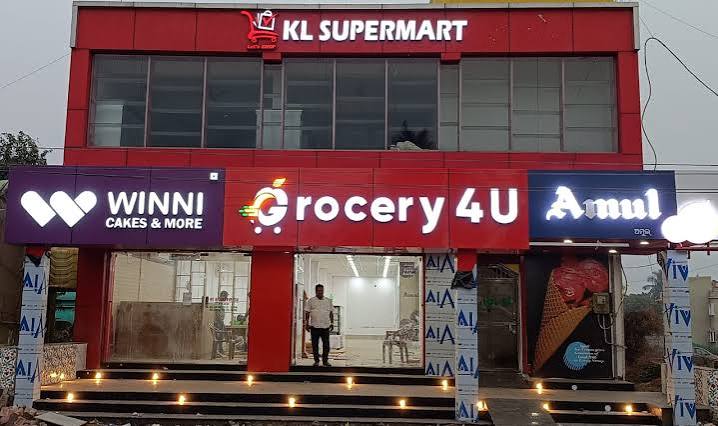
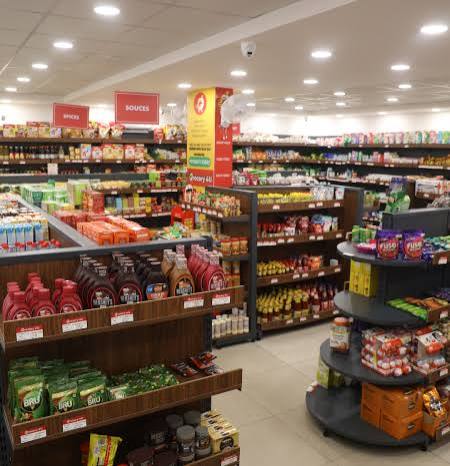
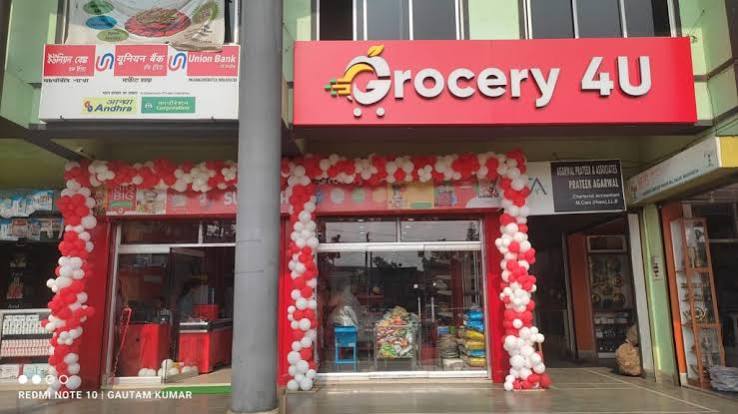
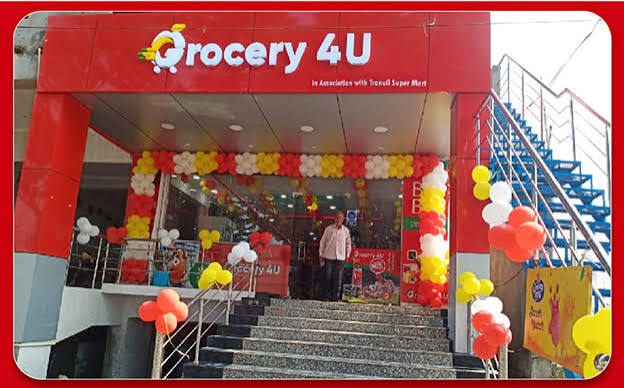
Grocery 4 U Retail Pvt ltd runs a multi-category neighborhood retail format that pairs everyday grocery staples with fresh fruits and vegetables, organic foods, dairy, personal care, and a wide assortment of household essentials under one roof. The positioning sits firmly in the mass-market convenience segment, priced for daily household shopping rather than premium specialty retail, which is precisely what keeps footfall steady regardless of broader retail sentiment. With a network spanning roughly fifty to one hundred outlets built over more than a decade, the brand has moved well past the proof-of-concept stage that earlier-stage retail franchises are still navigating. For a retail investor, that scale matters less as a vanity metric and more as evidence that the format has already been tested across varied city sizes and consumer profiles, with the operational kinks largely worked out before a new franchisee opens their doors.
The Margin and Inventory Model
Fresh produce and grocery retail in India typically runs on gross margins in the range of 20 to 30 percent, lower than apparel or electronics but offset by far higher purchase frequency and inventory turnover. The economics of this category reward speed of stock movement over markup size, since fruits and vegetables in particular carry spoilage risk that punishes slow-moving inventory hard. Grocery 4 U Retail Pvt ltd structures its supply chain to centralize procurement, which gives individual franchisees better buying terms than they could negotiate independently, while the franchisee remains responsible for managing daily ordering volumes against actual store-level sales velocity. Perishable categories generally need a clearance or markdown rhythm built into daily operations rather than treated as an occasional event, since unsold fresh stock at day’s end is effectively a sunk cost rather than inventory that can simply roll over to tomorrow.
Store Economics: Revenue Per Square Foot and Monthly Fixed Costs
A store in the 500 to 10,000 square foot range carries fixed costs, rent, staff salaries for a team of two to eight, electricity, and royalty obligations, that need to be covered before any profit accrues. Given the brand’s indicative monthly revenue range of roughly 0.9 lakh to 4.5 lakh, a smaller-format store at the lower end of that range needs considerably tighter cost control than a larger-format store generating toward the upper end, where fixed costs are spread across a larger revenue base. Revenue per square foot in grocery and produce retail tends to run higher than in most other retail categories precisely because purchase frequency is so high, customers visiting multiple times a week rather than once a season, which is what allows a relatively compact footprint to generate meaningful daily turnover.
The Investment Breakdown and What It Covers
An investment in the 20 to 30 lakh range for this format typically covers store fit-out and fixtures, opening inventory, brand licensing and training costs, and an initial working capital buffer to carry the store through its early, lower-traffic weeks. What is not covered by that upfront figure are the recurring monthly obligations: rent, staff wages, electricity and utility costs, royalty payments, and ongoing procurement, all of which the franchisee needs to fund from operating cash flow once the store opens. The brand’s estimated six to twelve month break-even window reflects how quickly a store can generate enough consistent revenue to cover these recurring costs, and that variance largely comes down to location quality, local competition density, and how quickly the franchisee builds repeat-customer habits in the surrounding neighborhood.
Seasonality and Demand Peaks in This Category
Fruits and vegetables carry pronounced seasonal swings tied to festival periods, wedding seasons, and weather-driven crop availability, with demand typically peaking around major festivals when household consumption and gifting both rise sharply. Lean months, often the period right after a major festival cycle or during extreme summer heat when fresh produce spoilage accelerates, tend to see noticeably lower revenue, and a franchisee who staffs and stocks at festival-peak levels year-round will carry unnecessary cost during these slower stretches. The more disciplined approach is matching inventory volume and staffing hours to the actual seasonal curve rather than running a flat operation that overspends in lean periods and understocks during peaks.
Online Competition and the Omnichannel Reality
Quick commerce has reshaped grocery buying behavior in Indian cities, but fresh produce remains one of the categories where physical inspection still matters to a meaningful share of consumers who want to choose their own fruit and vegetables rather than trust an algorithm-assigned bag. Grocery 4 U Retail Pvt ltd’s broader product range, spanning groceries, dairy, personal care, and household essentials alongside fresh produce, also gives it a basket-size advantage that pure online produce delivery struggles to match in a single order. Rather than treating e-commerce purely as a threat, the more realistic framing for a franchisee is that the physical store competes on immediacy and trust for perishables while naturally complementing, rather than losing to, online ordering for non-perishable categories.
Who This Retail Investment Suits
The investors who generate strong same-store sales growth in this format are typically hands-on with daily operations, watching shrinkage, staff performance, and local customer preferences closely rather than checking in occasionally from a distance. An agri-retail or general retail background helps considerably, since understanding produce quality and inventory cycles directly affects both margin and customer retention. One point worth stating plainly: investors who treat this as a passive income stream, showing up rarely and leaving daily decisions entirely to hired staff, consistently see weaker results than those who stay actively engaged with their store’s day-to-day performance.
Accepting franchise applications in 35 states & UTs
How much does it cost to open a Grocery 4 U Retail Pvt ltd franchise store?
The Grocery 4 U Retail Pvt ltd franchise typically requires an investment of roughly 20 to 30 lakh rupees, covering store fit-out, opening inventory, licensing, and initial working capital.
What is the expected monthly revenue from a Grocery 4 U Retail Pvt ltd store?
Indicative monthly revenue for this format generally falls between 0.9 lakh and 4.5 lakh rupees, varying with store size, location quality, and local demand density.
Does Grocery 4 U Retail Pvt ltd provide inventory on credit or consignment to franchisees?
Inventory and supply terms are determined at the franchise agreement stage, and prospective franchisees should confirm specific procurement and payment terms directly with the company before committing capital.
What is the Grocery 4 U Retail Pvt ltd franchise territory and exclusivity policy?
Territory allocation is typically assessed based on local market density and existing store coverage, and exact exclusivity terms should be confirmed directly with the franchisor during the inquiry process.
How many Grocery 4 U Retail Pvt ltd stores are currently operating in India?
The Grocery 4 U Retail Pvt ltd network currently spans an estimated fifty to one hundred stores across India, reflecting over a decade of steady, measured expansion.
Disclaimer: All scores, rankings, and estimates on ForeFind are independently produced editorial assessments using publicly available data and validated brand-submitted information. They are not verified facts, financial advice, or investment recommendations. Full Disclaimer.
