



SGF – Spice n Grilled Foods Franchise: Investment, Returns and Profit Model in India
About SGF – Spice n Grilled Foods
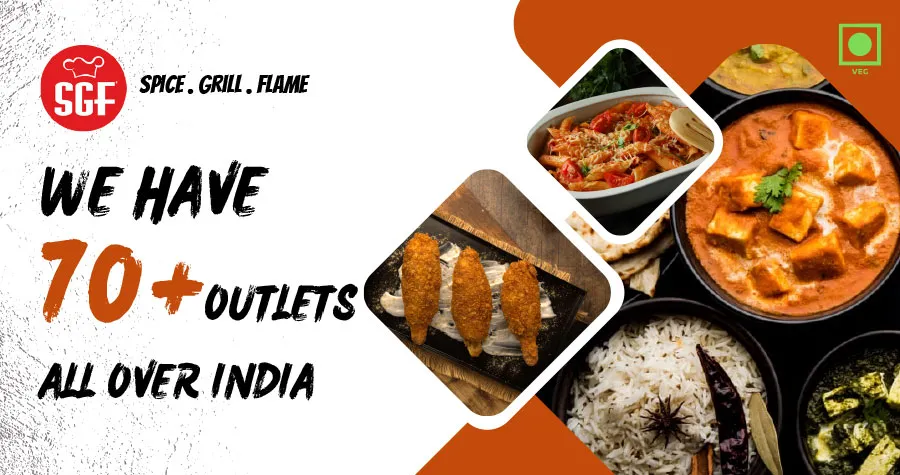
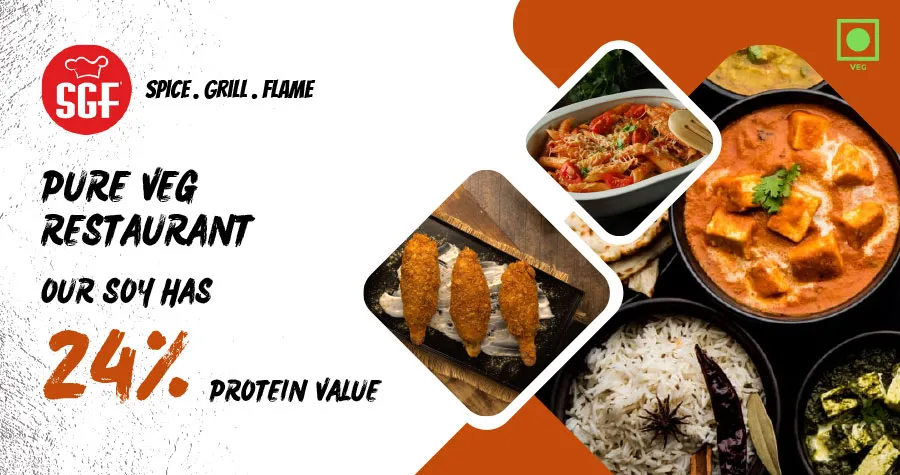
SGF – Spice n Grilled Foods runs a pure vegetarian quick-service format built around North Indian grills and soya-based proteins, a menu position that deliberately avoids competing head-on with the chicken- and meat-led QSR chains dominating most Indian high streets. The customer base is broad by design: families looking for a filling vegetarian meal, individual diners wanting something heartier than a snack-format outlet, and the meat-free segment of India’s population that often finds itself underserved by mainstream fast food menus. Operating since the early 2010s and now present across dozens of outlets nationally, the brand has had enough runway to refine its core soya chaap recipe and grill format to a level of consistency that a newer entrant simply has not had time to test across as many markets. One detail that signals durability here: the franchise model itself only opened up several years after the brand had already been running its own outlets, meaning the systems being licensed to franchisees today were built and corrected on the company’s own capital first, not handed to outside investors as an untested concept.
The Revenue Model in Practice
A SGF unit collects revenue across four channels that don’t behave identically. Dine-in carries the highest average ticket size because customers order combinations, mains plus sides plus a beverage, and tend to spend more per visit than a takeaway customer grabbing a single item. Takeaway moves faster and requires less seating overhead, which matters in a format where area requirements stretch from a compact 250 sq.ft kiosk format to a full 1000 sq.ft dine-in layout. Delivery extends reach well beyond walking distance but routes every order through aggregator commission, shaving a fixed percentage off whatever the menu price would otherwise yield. Catering and bulk orders, common for a vegetarian grill format given its popularity for office lunches and small family events, tend to carry better per-unit economics since prep is batched and delivery logistics are simplified into a single drop rather than many small ones. What the franchisee actually controls is execution: how efficiently the kitchen runs during peak hours, how aggressively local catering relationships are built, and how well staff manage the dine-in versus delivery balance during a single shift. What the brand controls is the menu architecture, pricing tiers, and the centralized kitchen supply that determines how consistent the soya chaap and grilled items taste from one outlet to the next.
Understanding the Investment: What INR 20 Lac – 30 Lac Actually Buys
At this investment tier, the capital outlay covers a noticeably larger physical build than a small kiosk format would require, since the area requirement scales up to 1000 sq.ft for a full dine-in layout. This means a proportionally larger share of the investment goes into interior fit-out, seating, and a grill-equipped kitchen capable of handling both the soya protein preparations and the broader North Indian menu at volume. The brand licence fee buys access to the recipes, the centralized kitchen supply relationship, and the operating manuals that keep quality consistent; training for the franchisee and the initial staff hires is bundled into the opening process, alongside the opening inventory and a working capital cushion to absorb the slower sales weeks typical of any new outlet’s first quarter. Once trading, the monthly cost structure splits into royalty payments to the franchisor, raw material costs tied to soya protein and fresh produce, wages for a staff team of 4 to 12, rent, which carries more weight here given the larger average footprint, and aggregator commissions on whatever share of revenue runs through delivery. Because the format leans toward a larger built-up area than a typical fast food kiosk, rent and utilities represent a comparatively bigger fixed-cost line than they would in a smaller-footprint food brand at a lower investment tier.
Break-Even and Return Timeline
A 9 to 18 month break-even range this wide is driven less by the brand’s systems and more by site-specific variables that differ outlet to outlet. On the controllable side, a franchisee who runs a tight food cost percentage, manages soya and produce wastage carefully, and builds catering or bulk-order relationships early tends to push toward the lower end of the range, since these add revenue without proportionally adding fixed costs. Staffing discipline during the first few months also matters more than it might appear: a kitchen that can’t yet execute the grill menu at full speed during peak hours loses table turns and delivery throughput simultaneously. On the side the franchisee cannot fully control, local rental rates relative to the chosen footprint size, the intensity of nearby QSR or casual dining competition, and how quickly the surrounding catchment recognizes a relatively specialized vegetarian-grill positioning all shape how fast revenue ramps. A franchisee opening in a market with limited existing vegetarian QSR competition typically sees faster customer adoption than one entering a market already saturated with similar positioning, simply because there’s less education needed to convince a first-time customer to try the format.
What the Franchisor Provides and What They Do Not
Before opening, SGF generally supports site evaluation against its own footfall and format criteria, provides the kitchen and interior design specifications matched to the chosen area size, and trains the franchisee’s initial team on recipe execution, particularly the soya chaap preparation that anchors the menu. At launch, the centralized kitchen supply arrangement reduces a significant sourcing burden, since core protein bases and standardized inputs arrive pre-prepared rather than needing to be built from scratch at each location. Ongoing, the brand maintains menu consistency, handles broader marketing at a regional or national level, and continues to refine the menu, as seen in its periodic addition of new items to keep the offering current. What remains the franchisee’s responsibility is everything local: hiring and retaining staff suited to the chosen city, negotiating and renewing the lease, managing daily inventory discipline to control wastage, and building the kind of community presence, including catering relationships, that pushes an outlet from merely operational to genuinely profitable. The centralized kitchen model narrows the operational gap between outlets, but it does not remove the franchisee’s responsibility for the commercial outcome at their specific address.
Financial Risk Factors Specific to This Category
Food spoilage risk is somewhat moderated by the centralized kitchen supplying pre-prepared bases, which reduces the volume of fully raw perishables a franchisee needs to manage on-site, though fresh produce and dairy components still require careful daily handling. Delivery platform dependency remains a structural risk shared across the category: aggregator commissions compress margin on every delivery order regardless of how strong the brand’s own reputation is, and SGF’s model does not eliminate this exposure, only the volume of orders flowing through it is within the franchisee’s influence. Staff turnover is a persistent cost in any QSR format, and with a team of 4 to 12 running a grill-heavy kitchen, losing an experienced cook mid-season can visibly slow service and hurt consistency until a replacement is trained. FSSAI compliance, along with the Eating House License and Fire NOC, is a recurring obligation rather than a one-time hurdle, and a grill-format kitchen in particular draws closer fire-safety scrutiny than a no-flame kiosk would. Lease renegotiation is a sharper risk here than in smaller-footprint food formats, since a larger built-up area means a proportionally larger rent increase if the landlord renegotiates aggressively at renewal, directly threatening a margin structure built around that specific cost assumption.
Who This Investment Suits and Who It Does Not
Franchisees who consistently reach break-even toward the lower end of the range tend to be established small business owners or mid-level corporate professionals with enough capital cushion to absorb a slower opening quarter, hands-on involvement in daily kitchen and floor operations rather than a purely supervisory role, and a willingness to build local catering and bulk-order relationships rather than relying solely on walk-in and delivery traffic. This matches the brand’s own target profile reasonably closely, since both groups typically bring either prior business management discipline or enough financial stability to not panic into damaging cost cuts during a slow stretch. The investor profile that consistently underperforms is the one treating this as a purely passive investment, leasing a large-footprint space and stepping back from daily oversight from the outset; in a format where kitchen execution quality directly drives repeat visits, removing the owner from daily involvement tends to show up as inconsistent food quality and a break-even timeline that drifts toward, or past, the upper end of the estimated range. A SGF – Spice n Grilled Foods franchise rewards an owner who treats the larger footprint as more operational responsibility, not less.
Accepting franchise applications in 34 states & UTs
How much does a SGF - Spice n Grilled Foods franchise cost in India?
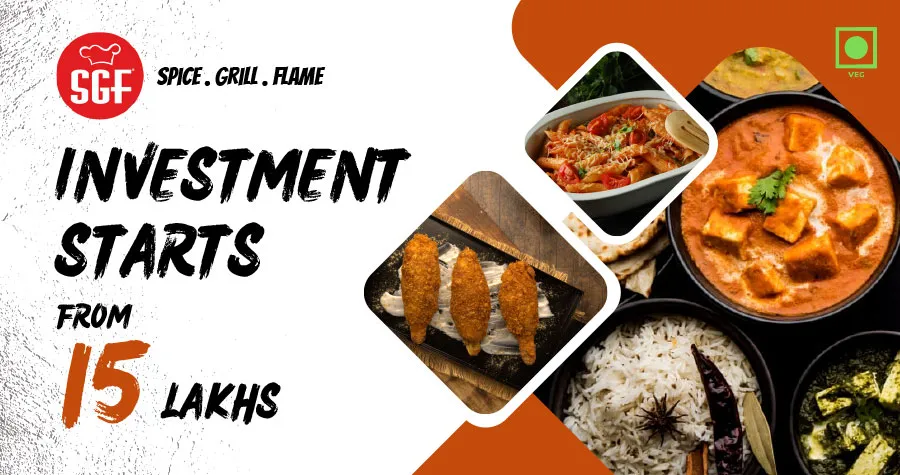
The total investment falls between INR 20 Lac and 30 Lac, covering interior fit-out and kitchen setup, the brand licence fee, initial staff training, opening inventory, and a working capital buffer for the first few months of trading.
What is the expected monthly revenue from a SGF - Spice n Grilled Foods outlet?
Indicative monthly revenue ranges from INR 2.7 Lac to 10.8 Lac, with the figure depending heavily on the chosen footprint size, local competitive density, and how effectively the dine-in, delivery, and catering channels are balanced.
Does SGF - Spice n Grilled Foods provide territory exclusivity to franchisees?
Exclusive territorial rights are generally part of the unit franchise arrangement, though the precise catchment boundaries and any conditions attached should be confirmed directly with the franchisor during the application process.
What licenses are required to open a SGF - Spice n Grilled Foods franchise?
Operating legally requires an FSSAI food licence, an Eating House License from local municipal authorities, and a Fire NOC, with the fire clearance carrying added weight given the grill-based cooking format.
Is prior food business experience required to open a SGF - Spice n Grilled Foods franchise?
It is not strictly mandatory, but the brand's target investor profile of established small business owners and mid-level corporate professionals suggests that prior experience managing staff-heavy, operationally complex businesses meaningfully shortens the learning curve during the opening phase.
Disclaimer: All scores, rankings, and estimates on ForeFind are independently produced editorial assessments using publicly available data and validated brand-submitted information. They are not verified facts, financial advice, or investment recommendations. Full Disclaimer.
