


Voylla Fashions Pvt Ltd Franchise: Store Operations, Daily Management and What Owning This Business Looks Like
A Voylla Fashions Pvt Ltd franchise places its owner inside one of India’s more recognisable fashion jewellery retail networks—a brand that has been building its physical store presence since 2010 and has navigated the operational demands of multi-city retail long enough to have standardised what works. For investors at the mid-high capital tier, the question is not whether consumer demand exists for this category but whether the daily operational reality of running a Voylla Fashions Pvt Ltd store matches what they are prepared to commit to. That operational reality is what this profile addresses.
What Voylla Fashions Pvt Ltd Sells and Who Buys It
The product range spans fashion jewellery for both women and men—earrings, necklaces, bangles, rings, and accessories that draw on traditional Indian craft aesthetics while being designed for contemporary wear. The brand has a position in the market that sits between commodity fashion accessories and precious jewellery, which is a commercially valuable space: the consumer gets the visual impact of crafted jewellery at a price point that allows for frequent purchase and gifting without the financial commitment that fine jewellery demands.
The repeat purchase dynamic in this category is driven by occasion rather than necessity. A customer who buys a pair of earrings for a wedding will return for Diwali gifting, then again when a new collection arrives that coordinates with a new outfit. Voylla’s range depth—spanning traditional motifs alongside contemporary designs—supports this behaviour by giving returning customers genuine newness to discover each visit rather than a static inventory that becomes familiar and loses its draw.
What Happens in a Voylla Fashions Pvt Ltd Store Every Day
Store days follow a rhythm that experienced retail operators recognise quickly. Before opening, display integrity is checked against the previous evening’s close—pieces that have been moved during browsing are reset, gaps from sales are noted, and the POS system is confirmed ready. These pre-opening checks take fifteen to twenty minutes and set the tone for how the floor functions during the trading day.
During trading hours, floor staff manage customer interaction while the franchisee’s role shifts to oversight: monitoring conversion, identifying display gaps as they form, handling any service escalations, and making the small real-time decisions about product placement that affect how browsers become buyers. End-of-day reconciliation is the franchisee’s personal task in most owner-operated stores of this type—it closes the day’s financial record and generates the reorder signals for the following week. A franchisee who treats reconciliation as optional will find inventory accuracy deteriorating faster than expected, which compounds into reordering errors and stockout problems within a few months.
Merchandise Planning, Display and Visual Standards
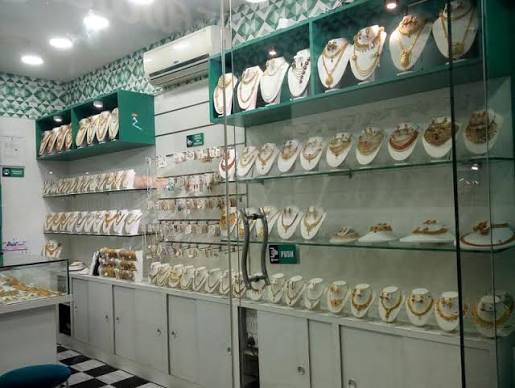
Voylla Fashions Pvt Ltd operates with visual merchandising standards that govern fixture use, product grouping, height and density of display, and how promotional product is positioned relative to core range. These standards exist because store presentation is part of what the consumer associates with the brand—walking into a Voylla store in Pune should feel broadly consistent with walking into one in Lucknow. Compliance with these standards is the franchisee’s operational responsibility, not the brand’s.
New product ranges arrive with seasonal frequency and ahead of major festive windows. Each arrival requires a display transition: incoming stock is assessed, feature positions are reorganised to highlight new product, and older inventory that has not moved is either repositioned for visibility or flagged for markdown in alignment with the brand’s promotional calendar. Franchisees who approach these transitions as a scheduled operational task—rather than an interruption to normal trading—keep their stores looking fresh without disrupting floor function. Slow-moving inventory handled through coordinated promotions rather than unilateral discounting protects margin and maintains pricing consistency across the network.
Staff Requirements and the Hiring Reality
Store staffing sits on a wide range, and where a franchisee lands on that range is determined by floor space, footfall volume, and the trading calendar. A 150 sq.ft. store with moderate weekday traffic can operate with two people; a 400 sq.ft. high street location in wedding season may need six to function without service bottlenecks. Getting this calibration wrong in either direction creates problems—overstaffing compresses margin, understaffing damages the customer experience at exactly the moments when it matters most.
In Tier 2 cities, where Voylla Fashions Pvt Ltd’s expansion is active, experienced fashion retail staff are scarce relative to demand. Most franchisees in this environment hire for personal presentation, communication comfort, and willingness to learn—then invest in product and process training to build the retail skill set. Voylla’s onboarding training provides the foundation, but day-to-day reinforcement of service standards is the franchisee’s ongoing responsibility. Retention is the harder long-term challenge: staff turnover in fashion retail spikes after peak seasons, and franchisees who build team loyalty through performance recognition and visible career development see meaningfully steadier operations than those who manage purely on salary.
Supply Chain, Reordering and Inventory Management
Franchisees order through Voylla’s central supply system, which removes sourcing complexity but also means operating within defined replenishment cycles and minimum order parameters. Understanding these parameters before the store opens is practically important: the temptation during setup is to focus on location and fit-out while treating inventory logistics as a detail to sort later. In practice, reorder lead times and minimum quantities directly affect how much buffer stock a franchisee should carry on fast-moving categories—knowledge that should inform the opening inventory decision, not be discovered after the first stockout.
Managing inventory at the SKU level, rather than by category total or overall store value, is where the operational discipline separates well-performing stores from average ones. A store can be hitting reasonable monthly revenue while simultaneously running out of its three highest-converting products because the franchisee is tracking aggregate numbers rather than individual piece velocity. Voylla’s systems support inventory visibility; acting on that data with timely reorders is the franchisee’s job.
Brand Support: Marketing, Promotions and National Campaigns
National brand activity—digital campaigns, social media presence, influencer partnerships—creates awareness that benefits the entire network without requiring individual franchisee spend. When a potential customer encounters Voylla online and decides to visit a store, that attribution belongs to brand-level marketing. Franchisees benefit from this without funding it directly, which is one of the structural advantages of operating under an established brand rather than building consumer recognition from scratch.
At the local level, however, the franchisee carries more responsibility than many first-time investors expect. Campaign activation in-store—updated window displays, promotional signage, staff briefed on offer mechanics—requires the franchisee to execute in the days before a campaign goes live, not after it has started. Local marketing, such as geo-targeted social posts or community-level promotions, is typically the franchisee’s initiative and budget to manage. High street locations that invest in local outreach around new collection launches tend to generate stronger off-peak traffic than those relying entirely on organic discovery.
Who Runs a Voylla Fashions Pvt Ltd Store Successfully
Fifteen years of franchise operation gives Voylla Fashions Pvt Ltd a clear view of what franchisee behaviours predict store performance. Operators who are physically present during weekend trading and festive periods, who treat each new product arrival as a display exercise rather than a logistics event, and who know their top-selling SKUs without needing to check a report are the ones who push their stores toward the upper end of the revenue range. They also tend to have a genuine feel for their local customer—the specific occasions, aesthetic preferences, and price sensitivities that distinguish their market from a national average.
Investors who delegate complete store management from the first month, before a reliable operational baseline has been established, consistently find that the store underperforms its potential during the period when customer habits are still being built—and that gap is difficult to close once it opens.
Accepting franchise applications in 31 states & UTs
What space is required for a Voylla Fashions Pvt Ltd franchise store?
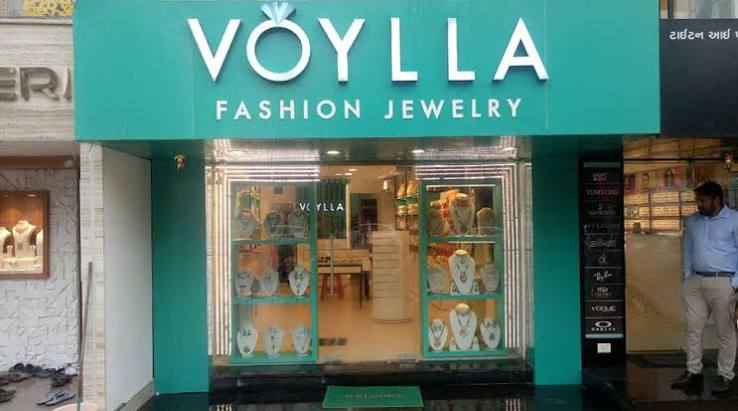
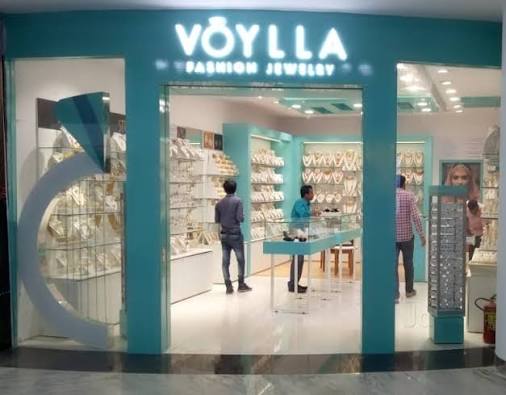
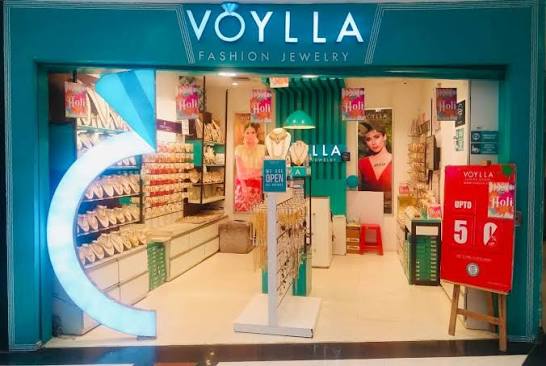
A Voylla Fashions Pvt Ltd franchise store requires between 150 and 400 sq.ft. of retail space. The lower end of that range suits mall kiosk or compact high street formats, while the upper end accommodates a fuller product display and a more comfortable browsing environment. Location approval is part of the brand's onboarding process, and franchisees should confirm space requirements with the brand before signing a lease, as minimum display standards vary by store size.
How long does the setup process take for a Voylla Fashions Pvt Ltd store?
From agreement signing to opening day, setup typically runs between eight and fourteen weeks. The timeline depends on how quickly the location fit-out is completed, when fixtures are installed, and how smoothly the initial inventory is received and merchandised. Delays most commonly occur at the fit-out or municipal licensing stage. Franchisees who line up contractors and license applications before signing tend to open closer to the shorter end of that range.
What product training and retail operations training does Voylla Fashions Pvt Ltd provide?
The brand provides pre-opening training covering product range knowledge, display standards, POS operation, and customer handling protocols. This training is designed for the franchisee and senior store staff rather than the full team, with the expectation that the franchisee cascades day-to-day standards to junior hires. Post-opening, brand visits and audits provide ongoing feedback on standards compliance and operational gaps.
Can a Voylla Fashions Pvt Ltd store be run semi-absentee with a store manager in place?
The model is classified as owner-operated, and that classification reflects operational reality rather than a contractual constraint. A competent store manager can handle daily trading effectively, but decisions about merchandise transitions, reordering, local marketing, and staff performance management require franchisee engagement to be made consistently well. Semi-absentee operation works better after the first twelve to eighteen months, once the store's operational systems are stable and the manager has a clear reference point for standards. Starting semi-absentee from day one is a common source of underperformance in first-year Voylla Fashions Pvt Ltd stores.
How does Voylla Fashions Pvt Ltd support franchisees during festive season demand peaks?
Festive season support typically includes coordinated promotional campaigns with in-store activation materials, advance dispatch of relevant product ranges timed to arrive before peak demand, and visibility into campaign mechanics that allows franchisees to brief staff and prepare displays ahead of the trading window. Franchisees are expected to plan their own stock depth and staffing increases for the festive period, using prior-year sales data and brand guidance to calibrate rather than simply scaling up uniformly across all categories.
Disclaimer: All scores, rankings, and estimates on ForeFind are independently produced editorial assessments using publicly available data and validated brand-submitted information. They are not verified facts, financial advice, or investment recommendations. Full Disclaimer.
