



G-Tec Computer Education Franchise: Running an Education Centre and What Daily Operations Look Like
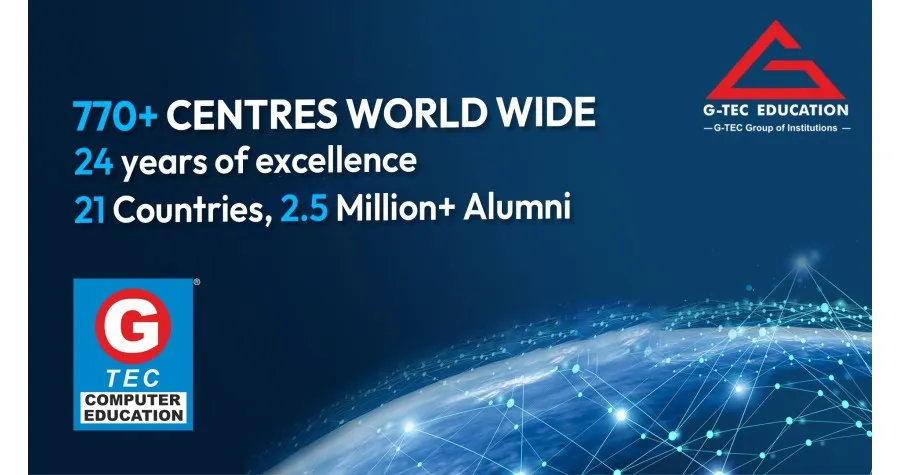
For an investor stepping into the G-Tec Computer Education franchise, the operational reality is straightforward but demanding: this is a centre-based IT training business where the franchisee’s daily involvement directly shapes enrolment, teaching quality, and student outcomes. G-Tec has been operating since 1995 and has expanded across eight countries, which means the systems, curriculum, and accreditation framework a franchisee plugs into have been stress-tested across a very wide range of local market conditions — a meaningful advantage over starting an independent computer institute from scratch.
What G-Tec Computer Education Teaches and Who Attends
The curriculum spans a broad spectrum of IT and computer education: foundational courses in office applications and digital literacy at one end, and professionally accredited programmes — including ethical hacking certifications through EC-Council, British Computer Society qualifications, and BTEC programmes through Edexcel — at the other. NIELIT-affiliated and NIOS-linked courses give students government-recognised credentials, which is a significant factor for families evaluating whether a centre’s certificates will carry weight with employers and institutions.
Students range from school-going children attending after-hours computer classes to working adults pursuing reskilling credentials and young graduates building an IT profile for job applications. The practical implication for a franchisee is that a single centre often runs multiple batch types simultaneously — a morning slot for early learners, afternoon batches for students, and evening sessions for working adults — each requiring instruction calibrated to a different pace and level. A student’s journey typically begins with a counselling conversation, moves through a structured programme of between three and twelve months, and concludes with a certification exam administered through one of G-Tec’s authorised testing partnerships.
Running a G-Tec Computer Education Centre Day to Day
A typical operating week revolves around batch management. Each batch — usually six to fifteen students — needs a scheduled instructor, a functional workstation per student, and a syllabus paced to reach the examination standard within the programme duration. Keeping those three elements aligned across three or four concurrent batches is the franchisee’s core operational task, and it requires more active oversight than it might initially appear. A teacher who falls behind on the syllabus or a cluster of workstations with software issues can disrupt the learning continuity of an entire batch.
Beyond classroom management, the franchisee handles fee collection, enrolment documentation, student attendance records, and periodic reporting to the franchisor. Front-desk administration — answering parent inquiries, scheduling trial sessions for prospective students, issuing course completion certificates — occupies at least one dedicated staff member. The franchisee who tries to absorb all these functions personally quickly finds that the operational load leaves little time for the community outreach that actually drives new admissions.
Student Acquisition: How Parents Find and Choose G-Tec Computer Education
The G-Tec brand carries recognition that a new independent centre cannot replicate quickly — three decades of operations and over a million trained students produce a degree of credibility that parents in many cities already associate with reliable IT certification. That recognition does the initial awareness work, but converting awareness into enrolments in a specific locality still requires the franchisee to be actively present in the community. Distributing materials at nearby schools, building a relationship with college placement cells, and maintaining a visible presence in the neighbourhood through signage and local events are the activities that fill the first batches.
Month one is a reality check for most new franchisees: eight to fifteen enrolments from personal contacts and walk-ins is a realistic starting point, not a failure. By month six, a franchisee who has worked local outreach consistently — following up with inquiries, asking satisfied students for referrals, and maintaining visibility at school notice boards — typically sees enrolment in the 35 to 60 range, which is where monthly revenue begins to comfortably exceed operating costs. The gap between those two figures is bridged almost entirely by the franchisee’s ground-level marketing effort, not by national advertising alone.
Teacher Hiring, Training, and the Retention Challenge
A centre running three to five active batches needs at minimum two instructors: one capable of handling foundational courses and one with the technical depth to teach advanced or certified programmes. In Tier 2 cities, the most productive hiring pool is B.Sc. Computer Science or BCA graduates who have not yet found placement-track employment — candidates who have the subject knowledge and can be trained on G-Tec’s curriculum methodology within a few weeks. Prometric and EC-Council authorised testing partnerships mean that a teacher delivering those certification programmes needs to meet specific competency standards, which narrows the hiring criteria for advanced courses.
Retention is the persistent challenge. A teacher who successfully delivers ethical hacking or BCS programmes is employable in the corporate training market at salaries a small franchise centre cannot always match. Franchisees who build a structured career path within the centre — offering senior instructors a share of batch revenue or a path toward centre co-management — tend to hold capable staff considerably longer than those relying on a fixed monthly salary alone.
Infrastructure, Technology, and Centre Setup
G-Tec centres require between 1,000 and 2,000 square feet, a range that reflects the difference between a single-classroom setup with one batch running at a time and a multi-room configuration capable of running concurrent batches across skill levels. The minimum functional requirement is a computer lab with one workstation per student seat, licensed software for the courses being offered, a projector or teaching display, stable broadband, and a reception or administrative area. Home-based operation is technically possible for small-scale beginners, though the 1,000 square foot minimum makes a dedicated commercial or residential space the practical norm.
The franchisor provides curriculum materials, software licences for the training platform, and branding collateral. Hardware procurement — computers, networking equipment, furniture — is the franchisee’s responsibility, and the condition of the equipment has a direct impact on both the student experience and the centre’s reputation for seriousness. Many franchisees starting at the lower end of the investment range use refurbished but fully functional machines and upgrade progressively as revenue permits.
Ongoing Support After the Centre Opens
After the initial launch period, G-Tec maintains the relationship through curriculum updates, refreshed course materials aligned to current certification requirements, and periodic audits that assess whether a centre is meeting the academic standards expected under the brand’s ISO certification framework. When new accreditations are added — as happened with the BTEC and BCS partnerships — franchisees gain access to those programmes through the existing network relationship rather than having to negotiate their own institutional agreements.
Operational queries — a software licensing issue, an examination scheduling problem, or a dispute about certification processing — are handled through G-Tec’s support structure. The scale of the network, operating across eight countries and 526 centres, means that most operational problems a franchisee encounters have already been resolved somewhere in the system, and the institutional memory of that experience is accessible in a way that an independent centre would simply not have.
Who Runs a G-Tec Computer Education Centre Successfully
The franchisees who consistently build full-capacity centres share a common characteristic: they treat the centre as a community institution, not just a business transaction. A teacher or subject expert who is already known and trusted in the local area converts that credibility into enrolments faster than someone building from cold. Young professionals with a technical background and a family network in the neighbourhood have a similar advantage — the first thirty students often come directly from people who already know the owner. Family-backed investors who treat the first six months as an investment period, absorbing slower enrolment growth without pressure to show immediate returns, tend to reach sustainable capacity before those who need the numbers to work from month two.
The investor who assumes that a nationally recognised brand will generate walk-in enrolment without personal community effort consistently underestimates how much local trust-building the early months actually require.
Accepting franchise applications in 34 states & UTs

Disclaimer: All scores, rankings, and estimates on ForeFind are independently produced editorial assessments using publicly available data and validated brand-submitted information. They are not verified facts, financial advice, or investment recommendations. Full Disclaimer.
