


Monte Carlo Fashions Ltd. Franchise: Market Position, Consumer Demand and Competitive Advantage in Indian Retail
The Monte Carlo Fashions Ltd. franchise represents one of the more structurally coherent retail investment propositions currently available in Indian apparel. Operating under the legacy of Oswal Woolen Mills Limited, a North Indian textile institution, Monte Carlo has spent decades building equity in a segment—premium knitted and blended casual wear—that sits at an interesting intersection of aspiration and accessibility. For an investor evaluating retail formats today, the brand’s trajectory from a regional woolen specialist to a nationally distributed multi-category apparel label tells a story worth understanding in full.
Monte Carlo Fashions Ltd.’s Position in the Indian Retail Landscape
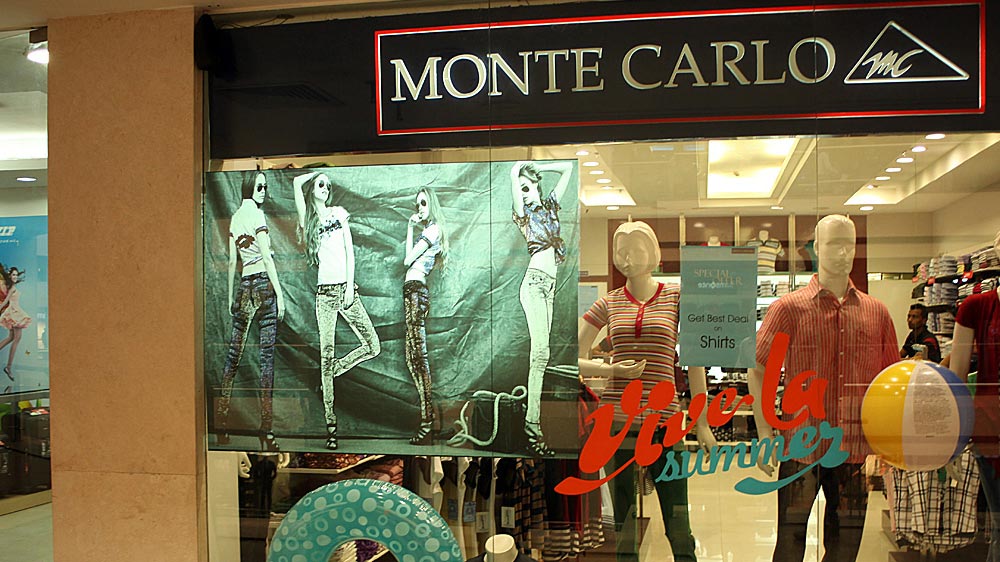
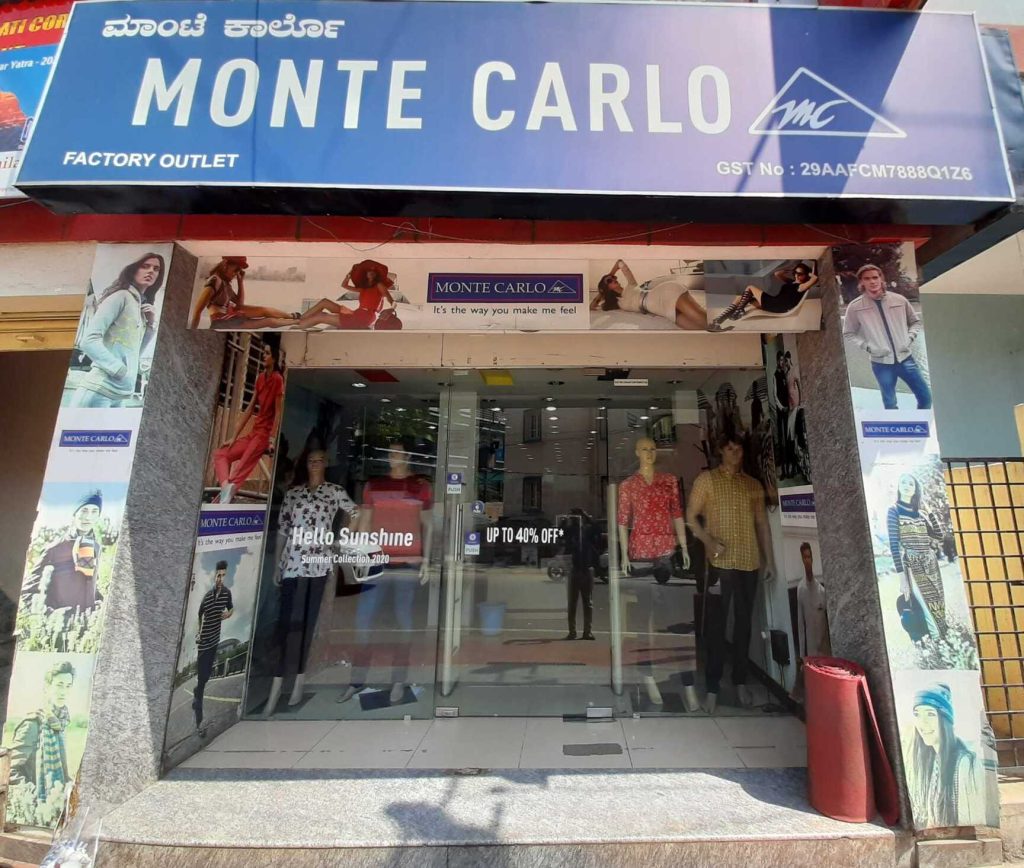
Monte Carlo occupies a well-defined band in the Indian premium casual-wear market—positioned above mass-market fast fashion but priced to remain genuinely accessible for the upper-middle-income household. Its product architecture spans menswear and womenswear across knitwear, linen shirts, denim, trousers, t-shirts, and sportswear, with accessories including belts, ties, and socks completing the range. This breadth matters: the store functions as a full wardrobe destination rather than a single-category pit stop, which drives basket size and repeat visits.
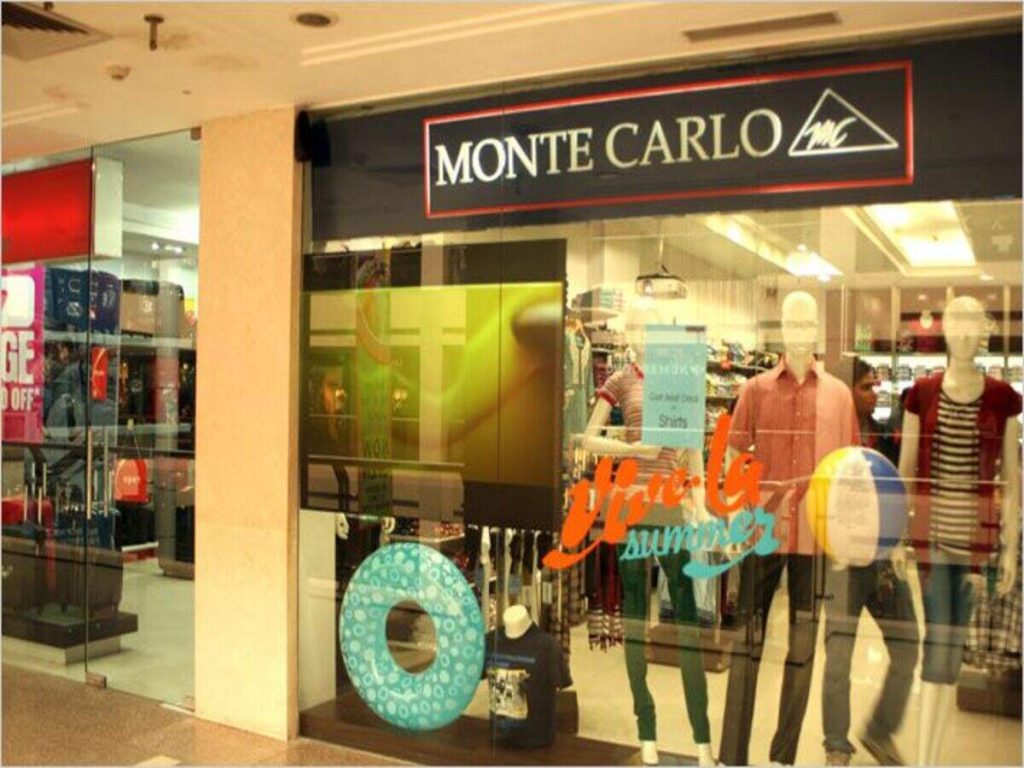
The format itself—Exclusive Brand Outlets anchored in malls and high-street locations, requiring approximately 1,000 sq. ft.—positions Monte Carlo firmly in the organised branded retail tier. The customer being targeted is typically an individual or family unit in the 28–55 age bracket with household income above INR 8 lakh annually, for whom brand recognition, consistent fit, and reliable fabric quality are non-negotiable. The brand’s long association with winterwear gives it strong seasonal recall, though its expanded range means the store has commercial relevance across 12 months rather than only in Q3 and Q4.
The Consumer Demand Case for This Product Category in India
India’s branded apparel sector is riding a structural shift that has been building for over a decade but accelerated sharply after 2020. The movement away from unorganised local tailoring and unbranded garment markets toward branded ready-to-wear retail is now well established across Tier 1 cities—but the more compelling story for a prospective Monte Carlo franchisee is what is happening in Tier 2 and Tier 3 India.
Urbanisation data consistently shows that cities with populations between 5 lakh and 25 lakh are experiencing rising per capita income, expanding working-age cohorts, and increasing penetration of digital media—which in turn generates brand awareness and purchase aspiration even where physical branded retail has historically been sparse. A consumer in Jalandhar, Udaipur, or Bhubaneswar today holds brand preferences shaped by Instagram, e-commerce browsing, and national television in exactly the same way a Delhi or Mumbai consumer did five years earlier. The demand precedes the supply, which is precisely the dynamic that creates franchise opportunity. Monte Carlo’s legacy in Northern India gives it above-average name recognition in markets where newer pan-India brands are still building familiarity.
Demographic tailwinds reinforce this. India’s median age is currently around 28 years, and the bulk of household formation—and thus clothing expenditure growth—is happening in this cohort. Younger consumers are not abandoning branded retail for online-only shopping; they are using digital channels to discover and then transacting in-store for categories where fit, texture, and tactile experience remain important decision factors.
Why a Branded Monte Carlo Fashions Ltd. Store Outperforms Independent Retail in This Category
Consider what an independent apparel retailer in the same location would need to replicate what Monte Carlo delivers structurally. Fabric sourcing at scale with quality controls, in-house product development for seasonal collections, national advertising spend, visual merchandising standards, trained field support, and consumer trust accumulated over decades—none of these are achievable for a standalone operator within a realistic capital envelope. A franchisee effectively acquires access to all of it for an entry cost that a comparable independent setup would exceed just on fitout and inventory alone.
Supply chain pricing power is particularly significant here. Monte Carlo’s manufacturing roots through Oswal Woolen Mills give the brand vertical integration advantages that purely distribution-focused labels cannot match. This translates to margin consistency that an independent retailer sourcing through wholesale intermediaries simply cannot replicate, especially in fabric-intensive product lines like knitwear and linen. The brand’s R&D and design infrastructure also means the product range refreshes with genuine seasonal direction, keeping the store’s visual appeal current without the franchisee needing to make individual sourcing bets.
National marketing campaigns—across television, digital, and outdoor—generate consumer footfall that benefits every EBO in the network simultaneously. An independent retailer funding its own marketing would exhaust a significant portion of gross margin to generate comparable awareness within even a single city catchment.
Geographic Opportunity and Where Monte Carlo Fashions Ltd. Is Expanding
With 214 operational franchise locations and a network that has been growing at roughly 35 new units annually over the past six years, the geographic footprint is substantial but far from saturated. The brand has concentrated density in Northern and Western India, where its heritage recognition is strongest. Southern and Eastern India represent the clearest expansion corridors—markets where the brand has below-average penetration relative to the consumer base that would respond positively to its positioning.
Within those broad geographies, the most active demand for new territory appears to exist in mid-tier cities with developed retail infrastructure but limited branded apparel representation. Locations with functional malls, active high-street corridors, and catchment populations above 8–10 lakh are the profile where a new store is most likely to achieve full commercial velocity within its first operating year. Territory allocation decisions are made at the brand level, and prospective franchisees should expect a structured process involving site assessment, catchment analysis, and competitive mapping before approval is granted. This discipline protects existing franchisees from cannibalisation while creating a credible framework for the investor evaluating exclusivity terms.
E-Commerce, Quick Commerce, and the Threat to Physical Retail
The competitive threat from e-commerce to branded apparel retail is real, but its severity is unevenly distributed across product types and price points. For Monte Carlo’s core range—structured knitwear, linen and blended fabric shirts, tailored trousers—the in-store experience provides functional value that an online transaction cannot fully replicate. Consumers buying at this price point want to assess drape, verify colour accuracy, confirm fit across their specific body type, and often want to wear a garment within days rather than wait for delivery. These are not irrational preferences; they represent a genuine informational gap that digital channels have not closed.
Monte Carlo’s integration of its brand presence across physical and digital channels means the franchise store is not positioned as a competitor to e-commerce but as a complementary touchpoint. Consumers who discover the brand online frequently complete their first purchase in-store, and in-store buyers become repeat digital purchasers for replenishment items. For the franchisee, this omnichannel dynamic increases the store’s role as a brand experience venue, which justifies the location quality and footfall-dependent format that the EBO model demands. Quick commerce, which has disrupted grocery and everyday essentials, has limited structural application in the premium apparel category where neither delivery speed nor price convenience is the primary purchase driver.
Competitive Differentiation: Why Consumers Choose Monte Carlo Fashions Ltd.
Monte Carlo’s differentiation is anchored in something that newer apparel brands consistently struggle to manufacture: fabric credibility. The brand’s origin in woolen mills gives it a technical heritage in natural and blended fibre construction that translates into a consumer perception of quality that holds across product lines beyond its original knitwear range. When a Monte Carlo shirt commands a premium over a less-established label at an equivalent price point, that premium is being paid for an implicit quality guarantee built over decades—not a marketing claim made in the current season.
This translates practically into lower in-store return rates, stronger repeat purchase behaviour, and word-of-mouth referral dynamics that reduce the franchisee’s dependence on walk-in traffic alone. The brand’s depth in menswear in particular—covering everything from casual t-shirts to formal trousers—means a loyal male customer can meet multiple wardrobe needs at a single store visit, which is a tangible competitive advantage over single-category competitors and over multi-brand retailers where the same consumer faces an overwhelming selection without a consistent quality filter.
Who Builds a Profitable Monte Carlo Fashions Ltd. Store
Capital is necessary but not the defining variable. The franchisees who generate consistently strong performance from Monte Carlo stores tend to share a specific operational profile: they are personally engaged with local consumer behaviour, actively involved in how merchandise is displayed and what inventory is prioritised for their specific catchment, and they approach the business with the kind of continuous attention that apparel retail requires.
A senior professional or experienced entrepreneur who treats the franchise as a passive investment—hiring a manager and reviewing numbers monthly—is likely to underperform relative to someone with genuine interest in the category who spends time on the floor, understands their customer’s preferences by season and occasion, and builds relationships with repeat buyers. Fashion retail rewards those who read their local market rather than relying entirely on brand-level merchandising guidance. The franchisor provides the framework; the franchisee provides the local intelligence that determines whether that framework is executed at its ceiling or its floor. Family businesses diversifying into organised retail have proven to be particularly effective operators in this format, given the combination of owner-level engagement, available capital, and established local commercial networks.
Accepting franchise applications in 33 states & UTs
How does Monte Carlo Fashions Ltd. compare to other retail franchises in this investment range?
Within the INR 30–50 lakh investment band, branded apparel franchises vary considerably in what they deliver. Monte Carlo's differentiator at this tier is the combination of a heritage manufacturing background, a multi-category product range with genuine depth in menswear and womenswear, and a network large enough to have demonstrated commercial viability across diverse Indian markets. Brands at this investment level without manufacturing integration tend to carry higher product cost structures, which compresses franchisee margins. Monte Carlo's vertical origins provide a degree of margin protection that pure-play distribution brands cannot match.
Is a Monte Carlo Fashions Ltd. store viable in Tier 2 and Tier 3 Indian cities?
Yes, and this is arguably where the most compelling opportunity currently exists. The brand's North Indian heritage gives it recognition in markets like Ludhiana, Amritsar, Kanpur, and Jaipur that a newer or metro-centric brand would take years to build. In Southern and Eastern Tier 2 cities where Monte Carlo has lighter penetration, the entry proposition is more of a market-making exercise—viable for investors with strong local retail networks who can drive initial traffic—but the brand's mass-market television presence provides a foundation of awareness even in markets where physical stores have historically been absent.
How does Monte Carlo Fashions Ltd. handle competition from e-commerce in this product category?
The brand maintains a digital retail presence that serves as a complementary channel rather than a channel in competition with the EBO network. For the franchise store, online visibility acts as a discovery tool that directs consumers toward physical locations for higher-consideration purchases. The product category—blended fabric apparel, structured knitwear, formal and semi-formal wear—has inherent characteristics that make in-store evaluation important for first-time buyers, which protects the physical format's role in the purchase journey. Franchisees benefit from online brand activity driving store visits without bearing the cost of that digital spend.
What is Monte Carlo Fashions Ltd.'s national marketing strategy and how does it benefit franchisees?
Monte Carlo invests in national advertising across television, digital, and outdoor channels, with campaigns timed to key retail seasons—particularly the pre-winter and festive periods that are the highest-revenue windows for the product category. This spend generates category awareness and brand recall at a scale that the individual franchisee could not fund independently. Store-level marketing support—including site-specific display materials, launch campaign assistance, and ongoing trade marketing tools—translates national brand investment into local footfall, which is the core financial benefit of franchising over independent retail operation.
What is the Monte Carlo Fashions Ltd. store expansion plan for the next two years?
Based on the brand's historical growth rate of approximately 35 new units per year, the network is on a trajectory to cross 280 locations within a two-year horizon. The expansion focus, based on current geographic distribution, appears weighted toward markets in Southern and Eastern India where the brand has fewer stores relative to its consumer potential. Investors in these regions who approach the brand early in its local expansion cycle are likely to access territory with the least competitive congestion within the network. Specific expansion plans and available territories are confirmed through the brand's franchisee development process. This brand profile is prepared for investment evaluation purposes. Financial projections referenced are indicative and based on category benchmarks; individual store performance depends on location, franchisee engagement, and local market conditions. Prospective investors should conduct independent due diligence and request audited disclosure from the franchisor before committing capital to a Monte Carlo Fashions Ltd. franchise or any other retail franchise opportunity.
Disclaimer: All scores, rankings, and estimates on ForeFind are independently produced editorial assessments using publicly available data and validated brand-submitted information. They are not verified facts, financial advice, or investment recommendations. Full Disclaimer.
