



Khilonewala Library Franchise: How the Business Works and What to Expect as an Owner
What Khilonewala Library Is and How It Got Here
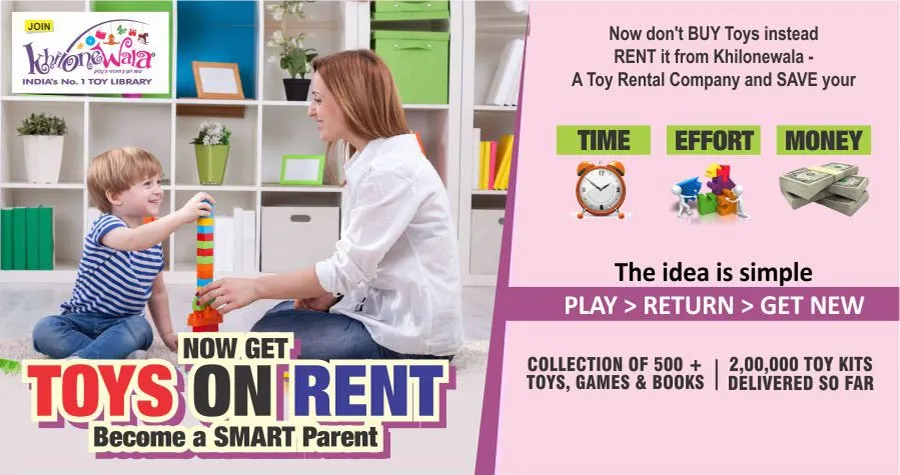
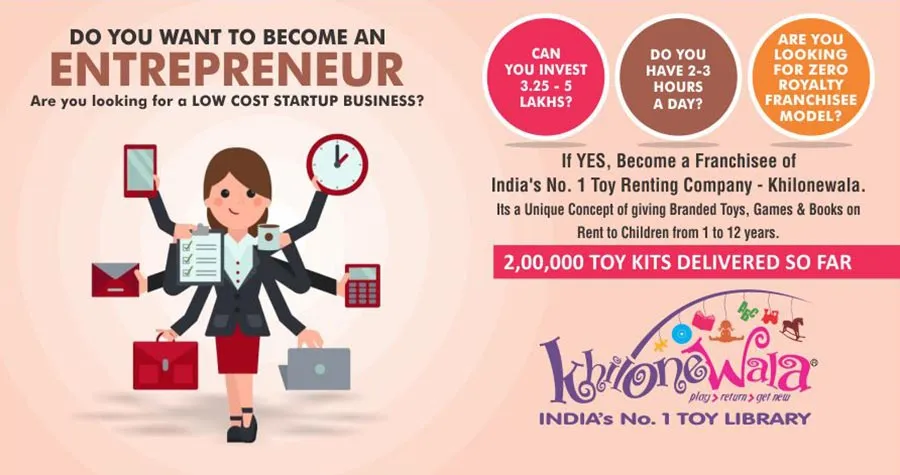
Khilonewala started in Indore in 2011 as a toy lending library — a format with almost no organised precedent in India at the time. The founding proposition was straightforward: rather than buying toys that children outgrow within months, families could pay a membership or per-rental fee to access a rotating collection of age-appropriate toys, games, and books for children from one to twelve years old. What began as a single-location experiment has grown into a franchise network of between 50 and 100 units operating across India, with an average of nearly six new outlets added per year over the last 13 years. A Khilonewala Library franchise today operates from a compact 100 to 150 square foot commercial space — small enough to fit within a residential colony market, a school campus, or a family-oriented retail complex — stocking a curated selection from a catalogue of over 50 national and international toy brands available for subscription-based rental. The format has not fundamentally changed from its original concept: the business model remains a membership and rental service rather than a retail sales operation.
A Franchisee’s Typical Operating Day
The daily rhythm of a Khilonewala Library franchise is built around two activities: managing toy returns and issuing new rentals. When a member returns a toy, the franchisee or staff member inspects it for damage, logs the return against the member’s account, cleans the item, and restocks it for the next rental. Outgoing rentals involve helping members — usually parents accompanied by children — select appropriate toys from the available collection, recording the loan against the membership, and packaging items for take-home. Peak periods are weekends and post-school hours on weekdays, when families browse and exchange. The franchisee’s personal time during trading hours is concentrated on member engagement: understanding which age groups are active in the membership base, suggesting new categories to regular customers, managing overdue returns, and handling membership renewals. Administrative work — stock inventory, member account management, and replenishment orders to the franchisor — fills the quieter morning hours. Unlike retail, there is no point-of-sale transaction for every customer interaction; the business is a membership model, so daily activity is relationship management more than transaction processing.
The Toy Collection, Inventory Management, and Supply Chain
The product supply chain for a Khilonewala Library franchise runs through the franchisor’s central catalogue and distribution system. Franchisees do not source toys independently — the collection is supplied by Khilonewala, which maintains relationships with the 50-plus national and international brands in the rental library. This is operationally significant: it removes the sourcing burden from the franchisee and ensures the collection reflects the brand’s quality and age-appropriateness standards rather than local market availability. Inventory management in a rental business is categorically different from retail: the stock does not deplete through sale but degrades through use, which means the franchisee’s ongoing cost is not replenishment of sold items but maintenance, replacement of damaged units, and periodic refresh of the collection to keep it current. The franchise support structure includes access to the online catalogue, which allows members to browse and reserve items — a feature that reduces the walk-in-to-checkout friction and makes the small physical space more effective than its square footage alone would suggest.
Location: What Works and What Limits the Business
For a toy library franchise operating out of 100 to 150 square feet, footfall is not the primary location driver — membership density is. The relevant question is not how many people walk past the outlet per day, but how many families with children aged one to twelve live within a five to ten minute reach. Residential colony markets, school-adjacent commercial strips, and family-oriented apartment complex ground floors consistently outperform high-street commercial locations in this format because the catchment is more precisely matched to the customer profile. A location with 500 family households within walking distance is more valuable than one with ten times the footfall but fewer children. The compact space requirement makes the format financially accessible in catchment-appropriate locations that a larger retail format could not afford. What limits a Khilonewala Library location is not competitor toy libraries — the organised rental library segment remains thin across most Indian cities — but rather demographic mismatch: a location surrounded by offices, commercial establishments, or an older residential demographic without young families generates insufficient membership demand regardless of visibility.
Staff: Roles, Hiring, and the Knowledge Dimension
A Khilonewala Library franchise runs with two to eight staff, though most units at the 100 to 150 square foot scale operate with one to two people during standard hours and add support during peak weekend periods. The role is not technically complex — toy inspection, rental logging, and member assistance — but it requires genuine warmth and child-friendliness, since the in-store experience of a child selecting a toy is the moment that determines whether a family renews their membership. In Tier 2 cities, candidates with childcare, teaching, or customer service backgrounds are well-suited and accessible at appropriate salary levels. Staff turnover in this format is typically lower than in food service because the work environment is pleasant and the hours are predictable. The franchisor provides training on the operational systems, catalogue navigation, and member management — which reduces onboarding time for new hires and maintains consistency across the network.
What the Franchisor Handles So You Do Not Have To
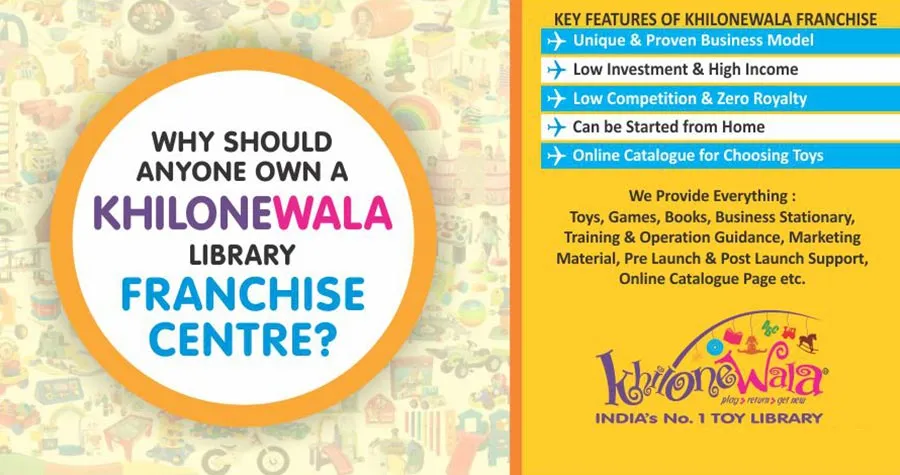
Khilonewala’s franchise structure removes several operational burdens that would otherwise fall on the franchisee. Toy sourcing, brand relationships, and catalogue curation are managed centrally — the franchisee does not negotiate with suppliers or decide which toy brands to stock. Marketing materials, the online catalogue, and business development support are provided as part of the franchise package. The zero-royalty structure — if confirmed in the franchise agreement — eliminates the ongoing percentage-of-revenue fee that most franchise models charge, which changes the monthly cost structure materially in the franchisee’s favour. Pre-launch, launch, and post-launch support means the franchisee has a structured onboarding process rather than a self-directed setup. What the franchisee manages independently is the local membership acquisition — identifying and reaching the families in their catchment through community engagement, school partnerships, and residential society outreach — and the day-to-day member relationship management that determines renewal rates. The franchisor’s systems and catalogue create the product; the franchisee’s community presence creates the customer base.
Who Runs a Khilonewala Library Franchise Successfully
The franchisee who builds a stable, renewing membership base within the first year is typically someone embedded in their local family community — a parent themselves, someone with school or childcare connections, or a first-time business owner with strong neighbourhood relationships who can seed the initial membership through personal outreach. The business runs on repeat: a member who renews their subscription every three or six months is the unit of value, and renewal rates are determined almost entirely by the quality of the relationship the franchisee maintains with that member’s family. Daily physical presence matters in this model — not because the operations are complex, but because the franchisee’s personal engagement with children selecting toys and parents discussing developmental stages is what makes members feel they are dealing with a service rather than a transaction. Franchisees who treat the outlet as a passive commercial asset, managed by a hired attendant with no personal relationship investment in the membership base, consistently see renewal rates erode and membership growth stall within the first six to twelve months of operation.
Accepting franchise applications in 35 states & UTs
Disclaimer: All scores, rankings, and estimates on ForeFind are independently produced editorial assessments using publicly available data and validated brand-submitted information. They are not verified facts, financial advice, or investment recommendations. Full Disclaimer.
