



RIFS Industries Franchise: Store Operations, Daily Management and What Owning This Business Looks Like
What RIFS Industries Sells and Who Buys It
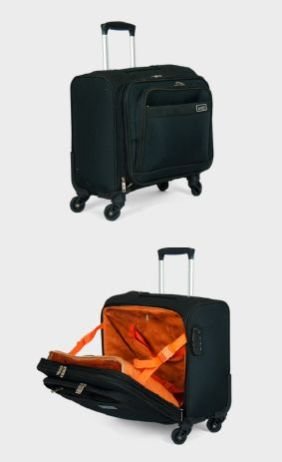
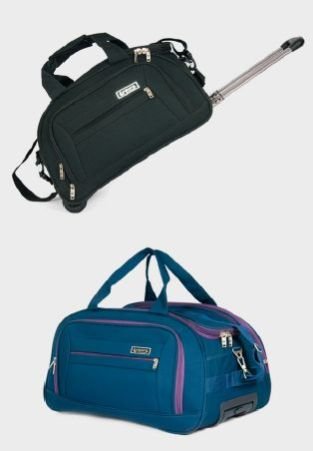
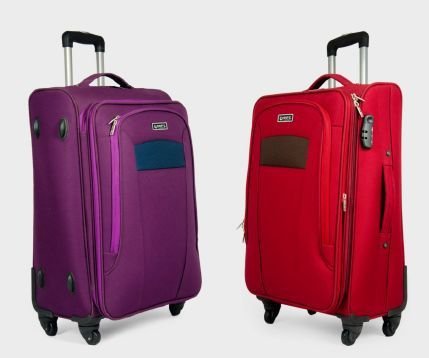
RIFS Industries franchise operates in the luggage and travel bag retail category, with a manufacturing base in Ahmedabad and a product identity built around spinner trolley bags — the four-wheel hard and soft luggage format that has become the dominant preference among Indian travellers over the past decade. The product range extends across cabin bags, check-in luggage, backpacks, and travel accessories, serving a consumer base that spans first-time flyers, frequent business travellers, family vacation purchasers, and students heading to college or abroad.
Repeat purchase in this category is driven by a combination of upgrade behavior and gifting occasions. Luggage wears over time — wheels degrade, zippers fail, shells crack — creating a replacement cycle that brings customers back every three to five years for their primary bags. Gifting drives a parallel demand pattern: luggage sets are among the most common wedding, graduation, and farewell gifts in Indian households, which means the store sees demand spikes that are predictable and plannable rather than random. A franchisee who understands both the replacement and gifting dimensions of their local consumer base manages inventory and floor display accordingly.
What Happens in a RIFS Industries Store Every Day
The store’s daily rhythm begins before the first customer arrives. Opening procedures involve verifying overnight security, preparing the floor for the day’s trading — checking that display bags are correctly positioned and that price tags are visible — and confirming stock levels for fast-moving sizes that may need replenishment from the back room. A store running two to six staff typically opens with one floor associate and a senior staff member or the franchisee, with additional staff arriving for the mid-morning and evening peak periods.
During trading hours, the franchisee or senior staff manages the floor rather than the stockroom. Customer interactions in luggage retail often require demonstration — opening bags, extending handles, showing compartment layouts — which means floor presence and product knowledge are the direct drivers of conversion. Walk-in browsers who receive an attentive, knowledgeable demonstration convert at meaningfully higher rates than those who self-navigate a poorly attended floor. POS reconciliation at closing confirms the day’s sales against cash and digital payments, flags any discrepancies, and updates the stock tracking system to trigger reorder alerts for items that have reached minimum inventory thresholds.
Merchandise Planning, Display and Visual Standards
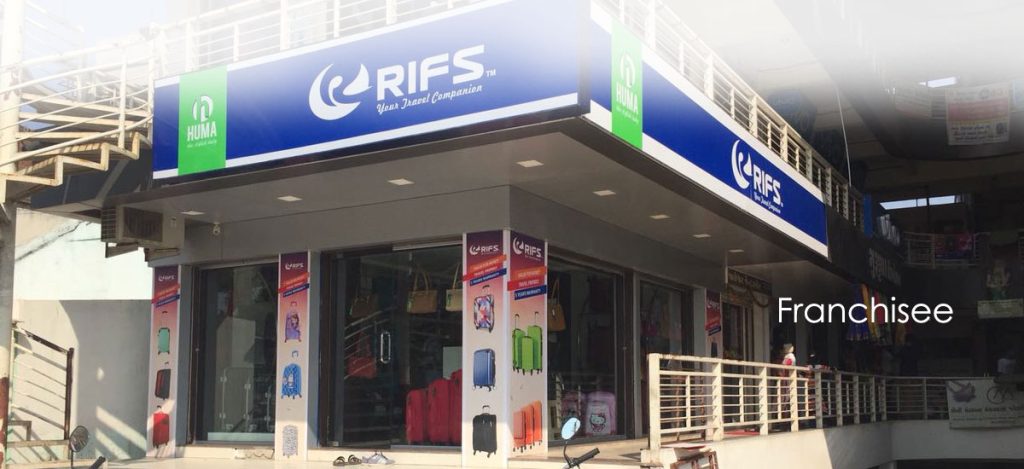
Visual merchandising in luggage retail is both a brand requirement and a commercial tool. RIFS Industries provides franchisees with display guidelines that establish how product should be organized — by size tier, by colour family, by price point — to guide the customer’s eye from entry to conversion. A well-executed display does the early selling work before a staff member engages the customer: the customer self-identifies the category they want, and the staff member’s role becomes advisory rather than directional.
New product ranges arrive seasonally, and the franchisee’s responsibility is to rotate displays promptly to ensure the current range is front-facing. Slow-moving inventory — styles or sizes that have not turned in 60 to 90 days — typically benefit from repositioning to a more prominent location or integration into a bundled offer rather than remaining in a secondary display position where they accumulate unnoticed. The brand’s field assistance infrastructure supports franchisees in identifying these merchandise decisions rather than leaving them to individual intuition. Consistent brand presentation across the 100-outlet network is what allows RIFS Industries to run national marketing campaigns that drive consumers to stores with a predictable experience.
Staff Requirements and the Hiring Reality
Running a RIFS Industries store requires two to six staff, and the composition matters more than the number. In a Tier 2 city where experienced branded retail staff are genuinely scarce, the franchisee who hires for attitude and trains for product knowledge builds a more reliable team than one who holds out for prior luggage retail experience that may not exist locally. A floor associate who is naturally curious, communicates well, and learns product features quickly will outperform an experienced but disengaged hire within two months of consistent training.
Retention in this tier of retail is often about schedule predictability and recognition rather than salary alone. Staff who are given clear opening and closing responsibilities, learn the full product range, and see their individual contribution to daily sales acknowledged tend to stay longer than those managed purely through oversight. The franchisee who builds a small, stable, motivated team of two to three core staff — supplemented by a part-time hire for weekend and festive peaks — operates more consistently than one cycling through high turnover.
Supply Chain, Reordering and Inventory Management
RIFS Industries manufactures from its Ahmedabad base, which means franchisees are sourcing from a domestic supply chain rather than depending on import timelines or third-party wholesalers. This structural advantage reduces the lead time uncertainty that affects franchise networks sourcing from international suppliers, and it allows reordering to respond more quickly to unexpected demand spikes — particularly during pre-festive and wedding season periods when luggage sales accelerate sharply.
Reordering typically operates against minimum stock thresholds — the franchisee or their designated store manager places replenishment orders when key SKUs fall below a defined unit count. The most commercially important discipline is identifying fast-moving sizes and styles accurately in the first three months of trading, since the store’s opening inventory plan is necessarily based on general category data rather than location-specific demand patterns. Franchisees who track their own weekly sales data from day one build a reorder model calibrated to their specific customer base, which reduces both stockout risk and the working capital tied up in slow-moving inventory.
Brand Support: Marketing, Promotions and National Campaigns
RIFS Industries provides marketing and advertising support to franchisees through materials, promotional frameworks, and field assistance — the specific mix confirmed during onboarding. At the store level, marketing support typically includes branded point-of-sale materials, seasonal campaign collateral for festive promotions, and guidance on activating national offers locally. The franchisee contributes to local visibility through their own channels: social media presence tied to the store location, participation in mall promotional events where applicable, and community outreach that introduces the brand to local consumer networks who may not yet be aware of the outlet.
Festive season — Dussehra through Diwali, followed by Christmas and New Year — represents the highest-demand window in the luggage retail calendar, and the most commercially productive franchisees prepare for it rather than reacting to it. This means building up inventory depth in the gifting-appropriate size tiers three to four weeks before the peak, briefing staff on the promotional offers running that season, and ensuring floor displays are refreshed to front the most giftable product range. Franchisees who execute this preparation consistently capture a disproportionate share of their market’s festive travel and gifting demand.
Who Runs a RIFS Industries Store Successfully
The franchisee who consistently builds a productive RIFS Industries outlet is personally present during peak trading hours — weekends, evenings, and festive periods — treats merchandise rotation as a non-negotiable weekly discipline rather than an occasional activity, and maintains a genuine understanding of which customer types and occasions drive their specific store’s sales patterns. Small business owners who enjoy direct consumer interaction, career changers from retail or consumer goods backgrounds, and graduate entrepreneurs with the energy to manage a floor-level business rather than a remote investment all fit the profile that generates strong early-stage performance. Investors who delegate all store management from day one consistently struggle because luggage retail requires frontline product knowledge and customer engagement that an untrained and unsupported manager cannot replicate without the franchisee’s direct involvement in the early months of building the team’s capability.
Accepting franchise applications in 32 states & UTs
Are you an enterprising individual ready to embark on an adventure?
Do you possess a proven track record in a related business? That's a definite advantage!
Disclaimer: All scores, rankings, and estimates on ForeFind are independently produced editorial assessments using publicly available data and validated brand-submitted information. They are not verified facts, financial advice, or investment recommendations. Full Disclaimer.
