


Bhagyashree Engineering Industries Franchise: Workshop Investment, Revenue Per Vehicle and Return Timeline
About Bhagyashree Engineering Industries
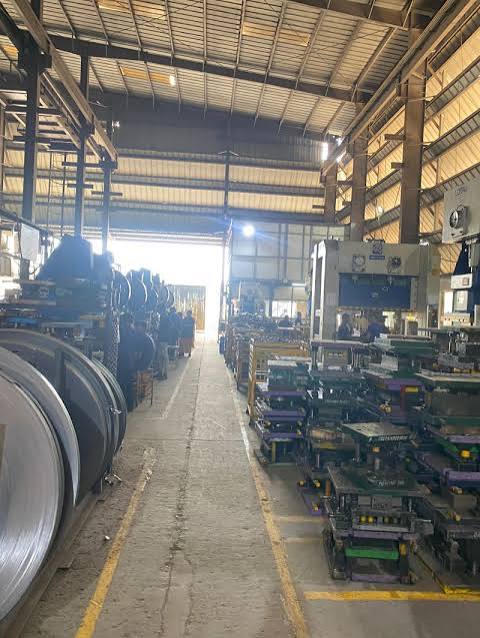
Bhagyashree Engineering Industries is an ISO-certified manufacturer and distributor of automotive spare parts spanning two-wheelers, three-wheelers, and four-wheelers — a cross-segment coverage that gives its franchise network access to virtually the entire Indian vehicle ownership base as a potential customer. Founded in 2000 and franchising for a quarter century, the brand’s manufacturing origin distinguishes it from trading-house distributors: parts are produced against OE specifications with quality control processes running from raw material procurement through to finished-product inspection and packaging. For a franchisee, this manufacturing provenance translates into a supply chain where parts authenticity is traceable rather than assumed. The structural demand driver underpinning this franchise category is India’s on-road vehicle base, which has crossed 340 million registered units and continues to grow. Each of those vehicles generates predictable, recurring parts consumption — filters, brake components, engine parts, transmission components — that does not contract meaningfully even when consumer discretionary spending softens.
Revenue Per Vehicle and Daily Throughput Economics
A multi-segment automotive parts franchise generates revenue through transaction volume across a diverse customer mix rather than a single high-value service job. On the retail side, individual vehicle owners purchasing replacement components generate transactions ranging from INR 200 for a filter to INR 3,000–8,000 for a brake assembly or engine component set. On the B2B side, workshop operators sourcing parts for multiple jobs in a single order generate INR 2,000–15,000 per transaction, with the value varying by the complexity of work they have scheduled that day.
A well-run Bhagyashree Engineering Industries outlet in an established phase handles fifteen to thirty customer interactions per day across both channels. The revenue arithmetic of that throughput, applied to a parts margin structure in the 18%–28% gross range typical for manufacturer-linked auto parts distribution, produces monthly gross margin that must cover staff costs, rent, and operating expenses while building toward the franchisor’s estimated break-even timeline. The B2B channel is the more important of the two for financial stability: a workshop client who purchases three times per week generates as much annual revenue as thirty casual retail buyers, while requiring a fraction of the counter time and customer acquisition effort to maintain.
Investment Breakdown: Equipment, Setup, and Working Capital
Allocating INR 20 lakh to 30 lakh across the setup requirements of a Bhagyashree Engineering Industries franchise demands careful sequencing. The largest single cost component is opening parts inventory — stocking sufficient depth across two-wheeler, three-wheeler, and four-wheeler fast-moving categories to fulfil same-day requests from workshop clients without back-ordering delays. This inventory investment is not sunk cost; it converts to revenue as stock turns, but the initial outlay must be sized to the local vehicle mix and the workshop client base the franchisee expects to serve in the first operating quarter.
The remaining investment covers commercial premises fit-out — racking, display, counter, signage, and point-of-sale infrastructure for the outlet’s commercial high-street location — plus the brand licence, onboarding training, and a working capital buffer. Monthly fixed costs after opening are anchored by staff wages for a three-to-eight person team, premises rent, GST filing costs, and ongoing stock replenishment. At the mid-high investment tier, the outlet’s fixed cost base is meaningfully higher than a low-investment format, which is why the nine-to-eighteen month break-even estimate requires consistent B2B account development from the first operating month rather than relying on retail walk-in alone to build toward profitability.
The AMC and Repeat Business Model
In the auto parts distribution category, recurring revenue is built through workshop supply relationships rather than vehicle-level maintenance contracts. A garage or service centre that designates a Bhagyashree Engineering Industries outlet as its primary parts source — placing orders multiple times per week across the two-wheeler and four-wheeler categories it services — is functionally equivalent to an AMC customer in the repeat revenue it generates. The relationship’s stickiness derives from operational dependency: once a workshop’s technicians are comfortable with a supplier’s parts identification process, pricing structure, and delivery reliability, the cost of switching to a different supplier mid-month disrupts their job scheduling in ways that no marginal price saving justifies.
Franchisees who formalise these relationships through preferred-supplier arrangements — committing to stock depth and pricing consistency in exchange for the workshop’s regular purchasing commitment — convert the informal repeat purchase pattern into a documented revenue floor. Building twenty such workshop accounts in the first operating year establishes a monthly recurring revenue base that provides meaningful financial stability regardless of week-to-week retail walk-in variability. The retail channel then functions as margin upside rather than a survival necessity, which is the financial position that allows a franchisee to manage the seasonal demand cycles the automotive category is subject to without operational stress.
Break-Even and What Drives the Timeline
The nine-to-eighteen month break-even range reflects two distinct operating trajectories that a potential franchisee can predict with reasonable accuracy before they open. Franchisees who begin operations with pre-existing relationships in the local vehicle service trade — a background in dealership parts management, a network of workshop operator contacts from a prior role, or family connections in the automotive business — typically build their B2B account base within the first sixty to ninety days and approach break-even at the shorter end of the estimate. Those starting without those relationships face a prospecting timeline of three to six months before workshop accounts begin generating reliable weekly orders, pushing the break-even toward the longer end.
Beyond B2B account development, three operational variables determine the trajectory: daily transaction count, average order value per B2B interaction, and the inventory fill rate on first-time requests from workshop clients. That last variable is particularly important and often underestimated: a workshop that asks for a part and is told it needs to be ordered loses confidence in the outlet’s usefulness as a same-day sourcing point, and may not return for the next requirement. Maintaining adequate stock depth in the most frequently requested categories across the local vehicle mix is the operational discipline that determines whether B2B relationships deepen or erode in the critical first quarter.
Regulatory Compliance and Authorization Requirements
Operating a Bhagyashree Engineering Industries franchise requires a Trade Licence from the relevant local municipal authority and GST registration — both standard commercial compliance requirements that the franchisee manages through their local administrative and accounting relationships. For a parts distribution business at this investment level, GST compliance involves monthly return filing across multiple tax rate categories, as automotive components carry different GST rates depending on vehicle type and component classification. Engaging a chartered accountant from the first month of operations is a practical necessity rather than a discretionary expense.
The franchisor’s role in the compliance framework centres on parts supply authorisation — the documentation and quality certification that establishes the outlet as a legitimate distribution channel for ISO-compliant manufactured components. This authorisation underpins the quality assurance conversation with institutional B2B buyers, many of whom require supplier documentation before committing to a preferred-supplier arrangement. Franchisees who maintain sourcing discipline through authorised channels preserve both their compliance position and the manufacturing quality standard that the brand’s ISO certification represents.
Who This Automotive Investment Suits
The investor profile that consistently builds profitable returns from a Bhagyashree Engineering Industries franchise combines two characteristics: capital resilience sufficient to sustain the nine-to-eighteen month break-even timeline without revenue pressure distorting operational decisions, and genuine familiarity with the automotive trade that accelerates B2B relationship development. Established small business owners from adjacent sectors — vehicle accessories retail, workshop equipment supply, automotive insurance — bring commercial networks that convert to parts purchasing accounts faster than a cold-start investor without those connections. Mid-level corporate professionals from automotive OEM, dealership, or logistics backgrounds bring supply chain understanding and institutional credibility that workshops respond to in initial supplier conversations.
Investors without any prior connection to the local vehicle owner or workshop community consistently struggle to build the daily transaction volume needed to sustain a mid-high investment parts franchise through its first operating year, because parts distribution at this level is a relationship business where trust compounds slowly and erodes quickly from a single reliability failure.
Accepting franchise applications in 32 states & UTs
How much does a Bhagyashree Engineering Industries franchise cost in India?
The total investment for a Bhagyashree Engineering Industries franchise falls between INR 20 lakh and INR 30 lakh, covering opening parts inventory across two-wheeler, three-wheeler, and four-wheeler categories, commercial premises fit-out, brand licence and onboarding, and an initial working capital reserve. The allocation between inventory and fit-out varies with the premises size and the local vehicle mix the franchisee expects to serve. Investors should hold additional working capital beyond the stated range to cover three to four months of operating costs independently of revenue, providing adequate runway through the B2B account development phase before recurring workshop orders stabilise monthly income.
How many vehicles does a Bhagyashree Engineering Industries outlet service per day on average?
As a parts distribution franchise rather than a mechanical service workshop, the outlet's daily activity is measured in customer transactions rather than vehicles serviced. A mature Bhagyashree Engineering Industries outlet handles fifteen to thirty interactions per day across retail and B2B channels, with each B2B workshop order covering parts requirements for multiple vehicles the workshop has scheduled that day. Early-stage outlets building their workshop client base should plan for eight to fifteen daily interactions while institutional relationships develop, scaling toward the higher range as the B2B account base compounds through the first and second operating years.
What is the expected monthly revenue from a Bhagyashree Engineering Industries franchise?
Monthly revenue figures from the existing network are available on inquiry from the franchisor and provide category-level benchmarks that prospective franchisees can assess against their specific market context. For financial planning purposes, projections built on a conservative workshop client base of fifteen to twenty active accounts placing regular weekly orders — combined with retail walk-in traffic from the outlet's commercial high-street location — provide a more grounded revenue estimate than industry average figures applied without local vehicle population and workshop density analysis.
Does Bhagyashree Engineering Industries provide equipment and tools as part of the franchise?
The franchise package provides access to the manufacturer's parts supply chain, brand authorisation, quality documentation, and the training programme. Commercial premises fit-out — racking, display systems, counter infrastructure, and signage — is funded from the franchisee's investment with guidance from the franchisor on layout standards and brand presentation requirements. The fit-out investment builds a parts display and storage environment appropriate to a mid-high investment franchise that serves both retail customers and professional workshop buyers, whose expectations of supplier presentation are higher than those of an informal market stall.
What technical training does Bhagyashree Engineering Industries provide to franchisees?
Training covers parts identification and specification matching across two-wheeler, three-wheeler, and four-wheeler categories, inventory management discipline for a broad SKU range, the quality documentation that supports authorised parts supply claims to institutional buyers, and the customer service approach for both retail and B2B interactions. Given the manufacturer's ISO quality management framework, training also addresses how to communicate parts quality and OE-specification compliance to workshop clients who need this assurance before committing purchasing volume. Staff training is included in the onboarding programme, recognising that counter staff quality directly determines whether workshop relationships deepen or stall in the critical first quarter of operations.
Disclaimer: All scores, rankings, and estimates on ForeFind are independently produced editorial assessments using publicly available data and validated brand-submitted information. They are not verified facts, financial advice, or investment recommendations. Full Disclaimer.
