



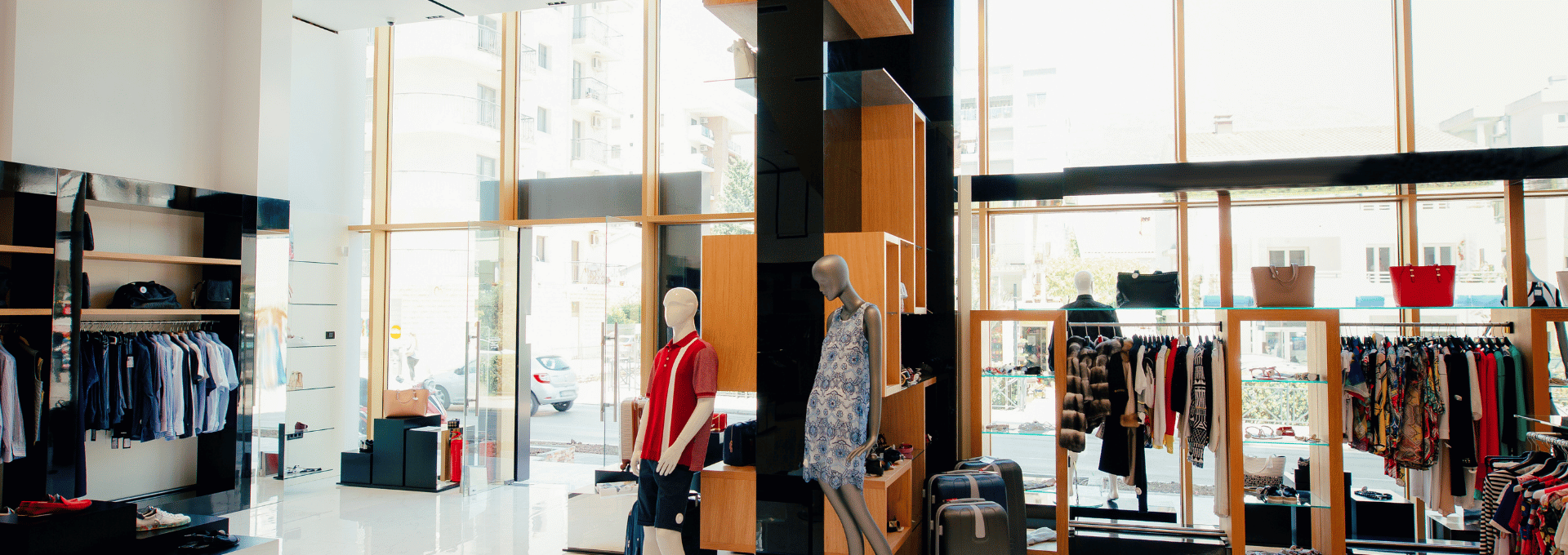




Clothing Store Franchises
After food, what’s the one thing people never stop buying? Clothes.
And not just once.
Weddings, festivals, school years, job changes; life keeps creating reasons to shop.
That kind of consistency is rare in retail, and for a franchise investor, that’s the whole argument.
In India, where the middle class is growing faster than ever, a clothing franchise sits right at the intersection of necessity and aspiration.
India’s apparel market is expected to hit USD 130–150B by 2030, growing at 10–12% CAGR – with branded apparel accounting for the majority of spend by then, and growing at over two times the pace of unbranded.
The Customer Was Already Waiting
Walk into any top clothing franchise and look at the price tags that are on display everywhere. They tell you something important; this isn’t for the super-rich. It’s built for India’s over 300 million middle-income consumers, who are increasingly choosing trusted names over unfamiliar ones.
Look around the store. You’ll see families in their mid-30s and 40s, arriving in budget cars, browsing unhurriedly, happy just to be somewhere they feel welcomed. These aren’t impulse shoppers. They’re people who’ve had enough.
Enough of the chaos at “low-price” stores. Enough of misleading deals and unruly crowds. Enough of digging through disorganized piles only to leave empty-handed. Enough of quality gambles; not knowing if that stitch holds or that colour bleeds until it’s too late to return.
They weren’t waiting for a sale. They were waiting for a better experience; and franchise retail gave them exactly that.
Clothing Franchises in India – Why Customers Keep Coming Back
Visit any established clothing franchise near you — Zudio, Max, Reliance Trends, Pantaloons, Style Union — and you’ll notice something almost immediately. Things that simply don’t exist at your neighbourhood store.
✅Try a bra in the trial room. Sounds basic, but most local stores can’t offer it. No space, no privacy, no trained staff. Franchise stores make it standard. And when a customer feels respected at that moment, she comes back. Every time.
✅Spray a perfume. Swipe lipstick. For Free. These aren’t gimmicks; they’re small moments that make a shopper feel like a customer worth impressing, not just a transaction to close.
✅The staff won’t hover, judge, or rush you. They’re trained to assist without making you uncomfortable; a small thing that changes everything about how long someone stays and how much they spend.
✅And then there’s the sticker inside the trial room; easy to miss, but quietly brilliant. Can’t find your size? Order from our app. No apology, no awkwardness. Just a seamless bridge from the physical store to the brand’s online inventory. The sale doesn’t end when the shelf runs out.
Taken individually, none of these feel revolutionary. Together, they create something local retail has never managed to deliver consistently; an experience people actually want to repeat.
Stand-Alone vs Franchise — What the Numbers Don’t Lie About
| Factor | Stand-Alone Store | Clothing Franchise |
| Brand Trust | Built from scratch;takes years, if ever | Instant. Customers already know and trust the name |
| Inventory & Sourcing | You negotiate alone;higher costs, inconsistent quality | Centralised sourcing, better margins, tested product mix |
| Marketing | Entirely your budget, your risk | National campaigns run by the brand;you benefit at no extra cost |
| Staff & Operations | You build the playbook from scratch | Proven SOPs, training manuals, and support from day one |
| Failure Risk | High — most independent retail stores don’t survive year three | Significantly lower — you’re running a model that already works |
Read: ROI in Franchising and How to Forecast Profitability Before You Buy
Best Clothing Franchise in India 2026 – Choosing the Right Apparel Franchise
- Not every brand works everywhere, and that’s the first thing most investors get wrong. The Indian apparel market is heading toward $150 billion by 2030, but that number means nothing if you pick a premium brand for a Tier-II town where the average shopper is looking for value — not aspiration.
- Start with the segment. Women’s ethnic wear still drives the largest share of the market. Athleisure and fast fashion are moving fastest among younger buyers. Kidswear turns inventory quickly and carries strong repeat purchase behaviour. Pick a category that matches your city’s income profile, not your personal taste.
- Then look at the numbers honestly. Entry costs range from ₹20 lakhs for smaller formats to over ₹1.5 crore for mall-based stores. A well-located franchise in 2026 typically returns 20–35% annually, with break-even somewhere between 18 and 30 months. That window depends heavily on rent and how fast inventory moves — two things worth stress-testing before you sign anything.
- On location, Tier-II and Tier-III cities are quietly outperforming metros right now. Lower rents, rising aspirational demand, and far less competition from organised retail. High-street locations in these cities often beat malls simply because the footfall is more consistent and the overhead is lower.
- Finally, look at what the franchisor actually gives you. Gross margins of 30–45%, inventory support, staff training, and omnichannel integration aren’t bonuses — they’re the baseline. If a brand can’t offer these, the brand name alone won’t save the business.
With a projected CAGR of 10-12% for branded retail, the risk in the clothing sector is mitigated by high repeat-purchase rates. Investors should look for “hybrid” models that combine menswear, womenswear, and kidswear to maximize footfall conversion and hedge against seasonal fluctuations.
Fashion Retail Franchise India – Critical Investor Pitfalls to Avoid
| Mistake | Description | Financial Impact |
| Dead Stock Neglect | Ignoring the franchisor’s liquidation policy for seasonal unsold inventory. | Erodes working capital and shrinks net margins. |
| Underestimating OPEX | Failing to account for rising electricity, staff attrition, and local marketing levies. | Delays break-even point by 6–12 months. |
| Brand Disconnect | Selecting a brand based on personal taste rather than local consumer purchasing power. | Results in high footfall with zero conversion rates. |
| Hidden Royalty Fees | Overlooking percentage-based “marketing contributions” on top of base royalties. | Can reduce projected ROI by 5–8% annually. |
| Passive Management | Treating the franchise as a purely hands-off investment without oversight. | Leads to inventory shrinkage and poor customer service. |
How ForeFind Helps You Decide
Finding the right franchise is less about inspiration and more about information — and that’s exactly where most investors lose time. ForeFind cuts through the noise by giving you the structural data that actually matters before you commit.
✅You can filter by investment range, so you’re only looking at brands that match your actual capital; not aspirational listings that quietly require twice what’s advertised.
✅Space requirements are listed upfront, which lets you calculate rent and CAM costs before you’ve even visited a site.
✅Filter by how long a brand has been operating and how many units it’s scaled to; a brand at 50+ locations over a decade tells a very different story than a two-year-old concept with aggressive marketing.
✅For investors eyeing Tier-II and Tier-III cities, ForeFind’s location filters help identify where organised retail hasn’t yet arrived; which is often where the smartest first-mover opportunities still exist.
After food, people buy clothes. They always have, they always will. All ForeFind does is help you make sure you’re the one they’re buying from.
FAQs
1. Is clothing franchise actually profitable in India?
It’s profitable, but not automatically. Typical ROI sits around 20–35% annually, with 18–30 months break-even. Most failures come from bad location, not bad demand.
2. Which clothing franchise makes money fast – Zudio, Max, Trends, Pantaloons?”
It depends on price positioning and location, not brand reputation alone. Zudio performs well in Tier-II/III cities through volume. Reliance Trends balances both. Pantaloons needs stronger urban footfall to justify its overhead.
3. What can go wrong in clothing franchise investment?
Dead stock tying up working capital. Rent and OPEX pushing break-even by 6–12 months. Wrong brand for the local income level. Hidden royalties quietly reducing ROI by 5–8%. Passive ownership leading to shrinkage and poor service.
4. Why do people choose branded stores over cheap local shops now?
Not price. Experience. Customers are done with inconsistency. They want:
- Trial rooms, privacy, fixed pricing
- Predictable quality
- Non-pushy staff
- Omnichannel fallback when size isn’t available
5. Where should I open a clothing franchise – metro or tier 2 city?
If you’re chasing returns, Tier-II/III cities are the smarter bet.
Metros are saturated and expensive. Tier-II gives:
- Lower rent
- Rising aspirational demand
- Less competition from organized retail
- Can I start a low investment clothing franchise under ₹5 lakh?
At that range, you’re looking at kiosks or reselling models — not true franchises. Limited brand pull, thin margins, and minimal support. Treat it as a trial, not a scalable retail business.
Also Read: Top 9 Franchise Categories Delivering The Highest ROI In 2026