



What Tea Post Private Limited Is and How It Got Here
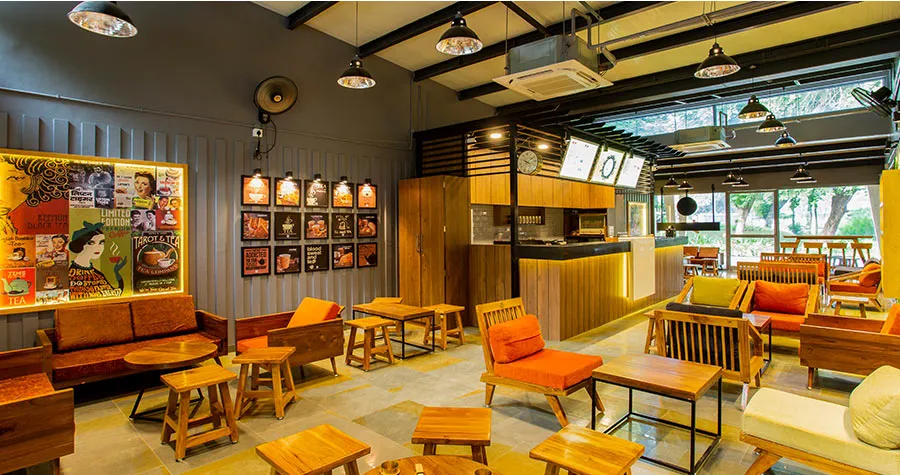
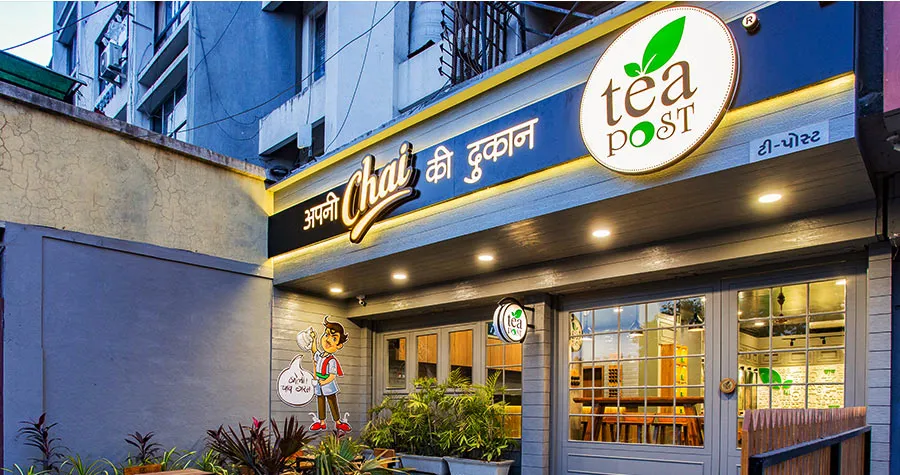
The Tea Post Private Limited franchise traces back to the early 2000s, when the brand began as a focused tea retail concept built around a simple premise: deliver a consistent cup at a price point and format that could scale across Indian cities without relying on a full restaurant infrastructure. Franchising followed within a few years of the brand’s founding, and over the two decades since, the format has evolved from a basic counter-service setup into a more developed café-style outlet capable of occupying a wider range of footprints, from compact high street counters to larger mall and standalone units. The menu has broadened in parallel — moving beyond a narrow tea offering into a wider beverage and light snack range — but the operational backbone has stayed consistent: a counter-driven service model designed for quick turnover rather than a leisurely dine-in experience. A present-day outlet reflects that evolution clearly, balancing a larger format option against the same fast-service discipline the brand built its early reputation on.
A Franchisee’s Typical Operating Day
The working day starts with prep — stock checks, equipment readiness, and getting the counter set up before the first customers arrive, since a slow start during the opening rush sets a bad tone for the rest of the day. Once the outlet opens, the franchisee’s central operational challenge is managing two simultaneous customer streams: walk-in orders at the counter and, depending on the outlet’s delivery integration, aggregator pickups arriving in parallel. Late morning through early evening tends to be the heaviest traffic window, and this is where the franchisee’s actual time gets spent — not making tea personally, but watching order flow, catching service bottlenecks before they become customer complaints, and stepping in directly when the counter falls behind. With a larger footprint range available in this format compared to a compact kiosk, some outlets also manage modest dine-in seating, which adds a layer of floor management — table turnover, cleanliness, and customer wait times — on top of the core counter operation.
The Kitchen, the Menu, and the Supply Chain
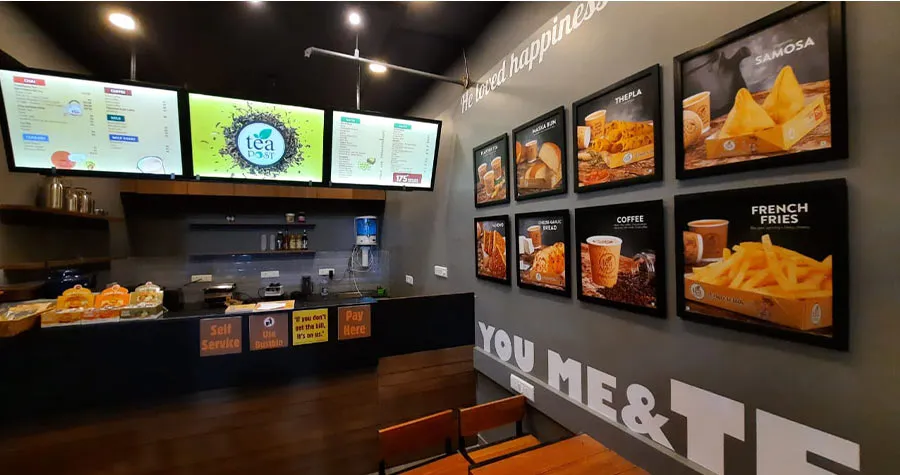
Production at a Tea Post Private Limited outlet typically follows a hybrid model rather than relying entirely on either fresh daily prep or centralised supply. Core beverage bases and any standardised packaged items generally come through franchisor-managed sourcing to keep taste and quality consistent across outlets regardless of city, while perishables like dairy and certain fresh ingredients are usually sourced locally by the franchisee against brand-set specifications. This split tends to work reasonably well in Tier 2 cities specifically — local dairy sourcing is often more straightforward outside major metro supply networks, and a menu that isn’t overly dependent on complex, hard-to-source ingredients is less vulnerable to the kind of supply disruption that can affect more elaborate food-led QSR concepts. Franchisees who build two or three reliable local vendor relationships rather than depending on a single supplier tend to weather seasonal supply fluctuations with far less disruption to daily service.
Location: What Works and What Kills the Business
Ground floor visibility matters, but it rarely determines success on its own in this category. What separates a strong location from a weak one is the composition of nearby footfall — proximity to office clusters drives steady weekday traffic, proximity to colleges drives higher volume at a lower average ticket, and residential density sustains the business through evenings and weekends when office traffic disappears. The strongest sites typically overlap at least two of these zones rather than relying on a single demand source. Competition within roughly 500 metres carries real weight, since tea and coffee are low-switching-cost products and customers will simply choose whichever outlet is closer or faster on a given day. For locations with meaningful delivery volume, a frequently overlooked detail is whether riders have a clear, accessible spot to park and collect orders — a visually strong location with poor rider access can underperform a less prominent site that has solved this logistical issue.
Staff: Hiring, Training, and the Retention Problem
Running a team of two to six means each hire carries real weight in daily consistency. Most franchisees recruit locally, since the wage band typical for counter and service roles in this category rarely justifies bringing staff in from outside the immediate area. The harder challenge in smaller cities isn’t finding willing candidates — it’s retaining them once they’ve been trained on the brand’s specific preparation and service standards. High turnover is common across quick-service beverage roles nationally, and every departure costs more than the obvious wage gap: it costs a stretch of slower, less consistent service while a replacement gets up to speed, often during exactly the peak hours when consistency matters most. Franchisees who manage this well typically cross-train staff across roles so a single absence doesn’t stall the counter, and use predictable scheduling as a retention tool rather than an afterthought.
What the Franchisor Handles So You Do Not Have To
Tea Post Private Limited’s role centres on the elements genuinely difficult to build independently: a tested recipe and beverage standard, staff training before launch, brand-level marketing and recognition built over more than two decades, and operating procedures designed to keep quality consistent across a varied footprint range from compact counters to larger café formats. This gives a first-time investor a working system to step into rather than building processes from zero. What stays with the franchisee is everything local and ongoing — daily staff management, local vendor relationships for perishables, rent negotiation, handling customer issues directly, and the discipline of running the outlet to standard every single day. The system only performs as well as the person executing it.
Who Runs a Tea Post Private Limited Franchise Successfully
The franchisees who consistently perform well share a recognisable pattern: they’re present at the outlet daily, they know their regular customers well enough to anticipate orders, and they treat the brand’s standard operating procedure as a discipline worth maintaining rather than a loose guideline. Many come from a small retail or professional background, drawn to this format because it rewards hands-on operational involvement over passive ownership. The honest reality is that absentee investors consistently struggle with QSR formats at this scale, because the margin for error is thin enough that even a short stretch of inconsistent service can undo months of built-up customer habit.
Accepting franchise applications in 20 states & UTs
How much space does a Tea Post Private Limited franchise require?
A Tea Post Private Limited outlet typically needs between 300 and 1,200 square feet, giving franchisees flexibility to choose between a compact high street counter and a larger mall or standalone format depending on the site and local market.
How long does it take to set up and open a Tea Post Private Limited outlet?
Given the format's simple setup complexity, most outlets move from site finalisation to opening within a few months, covering interior fit-out, equipment installation, and pre-launch staff training.
What training does Tea Post Private Limited provide before opening?
New franchisees and their staff typically receive training on beverage preparation standards, counter and floor service flow, and hygiene and FSSAI compliance practices, designed to bring a first-time operator to launch readiness without prior food business experience.
Can a Tea Post Private Limited franchise operate without the owner being present daily?
The format is built for owner-operated involvement, and outlets where the franchisee is present daily and actively managing peak-hour service consistently outperform those run at arm's length.
How many Tea Post Private Limited outlets are currently operating in India?
The brand operates between 100 and 200 outlets nationally, built over 24 years of franchising history, reflecting an established and steadily managed presence in India's tea and coffee chain segment.
Disclaimer: All scores, rankings, and estimates on ForeFind are independently produced editorial assessments using publicly available data and validated brand-submitted information. They are not verified facts, financial advice, or investment recommendations. Full Disclaimer.
