



Strands Salons pvt Ltd Franchise: Running a Health and Beauty Centre and What Daily Operations Require
Launched in Chandigarh in 2010 and now spanning fifty to a hundred locations across sixteen states, the Strands Salons pvt Ltd franchise has built its network through a combination of full-service salon and spa offerings, industry partnerships with Wella Professionals and other professional product houses, and an in-house training academy that produces staff to a documented technical standard. For an investor imagining themselves at the centre of this operation, the practical question is what the daily reality of managing one of these centres actually involves — and what the franchisor’s system does to make that work tractable.
What Strands Salons pvt Ltd Offers and Who Its Clients Are
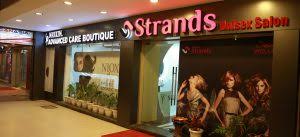
Strands operates as a full-service unisex salon and spa, covering hair design, skin treatments, makeup, nail services, and spa therapies from an 850 to 2,000 square foot format. The service range is wide by design: a client who books a haircut in month one is also a potential skin treatment client in month three, and a couple who uses the salon for everyday grooming may become wedding-day clients for the same centre. The target consumer is quality-conscious and regular-spending — working professionals, urban families, and men and women in the twenty-five to fifty age range who treat professional beauty and grooming as a routine expenditure rather than an occasional indulgence. What brings them back is not novelty but the accumulated trust that a specific centre delivers consistent results. In a competitive neighbourhood market, that trust — built visit by visit — is the most durable commercial asset the franchisee owns.
A Day in a Strands Salons pvt Ltd Centre
Operations begin before the first appointment. The opening sequence covers workstation sanitation, equipment readiness, stock checks, and appointment calendar review — a thirty to forty-five minute process that sets the standard for service delivery before a single client walks in. Morning slots are often lighter, used for staff briefings, product restocking, and handling enquiries. Footfall builds through late morning and peaks on weekday evenings and weekends, when a centre operating at capacity may run five or six service stations simultaneously across hair, skin, and nail treatments.
The franchisee’s role is not technical — trained staff deliver the services. The owner manages the operational layer: supervising service quality in real time, handling client feedback when it arises, overseeing payment reconciliation at close of day, monitoring retail sales against targets, and reviewing the next day’s appointment schedule. Centres where the franchisee is personally present during peak hours consistently maintain higher service standards than those where management is delegated entirely. The difference is not supervisory style but the accountability that direct ownership presence creates — and it is most consequential in the first twelve to eighteen months when team culture and client expectations are being established simultaneously.
Service Quality, Standards, and the Brand Promise
Maintaining quality across a network of fifty-plus locations requires documented standards rather than reliance on individual outlet culture. Strands enforces this through standardised treatment protocols — step-by-step service procedures for each category — hygiene requirements that apply uniformly across all centres, and product usage guidelines tied to the brand’s partnerships with Wella Professionals and other professional suppliers. The client consultation process is embedded in the service protocol: understanding what the client wants, setting realistic expectations, and recommending the appropriate treatment combination are not optional courtesies but defined steps in the service delivery sequence.
Strands Academy underpins the quality system by producing staff who have been trained to a consistent technical baseline before they work on paying clients. Staff trained through the Academy’s curriculum — which covers cutting, colouring, styling, beauty, spa, and nail techniques — are working from the same technical foundation regardless of which centre they are placed in. The franchisor conducts audits across the network that serve both a compliance function and a coaching one, identifying service drift before it becomes a client experience problem.
Appointment Management, Client Communication, and Retention
Running an efficient appointment calendar is a practical skill that most new franchisees underestimate. The challenge is not just filling slots — it is balancing pre-booked appointments with walk-in capacity, managing service time variability across technicians, and avoiding the wait times that erode the client experience and directly affect whether a first-time visitor returns. A centre that consistently runs twenty minutes behind schedule loses clients not because of service quality but because of operational management.
Client communication after a visit is one of the most under-used retention tools in this category. A rebooking prompt sent a week before the typical gap between a client’s visits, a seasonal promotion communicated to lapsed clients, a follow-up message after a first visit — each of these generates measurable increments in return frequency. The franchisor provides marketing materials and campaign guidance, but the local execution — knowing which clients are approaching a six-week gap, which ones responded to last month’s promotion — is the franchisee’s responsibility. Centres that build this communication habit in their first year consistently outperform those that rely on walk-in momentum.
Staff: Hiring Qualified Professionals and Keeping Them
A typical Strands centre runs on three to eight staff: one or two senior stylists with full technical capability across the service menu, two to three junior technicians at varying levels, a nail or spa specialist depending on the service mix, and a receptionist managing the front desk, appointments, and retail. In northern Indian cities — Chandigarh, Delhi, Punjab — where Strands has its strongest presence, qualified candidates can be sourced through the Strands Academy pipeline and industry referral networks. In newer geographic markets, franchisees often hire candidates with basic cosmetology training and develop them through the Academy’s curriculum over six to twelve months.
Staff poaching is an operational reality in this industry that experienced franchisees plan for rather than hope to avoid. A trained stylist with a client following is a target for competing salons and independent operators. The franchisees who retain staff most effectively combine market-rate compensation with a visible development pathway — technicians who see themselves progressing through skill levels and earning more as they do are materially less vulnerable to external approaches than those who feel they have reached a ceiling. The Academy’s international-linked curriculum, which offers certification recognised in Europe and potential placement in the UK, is a retention tool as much as a training one.
Products, Inventory, and Retail Revenue
Strands’ partnerships with Wella Professionals, L’Oréal, Matrix, and other professional product houses shape both the service quality and the retail revenue opportunity. Professional products used in service delivery become natural retail recommendations — a client whose hair has been treated with a specific product during their appointment is a credible prospect for taking that product home. Retail margins in the professional salon category run between thirty and fifty percent, and in a centre with active product integration, this stream can contribute meaningfully to monthly revenue. The key is that recommendations happen during the service consultation rather than at the checkout counter — a technician who mentions a specific product in the context of the treatment they are delivering is far more persuasive than a shelf display. Inventory management is supported by the franchisor’s systems, with the focus on maintaining stock on high-frequency items without accumulating slow-moving products that tie up working capital.
Who Runs a Strands Salons pvt Ltd Centre Successfully
The franchisee who builds a high-performing Strands centre takes service quality personally — not as an abstract brand value but as a daily operational commitment that is visible to staff and clients alike. They are present during peak hours because they understand that the accountability their presence creates is different from what a hired manager provides. They know that in a residential high-street catchment, a satisfied client who tells three neighbours generates more new business than any paid promotional campaign, and they manage accordingly. Absentee ownership — delegating all operational involvement from the outset — consistently produces below-average client retention across this format because service standards and staff performance drift without the direct accountability layer that owner presence provides, particularly in the first two years. The Strands Salons pvt Ltd franchise rewards engaged ownership proportionally and visibly in its retention and revenue metrics.
Accepting franchise applications in 5 states & UTs


How much space does a Strands Salons pvt Ltd franchise centre require?
The format operates across 850 to 2,000 square feet, with the lower end supporting a focused service menu across three to four workstations and the upper end enabling a full salon and spa offering with dedicated treatment rooms. Most franchisees in residential high-street locations find that 1,000 to 1,400 square feet provides sufficient capacity for the service range and team size the format requires, without the fixed cost burden of a larger space before the client base has matured.
What equipment and fit-out does Strands Salons pvt Ltd provide as part of the franchise?
The franchisor specifies the interior design standards, equipment list, and product partner requirements that ensure consistency across the network. This covers styling stations, wash units, skin treatment equipment, nail stations, and retail display infrastructure. Equipment is sourced through approved suppliers, and the franchisor provides guidance on procurement as part of the setup process. Fit-out costs are included within the overall investment range, and the design specification reflects the brand's positioning across its current network of fifty-plus locations.
What training does Strands Salons pvt Ltd provide for franchisees and their staff?
Training is delivered through Strands Academy, the brand's wholly owned training subsidiary, which covers hair design techniques, beauty, spa, nail, and skincare. The curriculum is developed in collaboration with professional product partners and international industry professionals. Initial training is completed before a centre opens, covering both technical service delivery and salon operations management. Ongoing training is available as the brand introduces new techniques or service categories, and the Academy's internationally linked certification programme provides a development pathway for staff that goes beyond standard cosmetology qualification.
Can a Strands Salons pvt Ltd centre be run by a manager without the owner being present daily?
Mature centres with stable teams and established client bases operate with reduced owner presence, and some franchisees reach this model in their third or fourth year. In the first two years, owner involvement during peak hours has a direct and measurable effect on service standards, staff performance, and client retention — the three variables that determine how quickly the centre reaches break-even and what revenue level it stabilises at. Moving to manager-led daily operations before the team culture and client base are secure tends to slow both metrics, and franchisees who attempt it early often return to active involvement when they see the performance data.
How does Strands Salons pvt Ltd support franchisees with local marketing and client acquisition?
The franchisor provides marketing materials, social media content frameworks, and national-level brand promotional activity that builds recognition across the network. Pre-opening support is more intensive, with structured activities designed to generate initial footfall and introduce the centre to the local catchment. Beyond the opening period, local marketing execution — neighbourhood promotions, community events, targeted offers to lapsed clients — is the franchisee's responsibility and the channel where investment of time pays the highest return. In a residential high-street salon, the most effective acquisition and retention mechanism remains word of mouth generated by consistently good service, and no marketing programme substitutes for it.
Disclaimer: All scores, rankings, and estimates on ForeFind are independently produced editorial assessments using publicly available data and validated brand-submitted information. They are not verified facts, financial advice, or investment recommendations. Full Disclaimer.
