



What STERLING ACCURIS WELLNESS PVT. LTD. Offers and Who Its Clients Are
A STERLING ACCURIS WELLNESS PVT. LTD. franchise centre functions as a diagnostic sample-collection and testing point, offering routine blood work, health screening panels, and pathology tests to individuals and families in its catchment area. The client base skews toward people managing ongoing health conditions, parents booking periodic check-ups for elderly relatives, and increasingly, working professionals who book preventive panels as part of annual health planning rather than waiting for symptoms. What pulls a client back is rarely the first test itself — it is the experience around it: how quickly the report arrives, whether the same lab consistently reads results the same way over time, and whether the centre proactively flags when a follow-up test is due. In a network of this scale, that consistency across a hundred-plus locations is itself a competitive asset, since a client who relocates within India can use the same brand and expect comparable turnaround and reporting standards.
A Day in a STERLING ACCURIS WELLNESS PVT. LTD. Centre
Mornings at a diagnostics centre typically begin before the doors open — equipment checks, reagent stock verification, and reviewing the day’s pre-booked appointment slots against walk-in capacity. Through the day, the front-desk role handles registration, sample-collection scheduling, and payment, while trained technical staff handle the actual collection and any point-of-care testing done on-site, with samples for more complex panels routed to a processing lab on a set pickup schedule. Retail-style revenue in this format comes less from product shelves and more from add-on packages — a client booking a single test is often offered a relevant bundled panel at the point of registration. By closing, the franchisee or a designated senior staff member reconciles the day’s collections against test bookings, checks pending report deliveries, and confirms reagent levels for the next day. The franchisee’s direct involvement tends to concentrate on this reconciliation step, on resolving any report delays, and on staff scheduling, while routine collection and registration run on trained staff once the centre is established.
Service Quality, Standards, and the Brand Promise
Consistency in diagnostics is a quality issue with direct financial consequences — an inaccurate or delayed report damages trust faster than almost any other failure point in the business. STERLING ACCURIS WELLNESS PVT. LTD. centres are expected to follow defined protocols for sample handling, storage temperature, labelling, and chain-of-custody documentation, alongside hygiene standards around collection areas and disposable-equipment usage. Client consultation at the point of sample collection typically includes basic intake questions to flag any condition-specific handling needs. The franchisor maintains oversight through periodic audits of individual centres, checking documentation practices, equipment calibration records, and complaint resolution timelines, and accreditation bodies such as NABL add an external layer of verification once a centre pursues that certification. This combination of internal audit and external accreditation is what allows the brand to make consistent reporting promises across a network spread over many cities rather than relying on each centre’s individual discipline alone.
Appointment Management, Client Communication, and Retention
Booking flow for a diagnostics centre runs through a mix of phone bookings, walk-ins, and increasingly app or web-based scheduling tied to the brand’s central system, which also lets a centre track which clients are due for repeat panels. Communication after a visit matters more than communication before it: a report-ready notification sent the moment results are available, paired with a simple note on when the next recommended test falls due, is what converts a one-time test into a recurring relationship. Centres that run periodic reminder campaigns — seasonal screening pushes, family package promotions around festival periods — tend to see steadier booking volumes than those relying purely on walk-in traffic. The franchisor typically provides templated communication formats and promotional calendars, but the discipline of actually sending them on schedule sits with the local team.
Staff: Hiring Qualified Professionals and Keeping Them
A centre of this kind runs lean, with three to ten staff covering front-desk, sample collection, and basic technical roles. The non-negotiable qualification is certified phlebotomy or lab-technician training, since uncertified sample collection creates both compliance risk and a higher chance of rejected or inaccurate samples. In smaller cities, franchisees often recruit through local paramedical institutes, diploma colleges, or by absorbing staff who have trained at larger hospital labs and want shorter commutes or better hours. The franchisor’s training program generally covers collection protocol, reporting software, and customer interaction standards during onboarding, with refresher sessions tied to protocol updates. The reality every franchisee eventually faces is staff poaching — trained phlebotomists are in demand across hospitals, larger labs, and competing chains, and a centre that does not offer some combination of stable hours, incentive structure, or growth path will see its better-trained staff move on after the first year or two, forcing a repeat of the hiring and training cycle.
Products, Inventory, and Retail Revenue
Inventory in this business is dominated by consumables — collection tubes, reagents, swabs, and point-of-care testing kits — rather than retail products in the conventional sense. Margin on bundled health packages tends to run higher than on single standalone tests, since the marginal cost of an additional panel within the same collection visit is low relative to the price uplift of the bundle. Inventory management is mostly about avoiding reagent expiry and stockouts on high-frequency tests, which requires reasonably disciplined reorder tracking rather than large capital tied up in stock. Staff are typically trained to mention relevant package upgrades at the point of booking — a client coming in for a single sugar test, for instance, being offered a broader metabolic panel — which is where a meaningful share of incremental revenue per visit actually comes from.
Who Runs a STERLING ACCURIS WELLNESS PVT. LTD. Centre Successfully
The franchisees who do well are the ones who treat report accuracy and turnaround time as personal responsibilities rather than staff-level details, and who are physically present enough to catch service issues before they become client complaints. Word of mouth carries unusual weight in this category — a family that trusts a centre for one member’s tests tends to bring the rest of the household, and that referral chain breaks quickly if even one report is wrong or late. Owners who treat the centre as a passive investment and manage it entirely through a hired manager consistently see weaker client retention than owner-present centres, simply because the accountability that prevents small operational lapses tends to weaken once the owner is no longer routinely checking in.
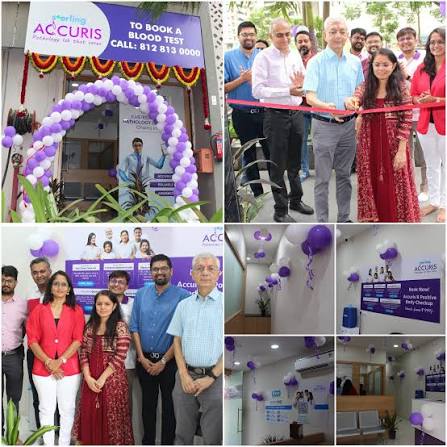
Accepting franchise applications in 9 states & UTs


How much space does a STERLING ACCURIS WELLNESS PVT. LTD. franchise centre require?
A centre generally needs between 150 and 250 square feet, enough for a reception and waiting area, a private sample-collection space, and minimal storage for consumables and reagents.
What equipment and fit-out does STERLING ACCURIS WELLNESS PVT. LTD. provide as part of the franchise?
The franchise investment covers basic collection equipment, reception and waiting-area fit-out, signage, and an opening stock of consumables, with more complex testing typically processed through a centralised or partner laboratory rather than on-site.
What training does STERLING ACCURIS WELLNESS PVT. LTD. provide for franchisees and their staff?
New franchisees and their technical staff are trained on sample-collection protocol, reporting software, documentation standards, and customer-facing procedures, with periodic refreshers as protocols are updated.
Can a STERLING ACCURIS WELLNESS PVT. LTD. centre be run by a manager without the owner being present daily?
While trained staff handle day-to-day collection and registration, the model is owner-operated by design, and centres where the owner stays closely involved in oversight and client follow-up tend to perform more consistently than those run entirely through a manager.
How does STERLING ACCURIS WELLNESS PVT. LTD. support franchisees with local marketing and client acquisition?
Support typically includes templated promotional material, seasonal screening campaign formats, and guidance on local outreach, while the franchisee is responsible for executing these consistently within their catchment.
Disclaimer: All scores, rankings, and estimates on ForeFind are independently produced editorial assessments using publicly available data and validated brand-submitted information. They are not verified facts, financial advice, or investment recommendations. Full Disclaimer.
