



Shadowfax Technologies Private Limited Franchise: Daily Operations, Client Management and What Running This Business Looks Like
What Shadowfax Technologies Private Limited Does and Who It Serves
Shadowfax Technologies private limited franchise operates as a last-mile and first-mile logistics partner, connecting businesses that need goods moved with a network capable of executing those movements at scale. The client base spans e-commerce sellers, food and grocery platforms, pharmaceutical distributors, and direct-to-consumer brands—essentially any business where speed and delivery reliability determine customer satisfaction. A successful client engagement begins with a business identifying Shadowfax as its local logistics execution partner, progresses through onboarding onto the platform, and continues as an ongoing operational relationship measured by daily order volumes and delivery success rates. The repeat nature of that relationship—where an active client generates dispatch activity every working day rather than periodically—is what gives this model its recurring revenue character.
What a Shadowfax Technologies Private Limited Franchisee Does Every Day
Daily operations in a Shadowfax franchise divide roughly into three zones: managing active delivery workflows, maintaining relationships with existing clients, and—particularly in the early months—actively developing new business. Morning hours typically involve coordinating pickup schedules, briefing delivery staff on the day’s order manifest, and resolving any exceptions from the previous day. The platform handles order assignment, tracking, and status updates automatically, which means the franchisee is not manually logging each shipment. What the technology does not replace is direct client communication: when a B2B account has a delivery complaint or needs a rush pickup arranged outside normal scheduling, the franchisee is the point of contact. This is fundamentally a relationship business running on a process backbone—the platform manages logistics data; the franchisee manages client trust.
Client Onboarding, Delivery, and Retention
Converting a prospect into an active client in courier logistics typically involves a short sales cycle but a longer trust-building phase. An initial meeting establishes service scope, pricing, and pickup scheduling; the client is then integrated into the platform and begins dispatching. The first two to four weeks of any new account are operationally critical—service failures in this window have an outsized effect on whether the client continues or churns. Retention, which matters far more to franchise economics than acquisition, depends on consistent pickup punctuality, delivery success rates, and responsive problem resolution when exceptions arise. A franchisee who personally follows up on delayed deliveries and communicates proactively during disruptions retains accounts at significantly higher rates than one who leaves exception management entirely to the platform. The unit economics improve meaningfully as the client base stabilises, since the cost of serving an established account is far lower than the effort required to replace one that leaves.
The Technology Platform and Operational Infrastructure
Shadowfax’s logistics platform provides franchisees with order management, delivery tracking, proof-of-delivery capture, and performance reporting in a single interface. Billing and reconciliation are handled within the system, reducing the administrative burden that would otherwise fall on a small franchise team. For a new franchisee, the learning curve is moderate—the platform is operational-focused rather than analytically complex, and most functions are accessible without technical background. Where franchisees encounter difficulty is typically in configuring client-specific pickup schedules or reconciling order-level discrepancies, both of which require familiarity with how the system represents data. Technical issues affecting the platform are resolved through the franchisor’s support channel rather than locally, so the franchisee’s role during system disruptions is primarily to manage client communication while the issue is addressed upstream.
Building and Managing a Team
Most Shadowfax franchise operations begin with the owner managing counter and coordination functions alongside one or two delivery executives. The decision to hire additional staff is typically triggered by order volume rather than time—when daily dispatches exceed what the founding team can process without errors or delays, headcount needs to increase. The first meaningful hire beyond delivery staff is usually a coordination or operations executive who can manage pickup scheduling, client communication, and exception handling independently, freeing the franchisee to focus on account development. In smaller Indian cities, this hire is often sourced through local referrals rather than formal recruitment channels. The franchisor’s training materials provide a framework for onboarding new staff to service standards, though day-to-day quality management remains the franchisee’s direct responsibility.
Franchisor Support: What Is Real and What Is Marketing
After signing, a Shadowfax Technologies private limited franchisee receives access to the logistics platform, initial operational training, brand association that supports credibility with B2B clients, and an onboarding process that covers service standards and system usage. These are substantive inputs that reduce the time required to launch and begin acquiring clients. What the franchisor does not provide is a guaranteed flow of clients, territory-level marketing spend, or ongoing hands-on operational involvement after the initial setup period. Local client acquisition, relationship management, staff supervision, and day-to-day problem resolution are handled by the franchisee without regular franchisor intervention. Investors who enter expecting passive support after launch typically find the business more demanding than anticipated; those who treat the franchisor’s infrastructure as a platform for their own local execution tend to perform better.
Who Runs a Shadowfax Technologies Private Limited Franchise Successfully
The franchisee profile that builds a stable client base within the first year almost always shares a common characteristic: prior exposure to local business networks in trading, distribution, retail, or logistics. That existing network shortens the B2B sales cycle from months to weeks, because trust is partially transferred rather than built entirely from scratch. Beyond network, the operating temperament that suits this business is one comfortable with daily operational problem-solving—delivery exceptions, client complaints, staffing gaps—without becoming paralysed by the unpredictability that characterises logistics at the ground level. Franchisees who are process-oriented and consistent in client communication outperform those who are strong at initial sales but disengage once accounts are signed. Those who consistently struggle in services businesses requiring active relationship management are individuals who prefer passive income structures and find direct client accountability uncomfortable over the long term.
Accepting franchise applications in 6 states & UTs
What qualifications or professional background are needed to run a Shadowfax Technologies private limited franchise?
No formal qualifications are required, but franchisees with a background in logistics, trading, distribution, or any field involving regular B2B client interaction tend to build their client base faster. The business rewards operational discipline and relationship management skills more than academic credentials.
Can a Shadowfax Technologies private limited franchise be run from home or does it require an office?
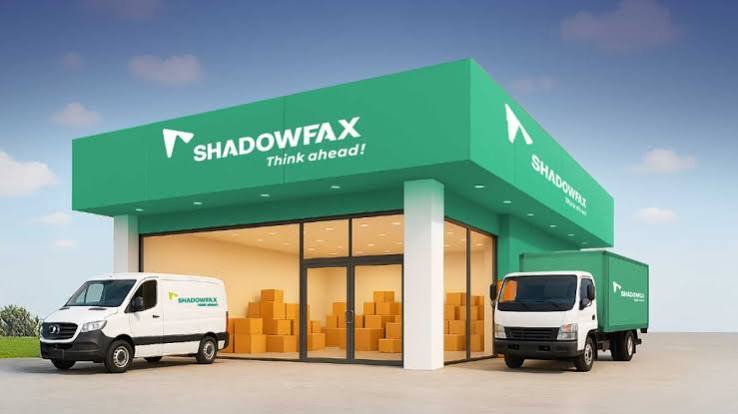
A commercial premises of 200 to 400 sq. ft. is required. The nature of the business—receiving parcels, coordinating pickups, and operating as a visible logistics point—makes a commercial or high-street location a functional necessity, not merely a preference.
How does Shadowfax Technologies private limited support franchisees in acquiring their first clients?
Brand association and platform access lower the credibility barrier when approaching corporate accounts. The franchisor provides training and onboarding support to prepare franchisees for client conversations. Direct client referrals or lead pipelines are not a standard feature of the model at this investment level—local outreach and relationship development remain the franchisee's primary acquisition mechanism.
What technology tools does Shadowfax Technologies private limited provide to franchisees?
Franchisees receive access to the Shadowfax logistics platform, which covers order management, delivery tracking, proof-of-delivery, and performance reporting. Billing and reconciliation are handled within the system. Technical support for platform issues is managed through the franchisor's support channel.
How many active franchisees does Shadowfax Technologies private limited have in India?
The current franchise network sits in the range of 100 to 200 units, with the brand having been in franchising for 19 years since its founding in 2006. That scale reflects a measured expansion pattern averaging roughly eight new units annually rather than rapid geographic saturation.
Disclaimer: All scores, rankings, and estimates on ForeFind are independently produced editorial assessments using publicly available data and validated brand-submitted information. They are not verified facts, financial advice, or investment recommendations. Full Disclaimer.
