



About Seth Anandram Jaipuria School
Seth Anandram Jaipuria School operates as a full K-12 institution delivering CBSE or ICSE-aligned education to children from early primary through senior secondary years, built around a physical campus model rather than a single-classroom coaching format. The brand’s academic operations trace back to 1974, decades before franchising began, which means the curriculum, examination structure, and pedagogical approach a franchisee inherits have already been tested across multiple generations of students rather than designed fresh for the franchise rollout. That operating history, spanning roughly five decades before the brand opened its model to outside investors, is the single fact that distinguishes this from an education concept still proving itself on franchisee capital.
How Revenue Is Generated in a Seth Anandram Jaipuria School Centre
A school franchise at this scale draws income from several layers simultaneously: a one-time admission fee charged at enrollment, recurring monthly or term-wise tuition that forms the bulk of predictable cash flow, separate examination or assessment fees tied to academic milestones, and ancillary revenue from textbooks, uniforms, and transport where offered. Given the brand’s indicative monthly revenue band of INR 12.5 Lac to 50 Lac, a centre operating toward the lower end of that range is likely still building toward full grade-wise enrollment, while the upper end reflects a campus running close to capacity across all grade levels. Covering monthly operating costs, with a staff complement that can run as high as 60 people at full scale, requires a substantial base of enrolled, fee-paying students before the centre crosses into comfortable monthly surplus, which is precisely why the brand’s own break-even estimate stretches to 18-36 months rather than something shorter.
The Investment and What It Covers
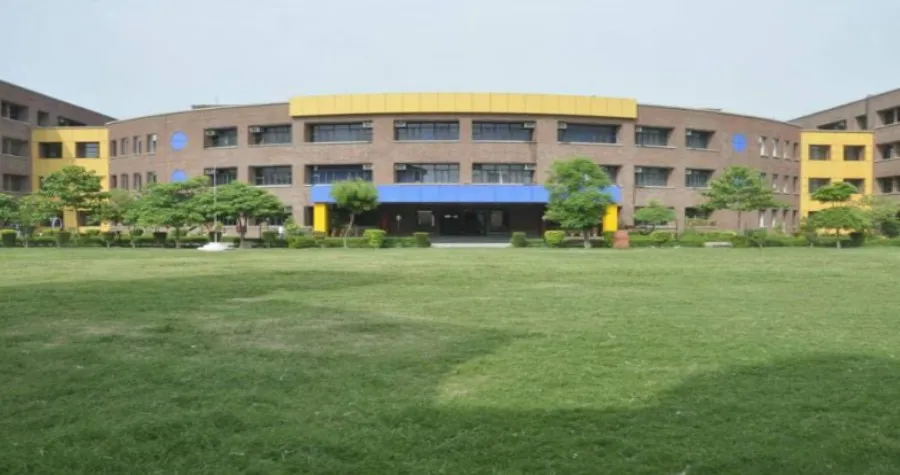
An outlay in the INR 5 Cr to 10 Cr range buys considerably more than a classroom; it funds a full campus, and the franchise fee, royalty obligation, and territorial exclusivity that come bundled with it are structured for a long operating horizon rather than a quick turnaround. Within this investment, a franchisee typically secures curriculum licensing, brand-standard signage and identity, an initial training program for academic and administrative staff, and access to assessment frameworks the brand has refined over its decades of direct school operation. What sits outside the franchise fee, and consumes the larger share of the total capital, is the land or long-lease premises across 90,000 to 100,000 square feet, the civil construction or renovation needed to meet that footprint, classroom furniture, laboratory and technology infrastructure, and compliance costs tied to fire safety and board affiliation. On a recurring basis, the franchisee carries a royalty obligation calculated as a percentage of revenue, ongoing contributions to centralized marketing, and the single largest line item by volume: monthly payroll across a staff base that can reach 60 people once the centre is operating at scale.
Enrollment Cycle, Seasonality, and Revenue Predictability
Indian school enrollment follows a fairly fixed seasonal pattern, concentrated around April through June when most academic sessions begin, with a secondary window from November through January when some boards and relocating families finalize admissions. A campus this size feels seasonal swings less sharply than a small coaching centre, because once a grade-wise student base is built, monthly tuition continues to flow through the quieter months regardless of new admission activity. This is the structural advantage of the recurring fee model: revenue predictability strengthens year over year as retained students move up through grade levels, meaning a centre in its fourth or fifth year of operation depends far less on each season’s fresh admissions than a centre still filling its early grades.
What the Franchisor Provides and Its Real Value
The franchisor’s package spans curriculum design refined over decades, structured teacher training, standardized assessment tools, parent communication systems, and brand-level marketing and admission support extended to each centre. The financial value of this becomes clear when compared against the alternative: an independent operator attempting to build an equivalent K-12 curriculum, train staff without a tested framework, and establish board affiliation credibility from zero would likely need years and a comparable or larger capital outlay just to reach the starting point a franchisee occupies on day one. Brand recognition also materially lowers customer acquisition cost in a category where parents are making a multi-year commitment for their child and weigh institutional reputation heavily before enrolling.
Risk Factors Specific to Education Franchises in India
Several risks are particular to this category. Regulatory exposure is constant, since CBSE or ICSE affiliation, fire safety clearance, and local no-objection certificates can shift in documentation or timeline requirements between states, and the brand’s established affiliation history across its network reduces, though does not eliminate, this exposure for a new centre. Competition from online learning content continues to pressure school-format brands, countered here by the depth of in-person, campus-based instruction and assessment that a purely digital platform cannot replicate at this scale. Teacher retention is a meaningful risk given staffing requirements running up to 60 people, addressed through the brand’s structured training and internal progression pathways that give qualified teachers a reason to stay rather than move to a competing institution. Student outcome risk, the question of whether enrolled children show measurable academic progress, is managed through the standardized, decades-refined assessment framework the franchisor provides, which gives franchisees a consistent and credible way to demonstrate results to parents.
Who This Investment Suits
The franchisee who consistently fills a Seth Anandram Jaipuria School campus to capacity within 18 months tends to combine deep capital reserves with either a background in education administration or access to an institutional team capable of managing a 60-person staff structure from day one. Given the scale of investment and the very low capital sensitivity this brand targets, this opportunity fits an HNI investor, corporate group, or family office far more naturally than an individual operator stretching personal savings; someone for whom this capital outlay represents a significant share of their net worth should not be pursuing an education franchise at this price point.
Accepting franchise applications in 5 states & UTs

How much does it cost to open a Seth Anandram Jaipuria School franchise?
The investment falls between INR 5 Cr and 10 Cr, covering the franchise fee, royalty structure, and the campus-scale infrastructure required across 90,000 to 100,000 square feet, with land and construction forming the largest share of total capital.
What is the expected monthly revenue from a Seth Anandram Jaipuria School centre?
Indicative monthly revenue ranges from INR 12.5 Lac to 50 Lac, with centres operating toward the higher end generally reflecting fuller grade-wise enrollment across the campus.
How many students does a Seth Anandram Jaipuria School centre need to reach break-even?
Break-even is estimated at 18 to 36 months, with the timeline driven primarily by how quickly the centre fills grade levels across its full capacity rather than any single enrollment threshold.
Does Seth Anandram Jaipuria School help with teacher recruitment and training?
Yes, the brand provides structured teacher training built on its decades of direct academic operation, designed to bring new hires up to standard before they independently manage a classroom.
Is Seth Anandram Jaipuria School suitable for Tier 2 and Tier 3 cities in India?
Given the scale of land and capital required, this format is generally better suited to cities with sufficient density of high-income families able to sustain premium tuition fees, which favors larger Tier 2 hubs over smaller Tier 3 markets.
Disclaimer: All scores, rankings, and estimates on ForeFind are independently produced editorial assessments using publicly available data and validated brand-submitted information. They are not verified facts, financial advice, or investment recommendations. Full Disclaimer.
