



Neeldavidfashionpvt ltd Franchise: Consumer Demand, Market Position and Competitive Advantage in India’s Wellness Sector
Operating under the Neel David International Beauty Salon brand, Neeldavidfashionpvt ltd has built a network of fifty to a hundred locations across India over twenty-one years of franchising activity. For an investor evaluating the health and beauty category, the brand occupies a specific and commercially well-defined position: a mid-investment, full-service salon format that combines fashion-forward hair and beauty services with a science-based approach to individual styling — a combination that differentiates it from both generic neighbourhood salons and the purely trend-driven formats that sacrifice technical rigour for aesthetic novelty.
Neeldavidfashionpvt ltd’s Position in India’s Growing Health and Beauty Market
Neel David International Beauty Salon sits at the accessible end of the organised premium salon segment — a 250 to 1,500 square foot format in residential high-street locations that targets consumers who want professional, fashion-literate hair and beauty services without the price point of luxury salon brands. The service menu is wide: hair styling and treatments, skin and body care, nail art, bridal makeup, body and hair tattoos, and complete appearance makeovers. This breadth positions the brand as a single destination for the full range of personal care needs, which drives visit frequency and average spend per client above what a single-service format achieves. A network of fifty to a hundred locations, built through consistent annual expansion over two decades, reflects a consumer base that keeps returning — not a network built on franchise sales activity alone.
Why Spending on Health and Beauty Is Growing in India
The demand case for organised beauty services in India rests on structural shifts that are not reversing. Urban household incomes have grown steadily, and within that growth, personal care has captured a rising share of discretionary spending — a pattern observed in every Asian market at a comparable stage of economic development. The migration from unbranded neighbourhood salons to organised franchise formats is particularly active in the mid-income segment, where consumers have the spending power to choose a branded experience but are price-conscious enough to favour accessibility over luxury. This is exactly the consumer Neel David International targets.
The male grooming market adds a demand layer that has grown rapidly over the past five years. Professional men across Tier 1 and Tier 2 cities are allocating regular budget to haircuts, skin treatments, and grooming services — a behavioural shift that has expanded the addressable market for unisex full-service formats considerably. A brand with a science-based, individually tailored approach to styling is well-positioned to capture this segment, where male clients are increasingly seeking differentiated outcomes rather than commodity haircuts.
Why a Neeldavidfashionpvt ltd Franchise Outperforms an Independent Centre in This Category
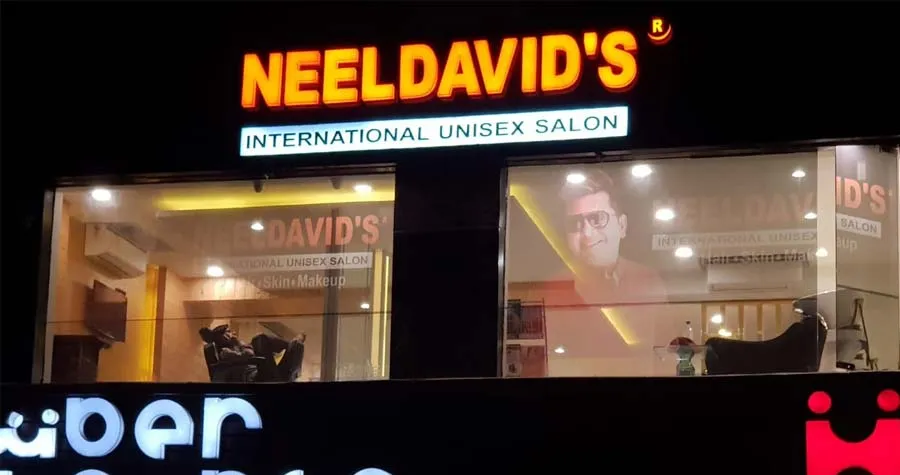
The advantage a Neel David International franchise holds over a well-run independent starts with consumer trust and extends through the entire operational stack. An independent salon opening in a residential neighbourhood spends twelve to eighteen months building local credibility through word of mouth alone; a franchisee under an established brand with twenty-one years of operating history and fifty-plus locations enters with a degree of consumer recognition that compresses that timeline. The brand’s distinctive salon environment — a consistent interior aesthetic that clients associate with a specific standard of service — communicates quality before the first treatment begins.
On the operational side, the franchisor’s staff training programme — delivered by experienced stylists trained in the brand’s science-based methodology — produces technicians who work to a documented standard rather than improvising. Uniform interiors across the network maintain brand consistency that independent operators cannot replicate. The monthly royalty structure, at INR 15,000, is a fixed rather than percentage-based obligation, which means the franchisee’s incentive is to maximise revenue above that threshold rather than to manage a variable cost that scales with success.
Geographic Opportunity and Target Locations
With the current network spanning fifty to a hundred locations, significant territory remains open across both established and emerging markets. In Tier 1 cities, the opportunity lies in residential neighbourhoods where organised salon density is still lower than consumer demand justifies — areas at some distance from city centre concentrations of branded salons, where a well-located Neel David centre can establish local market leadership. The format’s size flexibility, from 250 to 1,500 square feet, is a geographic advantage: a compact outlet is viable in a smaller Tier 2 town where a large-format salon would be economically difficult to sustain, while a larger 1,000 to 1,500 square foot centre in a dense urban residential catchment can support a fuller service menu and higher revenue ceiling. Tier 2 cities with growing professional populations and limited organised salon supply represent the most immediate white space.
Competitive Differentiation: Why Clients Choose Neeldavidfashionpvt ltd
In a market where multiple organised salon brands offer similar service menus, the differentiator that creates lasting client loyalty is the quality of the individual outcome — and the methodology behind it. Neel David International’s emphasis on a science-based approach to styling, where each client’s unique hair or skin characteristics shape the treatment rather than a standardised formula being applied uniformly, produces results that clients notice and return for. This is not a claim that most mid-investment salon brands make credibly; it requires a specific training framework to deliver. In a Tier 2 city where the competing options are either generic franchise salons or informal independent operators, a brand that offers technically grounded, individually calibrated services occupies a differentiated position that is difficult for either category of competitor to replicate quickly.
The Wellness Economy and Long-Term Category Outlook
India’s organised beauty and wellness sector is substantially underpenetrated relative to comparable Asian markets. South Korea, Japan, and even China allocate significantly higher per-capita spending to professional personal care services — a gap that reflects India’s earlier stage of economic development rather than any structural ceiling on demand. As urban incomes continue to rise and as the social normalisation of regular salon visits deepens across age groups and geographies, the category will grow. The salon format specifically — neighbourhood-accessible, experience-based, non-substitutable by technology or e-commerce — sits in a structurally secure position within this growth curve. Neel David International’s mid-investment, accessible-premium positioning is aligned with the consumer segment that will drive the largest volume of that growth: the middle-income urban professional who wants quality without exclusivity pricing.
Who Builds the Most Valuable Neeldavidfashionpvt ltd Centre
Client trust is the primary asset in any salon franchise, and it is not built through marketing — it is built through the consistent delivery of outcomes that clients value. The franchisee who builds the most valuable Neel David International centre brings together two capabilities that are individually common but less often found together: genuine skill at building and maintaining client relationships, and the operational discipline to hold service standards consistently across every visit. They are present in the centre during the hours when service pressure and client interaction are highest. They understand that a client who mentions the salon to three people in the same residential block is worth more than any promotional spend. The Neeldavidfashionpvt ltd franchise rewards this combination directly in retention rates and revenue consistency — and the twenty-one years of network history provide clear evidence of what engaged franchisees achieve versus those who treat client management as secondary to cost control.


Disclaimer: All scores, rankings, and estimates on ForeFind are independently produced editorial assessments using publicly available data and validated brand-submitted information. They are not verified facts, financial advice, or investment recommendations. Full Disclaimer.
