



Naturals Salon & Spa- India’s No.1 Hair & Beauty Salon Franchise: Running a Health and Beauty Centre and What Daily Operations Require
With over 410 locations across India and eighteen years of franchising experience, the Naturals Salon & Spa franchise is one of the most operationally documented salon networks in the country. A network of this scale — growing at an average of nearly twenty-three new units per year — generates a depth of operational knowledge that translates directly into what a franchisee receives: systems, training, and processes that have been tested across hundreds of real centres in varied markets. For an investor considering this format, the practical question is what running one of these centres actually looks like day to day, and what the franchisee’s personal role in that operation needs to be.
What Naturals Salon & Spa- India’s No.1 Hair & Beauty Salon Offers and Who Its Clients Are
Naturals operates as a full-service unisex salon, delivering hair care, skin treatments, makeup, and grooming services to a broad urban and semi-urban consumer base. The brand’s deliberate positioning as accessible yet quality-conscious means it attracts a wide demographic — working women, men seeking reliable grooming, and families who treat regular salon visits as part of their routine rather than an occasional indulgence. This breadth is a commercial strength: a centre is not dependent on a single consumer segment, and footfall is relatively consistent across the week rather than concentrated in narrow peak windows. What brings clients back is not novelty but reliability — a haircut that comes out the same way twice, a skin treatment that produces the expected result, a staff member who remembers a returning client’s preferences. In a network of 410 outlets, that consistency is systematically produced rather than left to individual outlet personality.
A Day in a Naturals Salon & Spa- India’s No.1 Hair & Beauty Salon Centre
The day begins before the first client arrives. Opening procedures cover workstation sanitation, equipment checks, product inventory review, and appointment calendar confirmation — a sequence that takes thirty to forty minutes and establishes the operational standard for everything that follows. Morning slots are typically lighter in footfall, used for staff briefings, training reviews, and handling walk-in and call-in enquiries. Client volume builds through late morning and peaks on weekday evenings and across weekends, when multiple service stations may run simultaneously.
The franchisee’s role is supervisory rather than technical. Trained staff handle service delivery; the owner manages the business layer — monitoring service quality in real time, handling client feedback, overseeing cash and digital payment reconciliation at day’s end, and reviewing daily revenue against targets. Product retail is tracked alongside service revenue because it is a distinct income stream, not an afterthought. Centres where the franchisee is physically present during peak hours consistently outperform those managed through a designated staff supervisor from early in the operation — the difference is not management style but accountability, which the owner’s presence creates in ways that delegated management does not replicate at this stage of a centre’s development.
Service Quality, Standards, and the Brand Promise
Maintaining consistent quality across 410 outlets requires more than goodwill — it requires documented standards and a mechanism for enforcing them. Naturals addresses this through standardised treatment protocols for each service category, hygiene requirements that are non-negotiable across all locations, and a product usage framework that specifies what is used in which service and in what quantity. The client consultation process — understanding what the client wants before beginning any treatment — is embedded in the service protocol rather than left to individual technician discretion. This matters because unrealistic expectations managed poorly are one of the leading causes of client attrition in the salon category.
The franchisor conducts quality audits across the network, which serve both a compliance and a coaching function. Franchisees who engage constructively with audit outcomes — using them to identify where service delivery has drifted — maintain stronger client satisfaction metrics than those who treat audits as administrative requirements to be passed. An 18-year franchising history across a network of this size produces audit frameworks that are genuinely calibrated to real operational failure points rather than theoretical standards.
Appointment Management, Client Communication, and Retention
Appointment management in a busy Naturals centre is a live operational challenge. The goal is a schedule that keeps staff productively utilised without creating wait times that erode the client experience — a balance that shifts with the day of the week, the season, and the local market’s demand patterns. Walk-ins need to be accommodated without displacing pre-booked clients, and the centre’s booking system needs to be managed actively rather than reactively.
Client communication after a visit is one of the most consistently underdeveloped retention tools in the salon category. A follow-up message, a rebooking prompt before the gap between visits extends, a personalised offer — each of these touches the retention rate in measurable ways. Naturals provides marketing support and templates at the network level, but localised client communication is the franchisee’s responsibility. The centres that retain clients at the highest rates are the ones where this communication is habitual rather than occasional.
Staff: Hiring Qualified Professionals and Keeping Them
A Naturals centre typically operates with three to eight staff, structured around one or two senior stylists with full-service capability, two to three junior technicians at different stages of development, and a receptionist who manages appointments, retail, and client communications. The Naturals Training Academy — developed in partnership with Godrej Industries — provides a structured training pipeline that covers everything from foundation cosmetology to specialised hair and skin technique courses. This is a material operational advantage: franchisees have access to a training resource that most salon networks of any size do not offer, which means locally recruited candidates with basic skills can be developed to brand standard rather than requiring the franchisee to source fully qualified technicians in a competitive market.
Staff poaching is a persistent reality in this industry. A trained technician with a client following is a target for competing salons and independent operators, and losing them disrupts both service capacity and client relationships that were built around that individual. Franchisees who retain staff effectively combine competitive compensation with visible development paths — technicians who see a trajectory within the centre are less vulnerable to external approaches than those who feel they have reached a ceiling.
Products, Inventory, and Retail Revenue
Retail product sales are a secondary but important revenue stream in a Naturals centre. Professional hair and skin care products recommended during a service visit carry margins of thirty to fifty percent and create a daily point of brand contact for the client until their next appointment. The key to retail performance is integration into the service consultation rather than a separate selling activity — a technician who mentions a specific product in the context of the treatment they are delivering is far more effective than a product display that clients walk past on their way out. Franchisees are trained in this integration as part of the operational framework. Inventory discipline — maintaining stock on high-movement items without accumulating slow movers — is supported by the centre’s management system and becomes more precise as the franchisee builds familiarity with their specific client base’s purchasing patterns.
Who Runs a Naturals Salon & Spa- India’s No.1 Hair & Beauty Salon Centre Successfully
The franchisee who builds a high-performing Naturals centre is one who takes personal ownership of the client experience — who notices when a service delivery standard has slipped and addresses it that day rather than waiting for an audit to flag it, who is present during morning and evening peaks when both the workload and the client interaction are highest, and who understands that in a residential neighbourhood, the most powerful marketing the centre has is a satisfied client who tells someone on the same street. The Naturals Salon & Spa franchise rewards this kind of ownership presence directly in retention metrics and revenue consistency. Absentee ownership — delegating daily management entirely from the outset — consistently produces below-average client retention because the accountability layer that maintains service standards disappears, and in a neighbourhood salon, reputation is rebuilt slowly once it begins to erode.
Accepting franchise applications in 30 states & UTs
How much space does a Naturals Salon & Spa- India's No.1 Hair & Beauty Salon franchise centre require?
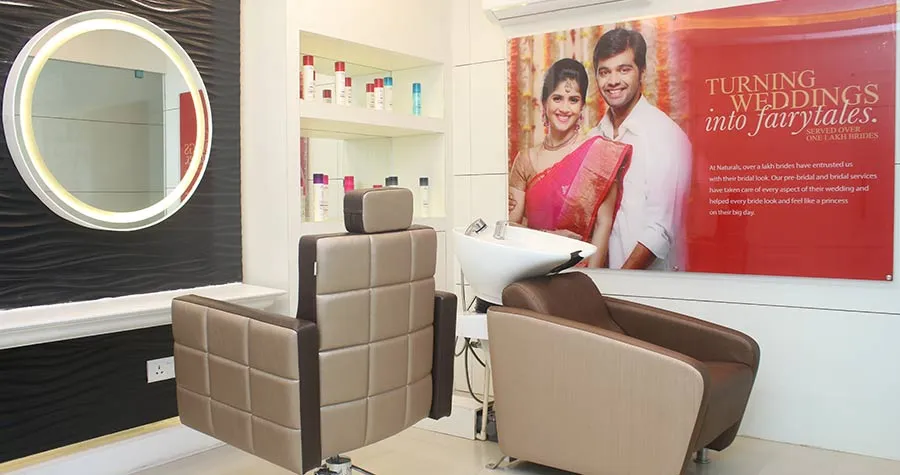
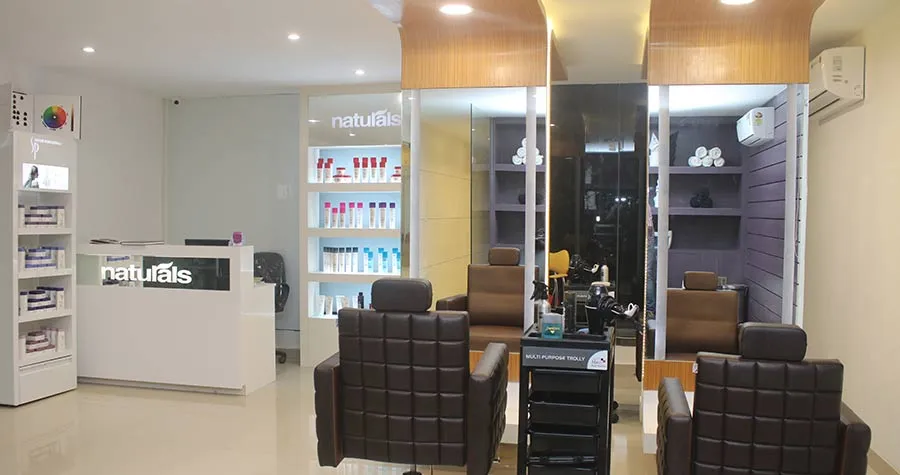
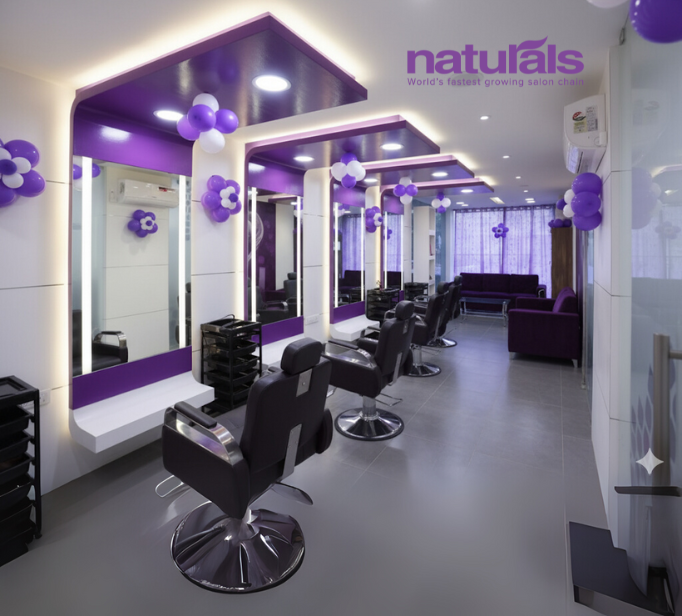
Space requirements vary by the sub-brand model chosen. The standard Naturals Unisex Salon format requires approximately 1,200 square feet, suited for a full-service appointment schedule across multiple simultaneous stations. The Naturals W format, designed exclusively for female clients and staff, operates from around 800 square feet. The Naturals Lounge, which incorporates spa services alongside the standard salon menu, requires approximately 1,800 square feet. Franchisees select the format based on their available space, target consumer, and local market conditions.
What equipment and fit-out does Naturals Salon & Spa- India's No.1 Hair & Beauty Salon provide as part of the franchise?
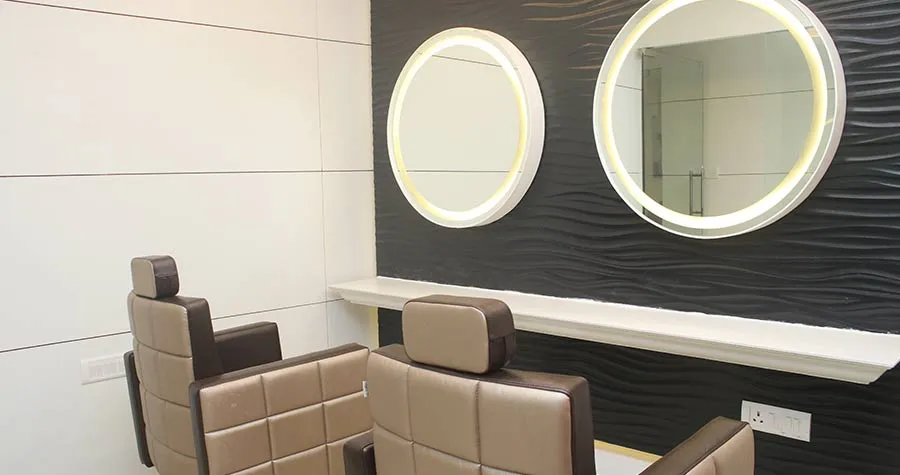
The franchisor specifies the interior layout, equipment list, and fit-out standards to maintain consistency across the network. This covers styling stations, wash units, skin treatment equipment, retail display infrastructure, and signage. Setup costs for interiors and equipment are included within the overall investment range, and the franchisor provides guidance on procurement. Franchisees who have accessed the brand's banking partnerships — with Bharatiya Mahila Bank and Indian Overseas Bank — have used loan facilities to fund the equipment and interior component of their setup.
What training does Naturals Salon & Spa- India's No.1 Hair & Beauty Salon provide for franchisees and their staff?
Training is delivered through the Naturals Training Academy, which offers courses ranging from foundation cosmetology programmes to specialised two-week modules on hair, skin, and makeup. The Academy's partnership with Godrej Industries provides both scale and curriculum depth. Initial training is completed before a centre opens, covering both technical service delivery and operational management. Ongoing training is available as the brand introduces new services or techniques, which means staff development is continuous rather than a one-time pre-opening activity.
Can a Naturals Salon & Spa- India's No.1 Hair & Beauty Salon centre be run by a manager without the owner being present daily?
In established centres with experienced teams and a mature client base, reduced owner presence is operationally viable. In the first two years, however, franchisee involvement during peak hours has a direct and measurable effect on service quality, staff retention, and client retention — the three variables that determine the speed of the break-even timeline. Moving to fully delegated management before the team and client base are stable tends to slow revenue growth and compress margins, because the oversight function that the owner provides is not easily replicated by a hired manager in an early-stage centre.
How does Naturals Salon & Spa- India's No.1 Hair & Beauty Salon support franchisees with local marketing and client acquisition?
The franchisor provides national-level marketing and promotional activity that builds brand visibility across the network, supported by digital marketing frameworks franchisees can adapt for their local market. Pre-launch support is provided to generate initial footfall. Beyond the opening period, the most effective client acquisition channel for a residential high-street salon is word of mouth driven by service quality — which is ultimately built through the franchisee's daily operational decisions rather than any marketing programme. The brand's scale provides a recognition baseline; local reputation is what converts that recognition into a loyal, recurring client base.
Disclaimer: All scores, rankings, and estimates on ForeFind are independently produced editorial assessments using publicly available data and validated brand-submitted information. They are not verified facts, financial advice, or investment recommendations. Full Disclaimer.
