


My bike Wash Franchise: Workshop Operations, Daily Management and What Owning This Business Requires
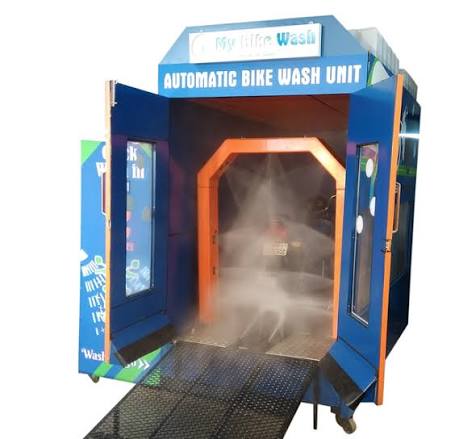
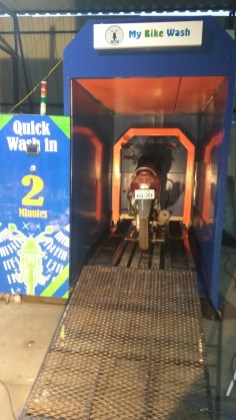
Developed by the Varadom Group and backed by research across two hundred washing centre operators and bike enthusiasts, the My bike Wash franchise is built around a fully automated motorcycle and scooter washing machine that completes a wash cycle in two minutes using under ten litres of water through an integrated recycling system. The format’s 100 to 200 square foot footprint, single-touch control interface, and PLC-controlled automation mean that a franchisee with two to six staff can run an operationally consistent service without the manual labour intensity of traditional bike wash operations. For an investor thinking through what owning and managing this business involves day to day, the automation is the defining operational fact — it changes the staffing requirement, the throughput ceiling, and the customer experience in ways that conventional hand-wash models do not.
What My bike Wash Does and Which Vehicles It Serves
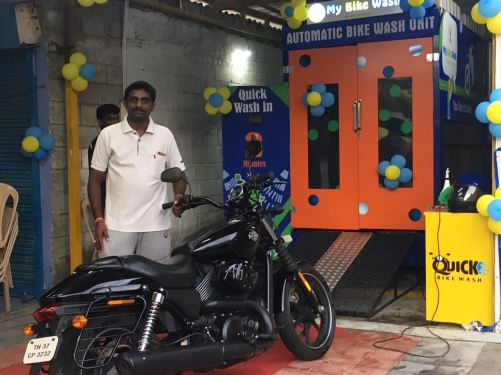
My bike Wash provides automated washing for all types and sizes of motorcycles and scooters — the full range of two-wheelers that form India’s dominant personal transport category. A typical customer engagement is brief by the standards of any service business: the rider pulls up, the bike enters the automated wash bay, completes its cycle in approximately two minutes, exits cleaned and dried, and the customer departs. The transaction is closer to a toll booth interaction than a service appointment — fast, standardised, and replicable at high frequency throughout the day. This speed is the business model’s core commercial property: it allows a small physical space to serve a large number of vehicles daily without the bottlenecks that accumulate in hand-wash operations where each vehicle takes fifteen to twenty minutes of manual attention.
Workshop Operations: A Typical Service Day
The operational day at a My bike Wash outlet divides between machine management and customer flow management. Opening involves switching on the automated system, running a brief functional check to confirm the wash programme options are operational, verifying the recycling unit’s filter status, and ensuring adequate water supply and consumable stock for the day’s expected volume. The machine handles the actual wash execution; the staff role is to guide vehicles into the bay, confirm programme selection with the customer, collect payment, and manage the queue when multiple customers arrive simultaneously.
The HMI interface and Single Touch Control mean that staff do not need mechanical expertise to operate the wash cycle — the machine manages itself once initiated. The franchisee’s operational role is queue management during peak hours, cash and digital payment reconciliation, consumable replenishment, and the three scheduled automated service visits provided annually by the franchisor, which maintain the machine’s performance standard without requiring the franchisee to manage that maintenance independently. End-of-day tasks are similarly compact: reconcile revenue, check the water recycling unit, log vehicle count, and power down.
Technician Recruitment, Training, and Productivity
The automation fundamentally changes the staffing requirement compared to a conventional bike wash. The two to six staff a My bike Wash outlet requires do not need motorcycle mechanical knowledge or specialised washing technique — they need customer service competence, the ability to operate the HMI control panel, and the diligence to follow the machine’s operating and maintenance procedures consistently. In Tier 2 cities, this profile is widely available: candidates from general service or retail backgrounds adapt to the role quickly. The franchisor provides onsite and offsite training for technicians, covering machine operation, basic maintenance checks, customer handling, and the IT system for franchise management. The training is designed for candidates without prior automotive experience, which keeps the recruitment challenge manageable even in cities where skilled automotive technicians are scarce.
Parts Procurement, Inventory Management, and Margin
A My bike Wash outlet’s consumable inventory is substantially simpler than a conventional automotive service franchise. The primary stock requirements are the cleaning agents and detailing products used in the wash cycle — specifically formulated for the automated system — along with filter maintenance materials for the water recycling unit. The franchisor specifies approved consumables through its supply framework, which ensures machine compatibility and protects the wash quality standard that the customer experience depends on. Unlike parts-intensive service franchises where counterfeit or substandard components create safety and quality risks, the primary risk in a bike wash consumable context is product dilution or substitution that degrades wash quality and customer satisfaction. Purchasing through the approved channel rather than sourcing cheaper informal alternatives is the practice that protects both the machine and the outlet’s reputation.
Customer Acquisition and Building a Repeat Client Base
Walk-in traffic from passing two-wheeler owners forms the initial customer base in any residential high-street location, but the My bike Wash franchisees who reach the six to twelve month break-even at the faster end are the ones who convert occasional visitors into regular weekly or fortnightly customers. Monthly membership packages — a fixed fee for a set number of washes per month — are the most effective tool for this conversion, and they transform the revenue model from entirely transaction-dependent to partially subscription-based. A customer who pays INR 400 to 600 per month for a weekly wash subscription generates predictable monthly revenue that does not require fresh acquisition each cycle. Corporate fleet tie-ups — delivery companies, courier operators, or businesses with two-wheeler fleets — provide concentrated volume that one account can contribute more daily washes than weeks of individual walk-in acquisition. The franchisor provides marketing material design support, which reduces the creative burden on new franchisees during the critical early months of customer awareness building.
Equipment, Technology, and Diagnostic Systems
The automated washing machine — a complete one-piece unit with PLC controller, HMI interface, Single Touch Control, and a multistage water recycling system with pre-filter — is the primary equipment provided as part of the My bike Wash franchise package. It comes with a one-year manufacturer warranty and three free scheduled service visits from the franchisor’s technical team annually, which handles the machine’s preventive maintenance without additional cost to the franchisee in the first year. The IT system for franchise management — covering transaction logging, customer data, and operational reporting — is integrated as part of the package. The franchisee sources utilities (water connection, electrical supply, air line) independently during setup, but the machine’s requirements are standard and the installation process is described as straightforward. The compact footprint — 100 to 200 square feet — means the space itself needs minimal modification beyond ensuring the utility connections are in place.
Who Runs a My bike Wash Workshop Successfully
The franchisee who builds a consistently profitable My bike Wash outlet is one who treats location selection as the most important pre-investment decision and treats daily customer volume management as the most important post-investment discipline. A well-chosen high-street residential location with genuine two-wheeler traffic density generates organic walk-in volume that a poorly chosen site requires sustained marketing effort to compensate for. The automation handles the service quality; the franchisee handles the commercial growth — converting walk-ins to subscribers, approaching local fleet operators, and maintaining the machine’s operational standard so that wash quality remains consistent enough to justify a customer’s repeat visit. Franchisees who treat the My bike Wash franchise as a passive income source managed entirely through hired staff consistently fail to build the daily throughput needed for profitability, because customer acquisition in the bike wash category depends on the owner’s personal presence, local relationships, and follow-through during the first six months when habits and loyalty are being established.
Accepting franchise applications in 26 states & UTs
What workshop space and infrastructure does a My bike Wash franchise require?
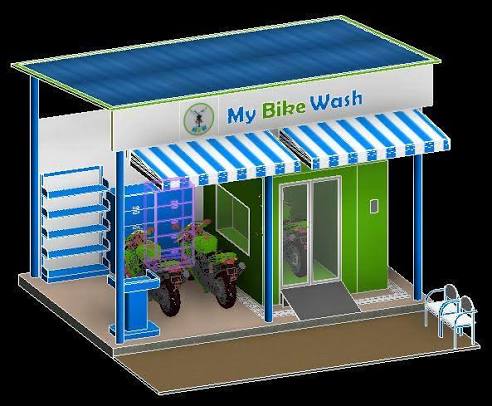
The format operates from 100 to 200 square feet — one of the most compact operational footprints in the automotive services franchise category. The space needs to accommodate the automated washing machine, a customer intake and payment area, and enough clearance for two-wheelers to enter and exit the wash bay. The only infrastructure requirements are a water connection, electrical supply, and an air line for the machine's compressed air functions. No structural construction is required beyond ensuring these utility connections are present at the chosen location.
What equipment does My bike Wash supply as part of the franchise package?
The franchise package includes the fully automated one-piece washing machine with PLC controller, HMI interface, Single Touch Control, and multistage water recycling unit with pre-filter. The machine comes with a one-year warranty and three scheduled onsite service visits annually from the franchisor's technical team, which covers preventive maintenance and performance checks at no additional cost in the first year. The IT system for franchise management and marketing material design are also provided as part of the package setup.
How does My bike Wash train franchisee technicians?
Training is provided both onsite and offsite, covering machine operation — including programme selection, basic troubleshooting, and the HMI interface — daily cleaning and maintenance routines for the machine and the water recycling unit, customer service standards, payment processing, and the IT system for operational management. The training is designed for candidates without prior automotive experience, which means franchisees in Tier 2 cities can recruit from a broad pool of candidates with general service or retail backgrounds rather than competing for a scarce supply of specialised automotive technicians.
Can a My bike Wash workshop be managed by a hired workshop manager?
The automated nature of the wash system means that day-to-day machine operation can function under a competent hired staff member with basic training. The customer acquisition and retention activities — monthly subscription sales, corporate fleet outreach, and community marketing — typically benefit from the franchisee's direct involvement, particularly in the first six months when the outlet's reputation and regular customer base are being established. Outlets where the owner delegates all commercial relationship building from day one tend to reach daily throughput targets more slowly than those where the franchisee is personally active in the opening phase.
How does My bike Wash support franchisees in building corporate and fleet client relationships?
The franchisor provides marketing material design, site selection assistance, and operational guidance that franchisees use to approach both individual customers and potential fleet clients. The compact, fast-service format is well-suited to fleet operator relationships — a delivery company whose riders need quick, consistent two-wheeler washing can use My bike Wash's two-minute cycle to turn over its fleet during operational breaks without significant downtime. The franchisor's IT system supports tracking and reporting that franchise clients with fleets may require for their own operational records, which is a practical advantage when pitching corporate accounts.
Disclaimer: All scores, rankings, and estimates on ForeFind are independently produced editorial assessments using publicly available data and validated brand-submitted information. They are not verified facts, financial advice, or investment recommendations. Full Disclaimer.
