



MindTech International Franchise: Education Market Opportunity, Brand Position and Growth Potential
MindTech International in the Context of India’s Education Franchise Market
India’s supplemental education sector spans everything from academic tutoring to vocational skilling, but MindTech International franchise operates in a narrower and distinctly differentiated corner: the psychometric and brain development space, specifically Dermatoglyphics Multiple Intelligence Testing (DMIT) and midbrain activation programmes targeted at children and adolescents. This positions the brand outside the crowded tutoring-centre model and instead in the assessment-led counselling category — a segment where parents are paying for insight rather than instruction. The contrast with an independent counsellor is consequential: an independent practitioner delivers their own interpretation through their own credibility alone, while a franchisee operates under a methodology that parents can verify, a brand they can reference, and a report format standardised across thousands of centres nationally.
Why Demand for This Education Format Is Growing in India
Several structural shifts in the Indian education environment are converging to expand the addressable market for assessment-led learning support. The National Education Policy 2020 explicitly moves away from rote-based evaluation toward competency and aptitude recognition — a policy shift that has elevated parent awareness of learning-style differences and created a receptive environment for tools that identify a child’s natural strengths early. Simultaneously, household spending on supplemental education has risen across income segments, with middle-class families in Tier 2 and Tier 3 cities now allocating discretionary budgets to learning support services that were previously confined to metropolitan households.
Post-COVID learning disruptions deepened parental anxiety about academic trajectories, which has translated into higher willingness to invest in diagnostic services that provide clarity. Organised franchise networks benefit disproportionately from these trends because they carry the brand recognition and standardised methodology that an anxious parent finds credible — an independent operator with no brand affiliation faces a higher trust barrier in precisely the market conditions where MindTech’s network scale is an asset.
What MindTech International Gives a Franchisee That They Cannot Build Alone
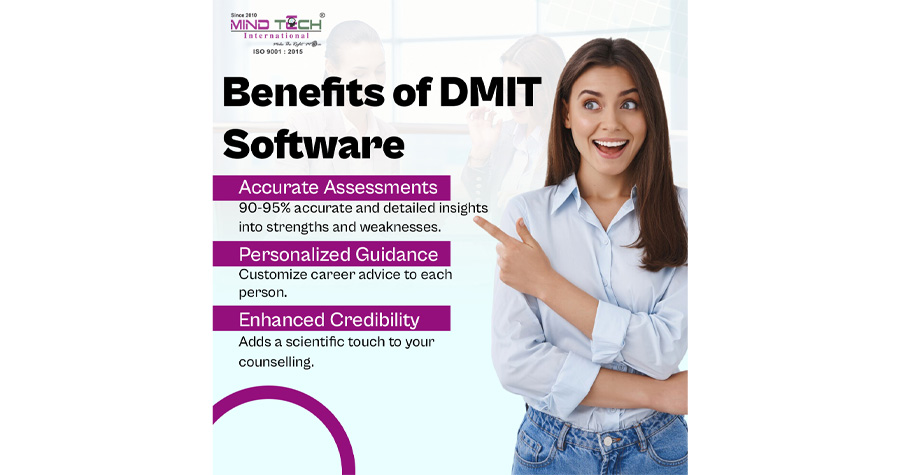
The core transferable asset in this franchise relationship is the DMIT methodology itself — a structured assessment framework drawing on dermatoglyphics, neuroscience, and multiple intelligence theory that would take years and significant expense for an individual to develop, validate, and present credibly. A franchisee enters with immediate access to this IP, along with the report generation tools, interpretation training, and curriculum that give the service its commercial form.
Beyond methodology, the brand’s presence across 20 states and over 1,500 centres creates a referral and recognition network that an independent counsellor cannot replicate. When a parent in a mid-sized city hears about MindTech from a school, a community group, or a neighbour, the franchise structure means that recognition converts into a local enquiry — and the franchisee captures that demand rather than losing it to an unknown competitor. The training programme MindTech provides is also the difference between a franchisee who can deliver a technically credible assessment and one who cannot, which matters in a category where the product is largely invisible until the report is delivered.
The MindTech International Network: Growth Rate and Geographic White Space
Adding approximately 344 new centres per year across a network that has grown to between 1,000 and 10,000 units over 16 years of franchising is a growth rate that reflects both the accessibility of the model and the breadth of India’s unserved geography. The investment entry point — under INR 50,000 — removes the capital barrier that limits most franchise categories, which is why MindTech has been able to expand into cities and towns where higher-investment franchise models have no presence.
Geographic white space in this network exists primarily in smaller district towns, semi-urban clusters, and states where organised career counselling penetration remains low. Territory allocation in education franchises of this type is typically structured around defined catchment areas — a school cluster, a residential zone, or a ward boundary — which protects franchisees from cannibalisation while giving the franchisor the density to build brand presence. Investors evaluating a specific city or town should assess local school density and the competitive presence of existing centres before assuming territorial availability.
Competitive Positioning: Why Parents Choose MindTech International Over Alternatives
A parent in a Tier 2 city evaluating options for their child’s learning support faces a fragmented market: independent tutors, coaching centres, and branded franchises of varying credibility. The reason MindTech occupies a defensible position within this landscape is the specificity of its product — DMIT delivers a fingerprint-based intelligence profile that is unique to the child, tangible in its output, and not easily replicated by a general tutoring centre. Parents receive a document they can keep, reference, and act on, which is a materially different experience from generic academic advice.
Midbrain activation programmes address a separate parental concern — optimising the whole child rather than drilling subject performance — and carry a differentiation that positions MindTech alongside holistic development rather than in direct competition with subject coaching. The combination of these two offerings gives a franchisee two distinct entry points into the parent community: one assessment-driven, one programme-driven, each capable of generating referrals to the other.
Policy and Regulatory Risk in the Indian Education Sector
Career counselling and psychometric assessment businesses operate in a relatively light regulatory environment compared to formal schooling or vocational training — no mandatory licences are required to open an MindTech centre, which is both an entry advantage and a signal about the category’s regulatory exposure. The absence of mandatory state board recognition or NSDC affiliation requirements reduces compliance friction for franchisees, but also means the brand’s credibility rests on its methodology and market reputation rather than a government-issued credential.
The primary regulatory consideration investors should monitor is the evolving standards around psychometric testing in educational contexts, particularly as NEP implementation deepens and state governments develop their own assessment frameworks. MindTech’s approach — rooted in internationally referenced dermatoglyphics research — positions it within a scientific frame rather than a purely commercial one, which provides some buffer against policy-driven challenges. The franchisor’s role in keeping curriculum and assessment tools updated as the regulatory and pedagogical environment evolves is a question franchisees should address directly before signing.
Who Captures the Most Value From a MindTech International Franchise
The MindTech International franchise’s financial profile — low capital entry, a 2–4 month break-even window, and monthly revenues scaling to INR 1 Lac with sufficient volume — is accessible enough that the differentiating factor between high-performing and underperforming centres is rarely capital. It is community trust. A homemaker with deep connections to local school networks, a former HR professional with relationships across corporate and coaching environments, or a salaried professional whose spouse or family is embedded in the local parent community — these investors convert enquiries into assessments because the first meeting is already half-won before it begins.
The brand’s target investor profile is not accidental. Franchisees who lack any prior relationship with the parent community in their catchment area, and who rely purely on cold marketing to build volume, consistently take longer to reach the revenue levels that make the investment worthwhile. In a high-seasonality business — demand peaks around school admission cycles and board exam periods — the franchisees who have pre-built trust are the ones who capture disproportionate volume during those windows.
Accepting franchise applications in 29 states & UTs


How does MindTech International compare to other education franchises at this investment level?
At under INR 50,000 entry investment, MindTech International franchise occupies a category where most competitors are either generic tutoring models or early-childhood activity franchises. MindTech's differentiation is its DMIT methodology — a fingerprint-based intelligence assessment tool with a defined scientific framework — which gives franchisees a product that parents cannot access from a neighbourhood tutor. The combination of a low capital requirement and a proprietary assessment tool is unusual in the education franchise segment at this price point.
Is MindTech International suitable for Tier 2 and Tier 3 cities?
Yes — and the evidence is in the network composition itself. A franchise that has expanded to over 20 states and 165 cities in India has by necessity penetrated well beyond the top-tier metros. The home-based and flexible location options further reduce the barriers for franchisees in smaller cities where commercial rental costs would make a fixed-centre model unviable. The key requirement is not city size but access to a sufficient concentration of school-age children and engaged parents, which most district towns and semi-urban areas satisfy.
What is MindTech International's student outcome track record?
MindTech's DMIT assessments are diagnostic tools rather than academic programmes — the output is an intelligence profile that parents and counsellors use to guide learning decisions, not a course with a pass rate. The relevant outcome metric is the quality and consistency of the assessment report, which is standardised across the franchise network. Franchisees should request sample reports and speak with existing centres about parent feedback when evaluating the product's reception in markets similar to their own.
How does MindTech International handle changes in education policy or curriculum?
The franchise model's resilience to policy change lies in the category it operates: psychometric assessment and brain development counselling sit adjacent to but outside the formal curriculum, which insulates the product from the direct impact of syllabus or board examination reforms. The franchisor's responsibility is to keep the DMIT methodology and midbrain activation programmes aligned with evolving scientific consensus and parent expectations — an area franchisees should discuss with the brand during evaluation to understand how curriculum updates are communicated and implemented across the network.
What is the MindTech International franchise expansion plan for India?
MindTech International has consistently added hundreds of new centres annually, with the network spanning a substantial share of India's states and cities after 16 years of franchising. The remaining expansion opportunity lies in smaller district towns, underserved semi-urban markets, and geographic clusters where organised career counselling has limited presence. Investors interested in specific geographies should enquire directly about territorial availability and the franchisor's activation plans for those markets, as growth priorities shift as the network matures.
Disclaimer: All scores, rankings, and estimates on ForeFind are independently produced editorial assessments using publicly available data and validated brand-submitted information. They are not verified facts, financial advice, or investment recommendations. Full Disclaimer.
