


Life Cycle Mall Franchise: India’s Vehicle Market, Demand Drivers and Competitive Positioning
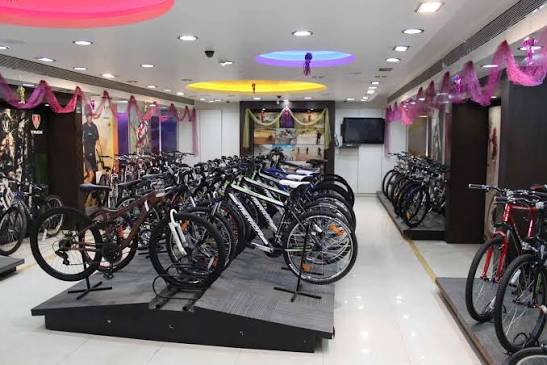
Originating in Pune as a large-format multi-brand bicycle destination, the Life Cycle Mall franchise represents an early-stage but structurally interesting entry point into India’s organised cycling retail sector. With a format designed for 1,500 to 2,000 square feet and a focus on offering a wide selection of bicycles across price points — from accessible everyday models to premium sports and leisure options — alongside accessories, spare parts, and cycling events, the brand targets a consumer and community experience that independent bicycle shops and generic sports retailers cannot credibly replicate.
Life Cycle Mall in India’s Automotive Services Landscape
Life Cycle Mall occupies a specific and underserved position in India’s automotive retail landscape: the organised, experience-oriented bicycle destination. Most bicycle retail in India happens through small independent cycle shops that carry a limited range, offer no curated brand experience, and provide service as an afterthought rather than as a revenue-generating operation. Life Cycle Mall’s format fills the gap between these fragmented independent retailers and the direct-to-consumer online channels that have grown in the cycling category but cannot replicate the in-person product experience, fitting advice, or immediate service that a physical destination provides. The 1,500 to 2,000 square foot format is large enough to create a genuine shopping environment with multi-brand display, a test-ride area, accessories, and a visible service zone — a combination that independent shops rarely achieve and that forms the basis of the brand’s consumer value proposition.
India’s Vehicle Population and Why Service Demand Is Growing
India has one of the largest bicycle populations in the world — hundreds of millions of bicycles in use across urban, semi-urban, and rural catchments — and the organised service infrastructure for this category is almost entirely absent. The vast majority of bicycle maintenance is handled informally, by roadside repair operators with limited tools and no parts quality assurance. As urban cycling grows — driven by rising fuel costs, increasing health awareness, improved cycling infrastructure in several cities, and the growth of recreational cycling as a middle-class activity — the demand for quality-assured, parts-reliable service is growing alongside it. The shift from informal to organised service is at an earlier stage in the bicycle category than in the motor vehicle category, which means the opportunity for well-positioned franchise operators is in the growth phase rather than the saturation phase.
Why a Life Cycle Mall Franchise Outperforms an Independent Workshop
An independent bicycle shop’s competitive position is almost entirely a function of the owner’s personal knowledge and local relationships. When those are strong, the shop can perform well; when they are not, or when the owner is absent, the business has little institutional differentiation to fall back on. A Life Cycle Mall franchise, by contrast, operates within a defined format — multi-brand product curation, event programming, service bay standards, and an operating model developed through the brand’s flagship store experience in Pune. The multi-brand approach is a structural advantage: customers seeking a specific brand or price point find it under one roof, which increases the probability of a purchase conversion compared to a single-brand independent shop where a customer whose preference does not match the inventory leaves without buying. The addition of cycling events — races, workshops, leisure rides — creates community engagement that an independent shop cannot replicate and that drives return visits beyond transactional service needs.
Geographic Opportunity: Tier 2 Cities and the Unorganised Market Gap
The most significant white space for Life Cycle Mall’s format exists in Tier 2 cities with growing middle-income populations and increasing cycling activity — markets like Nashik, Coimbatore, Indore, Bhubaneswar, and Vadodara, where organised bicycle retail is almost entirely absent despite meaningful consumer demand. In these cities, the choice available to a cycling enthusiast or a family purchasing a child’s bicycle is typically limited to a handful of small independent shops or a general sporting goods retailer. A properly fitted Life Cycle Mall destination — with a wide selection, knowledgeable staff, an accessible service bay, and a program of cycling events — would be commercially distinctive in most of these markets. The format’s 1,500 to 2,000 square foot requirement is achievable in these cities at rental costs considerably lower than equivalent space in Mumbai or Bengaluru, which improves the investment economics for franchisees in secondary markets.
EV and New Energy Vehicles: How Life Cycle Mall Is Positioned
The cycling category sits at an interesting intersection with the electric vehicle transition. E-bikes — pedal-assist and throttle-assist electric bicycles — are a growing segment in India, particularly for urban commuting, and they are a natural extension of the bicycle retail format rather than a departure from it. Life Cycle Mall’s multi-brand, experience-oriented format is inherently positioned to incorporate e-bike models as the category grows, since the product selection and service requirements are adjacent to conventional bicycles rather than requiring entirely different infrastructure. Unlike motor vehicle workshops facing EV disruption in powertrain and maintenance, a bicycle destination franchise faces the EV transition as an opportunity to expand its product range upward in value and margin rather than as a threat to its existing service model.
Competitive Differentiation: Why Customers Choose Life Cycle Mall
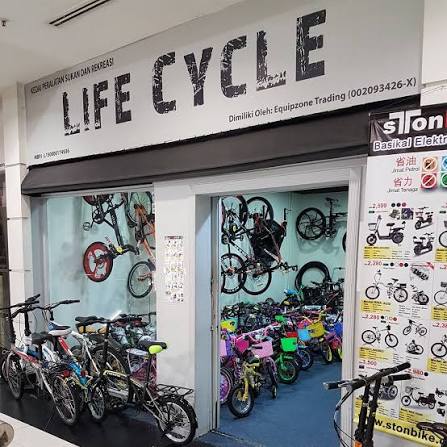
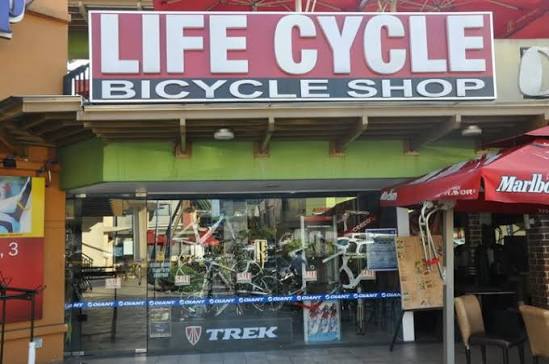
Three factors drive a customer’s choice of where to buy or service a bicycle: proximity to where they live, confidence that the price is fair, and trust that the parts used in service are genuine and the product on sale is correctly represented. Life Cycle Mall’s residential high-street location format addresses proximity directly. Its multi-brand selection addresses competitive pricing because customers can compare options within the store rather than needing to visit multiple shops. And the brand’s format — defined service bay, professional staff, community events — creates the kind of institutional presentation that signals quality assurance to a consumer who has been burned by a roadside repair or received a counterfeit part from an informal shop. These three factors together create a differentiated proposition that most independent competitors address poorly, even when their prices are lower on a like-for-like basis.
Who Builds a Profitable Life Cycle Mall Franchise
The franchisee who builds the most commercially viable Life Cycle Mall outlet combines genuine passion for cycling as a category — which makes the event programming and community engagement feel authentic rather than promotional — with the commercial discipline to manage inventory across a multi-brand selection and build the repeat customer relationships that sustain revenue beyond the initial opening period. Location selection matters as much as the franchisee’s personal profile: a Life Cycle Mall in a residential area with cycling infrastructure nearby, near a park or cycling route, or adjacent to a school with a cycling culture will generate organic footfall that a comparable space in an unrelated commercial district cannot. Technical credibility in the service bay is the second commercial foundation — a centre whose service work generates positive word of mouth becomes the default bicycle repair destination for an entire neighbourhood, which is a recurring revenue base that the retail side alone cannot provide. The Life Cycle Mall franchise rewards investors who bring community relationships and category enthusiasm alongside their capital commitment.
How does Life Cycle Mall compare to OEM-authorised service centres in India?
Life Cycle Mall operates as a multi-brand destination rather than a single-brand authorised service centre, which gives it a broader consumer appeal. A customer not wedded to one brand — which describes most recreational and commuter cyclists — finds more value in a destination that offers selection and comparison than in a single-brand outlet. The trade-off is that multi-brand operations require deeper product knowledge across a wider range and more complex parts inventory management. The format's competitive strength is in consumer experience and selection breadth rather than manufacturer-exclusive service relationships.
Is a Life Cycle Mall franchise viable in Tier 2 and Tier 3 Indian cities?
Tier 2 cities with growing middle-income populations and some existing cycling culture are well-suited to this format. The key viability factors are the local cycling habit — whether people in the city already commute, exercise, or ride recreationally — and the absence of organised competition, which gives a well-run Life Cycle Mall franchise an early-mover advantage in markets where the consumer demand exists but no organised outlet currently serves it. Tier 3 cities require more careful assessment of demand density, since the format's 1,500 to 2,000 square foot space and multi-brand inventory requires sufficient consumer volume to justify the investment.
How does Life Cycle Mall handle the shift toward electric vehicles?
E-bikes are a natural extension of the bicycle retail format rather than a disruptive threat to it. Life Cycle Mall's multi-brand, product-agnostic approach allows the outlet to incorporate electric bicycle models as the category grows, without requiring investment in entirely new service infrastructure. The service requirements for e-bikes — battery maintenance, motor diagnostics alongside standard mechanical service — are additive skills for bicycle technicians rather than a wholesale replacement of existing knowledge, which makes the transition manageable for franchisees who build technical capability now.
What is the addressable vehicle population in a typical Life Cycle Mall franchise territory?
India's total bicycle population is estimated in the hundreds of millions, but the commercially relevant addressable population for a Life Cycle Mall format — quality-conscious consumers willing to spend on a proper bicycle and pay for organised service — is concentrated in middle-income urban and semi-urban catchments. In a Tier 2 city with a population of five hundred thousand or more, a conservatively estimated addressable consumer base of fifteen to twenty-five thousand cycling households within a reasonable travel radius can sustain a well-run multi-brand destination. The actual catchment depends on local cycling culture, competitive density, and the quality of the location.
How does Life Cycle Mall's parts supply chain ensure quality and availability?
Multi-brand bicycle retail requires a parts inventory strategy that covers both branded consumables from the major manufacturers represented in the showroom and generic replacement parts for the broader service customer base. The brand's operating framework guides franchisees on sourcing and inventory management to balance availability against working capital. Counterfeit or substandard parts are a genuine risk in the bicycle service category — a service centre that uses poor-quality parts generates repeat failures and damages its reputation faster than almost any other operational failure. Life Cycle Mall's branded format creates an institutional accountability that an informal repair shop does not have, and franchisees who maintain genuine parts inventory as a non-negotiable operational standard build the trust-based reputation that drives long-term service revenue.
Disclaimer: All scores, rankings, and estimates on ForeFind are independently produced editorial assessments using publicly available data and validated brand-submitted information. They are not verified facts, financial advice, or investment recommendations. Full Disclaimer.
