



IFB Industries Franchise: Store Operations, Daily Management and What Owning This Business Looks Like
Running an IFB Industries franchise means operating within one of India’s more recognisable consumer appliance networks — a brand with 200 outlets built over thirteen years of franchising and a product range anchored by front-loading washing machines, a category in which IFB holds strong retail visibility. For an investor evaluating what daily ownership actually involves, the picture is one of active, owner-managed retail: a store where the franchisee’s presence, product knowledge, and local relationships are the primary drivers of the revenue that the brand’s indicative monthly figures describe. This profile walks through the operational reality of that ownership, from morning opening to festive season planning.
What IFB Industries Sells and Who Buys It
IFB’s product range spans the major home appliance categories: front-loading and top-loading washing machines, microwave ovens, dishwashers, air conditioners, cloth dryers, chimneys, and hobs. The buyer is predominantly a household making a considered, high-involvement purchase — someone who has already decided to buy but needs in-person reassurance about specifications, warranty terms, installation logistics, and price. These are not impulse purchases. A washing machine or dishwasher buyer visits one or two stores, spends twenty to forty minutes evaluating, and often returns with a family member before confirming. What drives repeat engagement in this category is not repeat purchase of the same product but the household lifecycle: the same customer who bought a washing machine in year one returns for a microwave in year three and an air conditioner in year five. A franchisee who builds genuine relationships with local buyers creates a customer base that compounds quietly over time.
What Happens in an IFB Industries Store Every Day
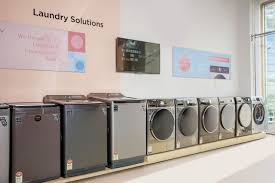
The daily rhythm of a consumer appliances store is more structured than many retail formats because the product range demands it. Opening involves floor readiness — display units powered on and demonstrable, promotional materials current, POS system active — before foot traffic begins. In the morning hours, which are quieter in most markets, experienced staff handle stock checks against the previous day’s sales log and flag any SKU that needs urgent reorder attention. Customer-facing hours, which peak in evenings and on weekends, require the franchisee or a trained floor supervisor to manage product demonstrations personally: IFB’s appliances are evaluated by watching them run, and a staff member who cannot demonstrate a front-loader’s wash cycle confidently loses the sale at the demonstration stage.
Closing involves POS reconciliation, daily sales reporting to the brand’s systems, and a brief review of the next day’s appointment or delivery schedule. Franchisees who delegate this closing discipline entirely to staff without personal review tend to encounter inventory discrepancies that compound across weeks. Daily engagement with the numbers is a characteristic of the franchisees who reach break-even within the lower end of the nine to eighteen month window.
Merchandise Planning, Display and Visual Standards
IFB, as a mature franchise system, maintains defined visual merchandising standards that franchisees are expected to implement and sustain. Display units must be operational and demonstrable — a non-functional display unit in a consumer appliances store does not just represent a missed sale; it signals product quality concerns to browsers. The brand periodically refreshes its product range, and franchisees need to integrate new SKUs into the display floor while managing space efficiently across a 0 to undefined square footage that varies by outlet.
Slow-moving inventory is a practical reality in any retail format with a broad appliance range. In this category, slow movers are typically older model versions that a new product launch has partially displaced. The franchisee’s responsibility is to identify these early — through weekly sales velocity reviews — and discuss clearance pricing or return options with the brand before the stock ties up working capital across multiple months. IFB’s marketing support typically generates promotional materials for national product campaigns; the franchisee’s role is to activate these materials at the local store level and ensure in-store presentation aligns with whatever the brand is promoting nationally at any given time.
Staff Requirements and the Hiring Reality
Three to ten staff across a consumer electronics retail store covers several distinct roles: a floor supervisor or senior sales associate who handles high-involvement customer conversations and product demonstrations; one or two junior sales staff who manage floor presentation, stock movement, and initial customer greeting; and an accounts or billing person who handles POS, invoicing, and daily reconciliation. In metro markets, hiring experienced appliance retail staff is competitive but feasible. In Tier 2 cities, the more practical approach is to hire for attitude and train for product knowledge — a motivated candidate with no appliance retail background can become a competent floor associate within four to six weeks of structured product training.
Retention in Tier 2 retail is driven less by salary than by workplace predictability and growth visibility. Franchisees who invest in staff training, communicate clearly about performance expectations, and create a store culture where good results are recognised tend to hold their teams for two to three years — long enough to build the product depth and customer familiarity that converts browsers into buyers.
Supply Chain, Reordering and Inventory Management
IFB’s franchise network of 200 outlets gives the brand enough distribution scale to maintain regional warehouse infrastructure, which typically means lead times on standard SKUs are measured in days rather than weeks. Franchisees place replenishment orders through the brand’s ordering system, with reorder triggers based on stock-on-hand levels relative to average weekly sales velocity. The risk period for stockouts occurs during festive demand peaks, when high-velocity SKUs — particularly mid-range washing machines and microwave ovens — can clear faster than the replenishment cycle refills them.
Managing this requires the franchisee to forecast festive demand and place pre-peak orders three to four weeks in advance — a discipline that experienced operators treat as a fixed calendar task rather than a reactive decision. What happens when a product sells out mid-peak depends on the brand’s buffer stock policy; this is worth clarifying during onboarding so the franchisee understands whether they can place emergency orders and at what lead time.
Brand Support: Marketing, Promotions and National Campaigns
IFB’s national marketing presence — built across television, digital, and print channels over decades — creates awareness that franchisees inherit at the local level. When a customer walks into an IFB outlet, the brand name is already known; the store’s job is to convert that awareness into a purchase decision. At the store level, the brand provides marketing materials aligned with national campaign calendars: product launch collateral, festive season promotional assets, and price cards. What the franchisee funds locally includes hyperlocal activations — area-level promotions, housing society tie-ups, or local newspaper insertions — that the national marketing budget does not cover.
The practical value of brand support for an IFB Industries franchise investor is that it reduces the cost and effort of generating store-level awareness relative to an independent retailer, who must build that awareness entirely from scratch. It does not eliminate the franchisee’s responsibility for local outreach; it simply provides a stronger starting point.
Who Runs an IFB Industries Store Successfully
The franchisee profile that generates consistent same-store growth across an IFB Industries outlet is someone who is present during peak trading hours, understands which local consumers are in a purchase cycle for major appliances, and treats the store’s product presentation as an ongoing discipline rather than a one-time setup task. Electronics retail investor experience helps because the category’s economics — margin structure, inventory management, demonstration-driven sales — are not intuitive to someone whose background is in unrelated retail or services. Investors who hand day-to-day store management to a hired manager from the first month, without first establishing the operational rhythm themselves, consistently find that the store underperforms its potential for the first two years — not because the brand fails them, but because the local consumer relationships and staff culture that drive conversion take longer to build when the owner is not in the room.
What space is required for an IFB Industries franchise store?
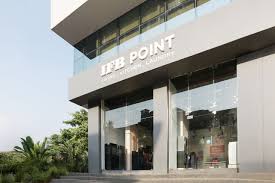
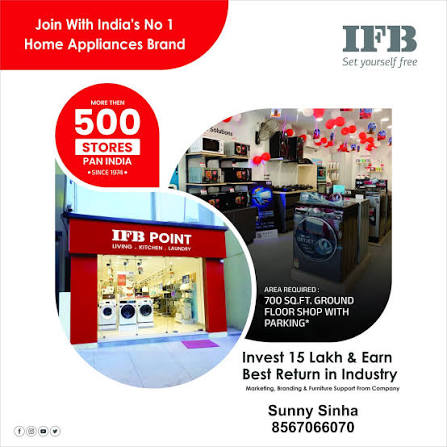
IFB Industries franchise outlets operate across a range of store sizes depending on location type — mall versus high-street — and local market conditions. The brand's specific space requirement for new franchisees is confirmed through the onboarding process, where location suitability is assessed based on footfall, visibility, and proximity to the brand's existing network. Prospective franchisees should approach the inquiry process with a shortlisted location in mind, as site approval is typically part of the franchise agreement process.
How long does the setup process take for an IFB Industries store?
Setup complexity for an IFB Industries store is classified as moderate, which in practice means a franchisee with a confirmed location, approved fit-out plan, and secured investment can expect to move from agreement signing to store opening in six to twelve weeks. The primary variables are fit-out execution speed, local contractor availability, and how quickly the initial inventory order is processed and delivered. Franchisees who complete their location and legal documentation before signing tend to compress the setup timeline meaningfully.
What product training and retail operations training does IFB Industries provide?
IFB Industries provides franchisees and their key staff with product knowledge training covering the full appliance range — specifications, feature differentiation, installation requirements, and warranty terms. Operations training covers the brand's POS system, ordering process, visual merchandising standards, and reporting requirements. Given that IFB's sales process is heavily demonstration-driven, product training for floor staff is not a one-time event; franchisees in established outlets typically run refresher sessions when new product ranges are introduced.
Can an IFB Industries store be run semi-absentee with a store manager in place?
The IFB Industries franchise is structured as an owner-operated business, and the operational realities of consumer appliances retail make that classification accurate. High-involvement purchase decisions, staff management, local marketing, and inventory planning all benefit from an engaged owner who is present regularly. A store manager can handle day-to-day floor operations, but franchisees who are consistently absent from their store during the first two years tend to see slower revenue growth and higher staff turnover than those who treat active involvement as a non-negotiable phase of building the business.
How does IFB Industries support franchisees during festive season demand peaks?
Festive season — primarily October through December — represents a disproportionate share of annual appliance sales for most IFB franchise stores. The brand typically supports this period with national marketing campaigns that drive category demand, promotional pricing structures that franchisees can activate locally, and advance communication about new product launches timed to coincide with peak consumer spending. Franchisees who perform best during festive periods are those who plan their inventory orders four to six weeks ahead of the peak and staff up temporarily to handle increased daily footfall without compromising the quality of in-store customer conversations.
Disclaimer: All scores, rankings, and estimates on ForeFind are independently produced editorial assessments using publicly available data and validated brand-submitted information. They are not verified facts, financial advice, or investment recommendations. Full Disclaimer.
