



Ideal Play Abacus India Pvt. Ltd. Franchise: Investment, Fee Structure and Return Potential in India
The Ideal Play Abacus India Pvt. Ltd. franchise operates in a segment of the Indian education market where demand is durable, entry costs are low, and the operational model is designed for owner-operators who want manageable complexity alongside meaningful returns. With nearly two decades of franchising history and 400 centres across the country, IPA has accumulated the kind of field-tested operational knowledge that distinguishes an established network from a franchise concept still finding its footing. Investors evaluating this opportunity through a financial lens will find a model worth examining carefully — both for what it costs to enter and what drives revenue once the centre is running.
About Ideal Play Abacus India Pvt. Ltd.
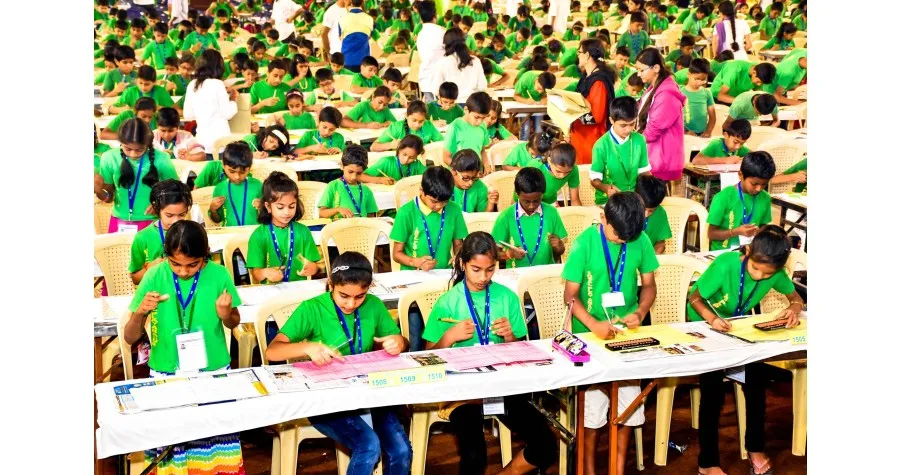
IPA’s core programme is abacus-based mental arithmetic, targeted at children between the ages of 4 and 14, with curriculum emphasis placed on the 4 to 12 age window when cognitive development is at its most accelerable. The teaching methodology is grounded in a well-established body of research on early brain development — specifically, the finding that the most intensive neurological growth occurs in the first decade of life, creating a time-sensitive window for structured skill building.
Beyond abacus, the brand has developed a range of supplementary programmes including speed arithmetic, memory training, handwriting improvement, colour recognition, and an English fluency programme called BRITE. This multi-programme structure matters commercially: it gives enrolled families reasons to continue beyond a single course, extending the revenue relationship per student rather than resetting it with each new admission cycle. The fact that IPA has added more than 21 new centres per year on average across its franchising history indicates the model has sustained franchisee interest over time — not simply in early growth years, but consistently.
How Revenue Is Generated in a Ideal Play Abacus India Pvt. Ltd. Centre
Revenue in an IPA centre comes from four distinct sources, each with a different predictability profile. Admission fees are collected once per enrolment and represent the highest single payment per student, but they are not recurrent. Monthly tuition fees are the backbone of the model — they continue for as long as a student remains enrolled across multiple levels, which in a well-run centre averages 18 to 24 months per child. Examination fees are charged when students sit for level assessments, occurring several times per year per active student. Study materials and workbooks add a supplementary revenue line that scales with enrolment volume.
The monthly revenue range of INR 20,000 to INR 1,50,000 reflects the spread between a centre with 20 to 25 enrolled students and one carrying 80 to 100. The break-even threshold, at the low fixed cost structure this model supports, is typically reached somewhere between 25 and 40 active paying students — a number that a franchisee in a residential catchment with school-age families can realistically achieve within the first four to five months through structured local outreach and trial session conversions.
The Investment and What It Covers
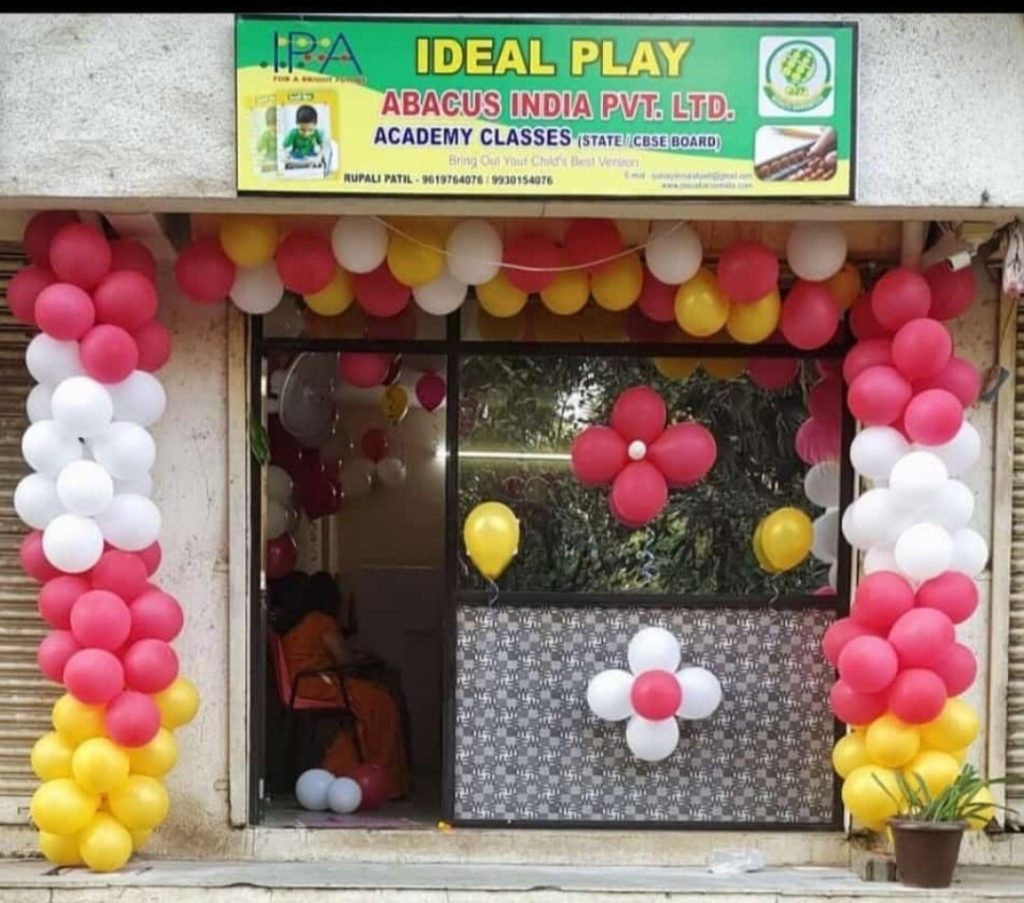
At INR 50,000 to INR 2,00,000, the initial investment in an IPA franchise is structured primarily around access rather than physical infrastructure. The franchise fee covers the right to operate under the IPA brand within an exclusive territory, initial curriculum materials across all active programmes, teacher training for the first instructors, and operating documentation including field manuals. Because the space requirement is flexible — ranging from 50 to 1,000 square feet depending on the centre’s scale — fitout costs are within the franchisee’s control rather than dictated by a fixed specification.
Monthly recurring costs in a small IPA centre typically include teacher salaries for one to two instructors, a royalty or programme fee paid to the franchisor, and any local marketing spend the franchisee chooses to run independently. In a centre operating with two teachers and 40 enrolled students, total monthly outflows can be managed below INR 25,000, which means the revenue required to cover costs is achievable at a relatively modest enrolment level. This cost structure is what makes the 4 to 8 month break-even window realistic rather than aspirational.
Enrollment Cycle, Seasonality, and Revenue Predictability
Two admission surges shape the annual calendar of any children’s activity programme in India. The April to June window aligns with the new academic year, when parents are most receptive to supplemental enrolments. The November to January window follows the half-year school assessment period, when parents who noticed gaps in their child’s learning often act. IPA centres, like others in this category, will see concentrated admission activity during these periods.
What distinguishes abacus programmes from session-based activity classes is the multi-month enrolment model. A child who joins in May and progresses through Level 1 and Level 2 is still paying monthly fees in September and October — months when new admissions slow. This structural carry-over means a centre with a healthy enrolled base does not experience the sharp revenue dips that purely admission-dependent models face in flat months. The revenue predictability is not uniform across all months, but it is substantially more stable than the seasonality rating alone would imply, because existing students continue generating monthly income regardless of new admission volume.
What the Franchisor Provides and Its Real Value
IPA’s support package includes operating manuals, field assistance during setup, head office guidance, and marketing and advertising support. Translated into practical terms for a new franchisee, this means the curriculum does not need to be designed or tested — it arrives validated across 400 centres over nineteen years. Assessment frameworks, examination papers, and student certificates come from the franchisor, eliminating a significant administrative burden that independent operators carry entirely on their own.
The territorial exclusivity element is often underappreciated at the evaluation stage. A franchisee operating in a defined geographic area without a competing IPA centre has a clear addressable market and a brand that, in cities where IPA has been active, parents may already recognise. Building equivalent recognition independently would require sustained multi-year marketing investment at a cost that exceeds the franchise fee several times over. The franchisor’s value proposition is largely about compressing this trust-building timeline — and at the investment level this franchise requires, that compression has a direct effect on how quickly break-even is reached.
Risk Factors Specific to Education Franchises in India
Four risks are worth examining directly. Teacher retention is the most operationally disruptive: a skilled instructor who has built relationships with 30 enrolled families is difficult to replace mid-term without affecting student progress and parent confidence. IPA’s standardised teaching methodology reduces this risk by making the programme deliverable by any trained instructor rather than dependent on individual teaching style — but the replacement timeline still creates a service gap.
Online substitution is a genuine competitive pressure. Free abacus apps and YouTube tutorials are widely available and parents are aware of them. The IPA model competes on structured progression, supervised assessment, and the social accountability of a classroom setting — elements that self-directed digital tools cannot replicate. Policy risk, while real, is lower for supplemental activity centres than for tutoring operations that overlap with school curriculum, since IPA programmes do not claim to replace formal schooling. Student outcome risk — the possibility that enrolled children show insufficient progress and parents withdraw — is managed through the level-based assessment structure, which gives both teachers and parents early visibility into a student’s pace before dissatisfaction accumulates.
Who This Investment Suits
The franchisee who builds a consistently full IPA centre within 18 months shares a common profile: they are known in their local community before the centre opens, they have a natural ability to speak with parents about their children’s development, and they treat the admission process as relationship-building rather than sales. A retired schoolteacher, a former education administrator, or a salaried professional who is already active in school parent groups enters this business with a trust base that shortens the enrolment ramp considerably.
An investor who expects enrolment to grow through the brand name alone, without sustained personal outreach and community presence in the first year, will find the lower end of the revenue range more persistent than they anticipated.
Accepting franchise applications in 16 states & UTs


How much does it cost to open a Ideal Play Abacus India Pvt. Ltd. franchise?
The initial investment falls between INR 50,000 and INR 2,00,000, covering the franchise fee, curriculum access, initial materials, and teacher training. The wide range reflects differences in centre size, local setup costs, and the scope of the initial marketing effort a franchisee chooses to fund at launch.
What is the expected monthly revenue from a Ideal Play Abacus India Pvt. Ltd. centre?
Monthly revenue is estimated between INR 20,000 and INR 1,50,000 depending on active enrolment. A centre with 40 to 50 students paying regular monthly fees, plus examination and material income, typically generates INR 60,000 to INR 90,000 per month — a range that represents a realistic 12-month target for a franchisee with active local outreach.
How many students does a Ideal Play Abacus India Pvt. Ltd. centre need to reach break-even?
Given the low fixed cost structure, break-even is generally achievable with 25 to 40 enrolled students paying monthly tuition. At a typical tuition fee in a Tier 2 city, 30 active students generating INR 800 to INR 1,200 per month each produces enough recurring income to cover teacher salaries and franchisor fees with a modest surplus.
Does Ideal Play Abacus India Pvt. Ltd. help with teacher recruitment and training?
Yes. The franchisor provides structured teacher training as part of its support framework, and field assistance is available during the setup period to help franchisees identify and prepare their first instructors. In smaller cities, franchisees often find suitable candidates among mathematics graduates or school teachers seeking supplementary income — a pool that the IPA training system can bring up to delivery standard within a few weeks.
Is Ideal Play Abacus India Pvt. Ltd. suitable for Tier 2 and Tier 3 cities in India?
The Ideal Play Abacus India Pvt. Ltd. franchise is particularly well-suited to smaller cities, where organised cognitive development programmes for children are less available and parental demand for measurable academic improvement is strong. The flexible space requirement, low mandatory licensing, and part-time operation mode make it easier to establish in a residential locality without the overhead that larger education franchise models require.
Disclaimer: All scores, rankings, and estimates on ForeFind are independently produced editorial assessments using publicly available data and validated brand-submitted information. They are not verified facts, financial advice, or investment recommendations. Full Disclaimer.
