



What Gopi Chand and Son Sells and Who Buys It
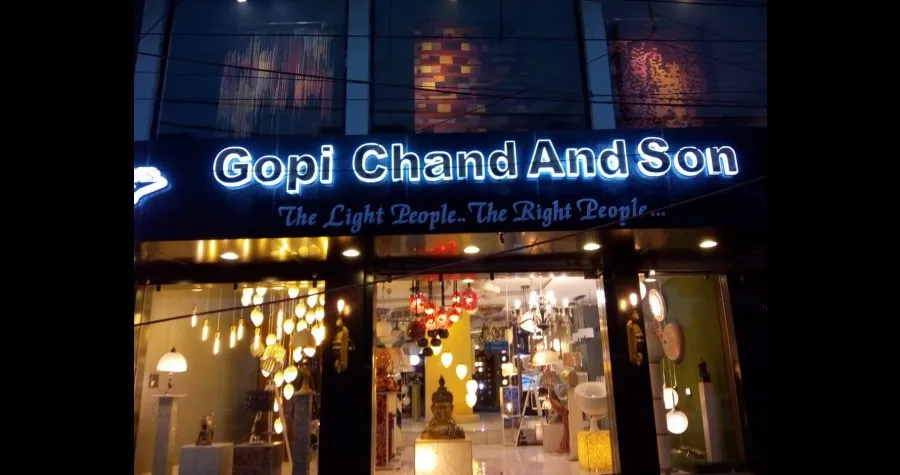
Gopi Chand and Son franchise stores trade in decorative and functional lighting — chandeliers, wall fixtures, pendant lights, lamps, and the ornamental pieces that buyers use to finish a room rather than just light it. The core customer is a homeowner mid-way through a renovation or a new buyer furnishing a flat for the first time, often shopping alongside a furniture or curtain purchase rather than in isolation. Repeat purchase in this category is driven less by frequent need and more by life-stage triggers: a wedding, a new home, a room renovation, or a festive refresh that prompts someone to replace fixtures they’ve lived with for years. The category also benefits from gifting behaviour, since decorative lighting pieces are a common choice for housewarming and wedding gifts, giving the store a secondary footfall driver beyond pure self-purchase.
What Happens in a Gopi Chand and Son Store Every Day
A typical day starts well before the shutters go up: staff check overnight deliveries, restock display shelves, and test fixtures on the floor since a non-functioning display piece is one of the fastest ways to lose a sale in lighting retail. Through the day, floor staff handle walk-ins and product explanations, while billing and POS reconciliation usually fall to a senior staff member or the franchisee directly, since lighting purchases often involve negotiated pricing on bulk or custom orders that a junior team member shouldn’t be authorised to close alone. Closing procedures involve tallying the day’s sales against stock movement, flagging anything that needs reordering, and securing high-value display pieces. The franchisee’s personal involvement tends to concentrate around customer consultations for larger orders, staff performance, and end-of-day reconciliation — the parts of the business where judgment and accountability matter more than routine execution.
Merchandise Planning, Display and Visual Standards
Lighting is a category that sells on visual impact, so how a fixture is lit, angled, and grouped on the showroom floor directly affects conversion. Stores are expected to maintain a consistent display standard where new ranges get placed at eye level and in feature zones as they arrive, while older stock gets rotated rather than left static in the same spot for months. New product ranges typically come through on a seasonal cycle, often timed ahead of the festive and wedding months when demand is highest, giving the franchisee a recurring reason to refresh the floor rather than let it go stale. Slow-moving inventory is usually addressed through bundled offers or markdown placement near the entrance, since heavily discounting a single fixture in isolation can undercut the pricing of comparable pieces still selling at full margin. Maintaining this discipline is squarely the franchisee’s responsibility — no field team visits often enough to manage it remotely.
Staff Requirements and the Hiring Reality
With three to ten staff needed to run the floor, billing counter, and back-of-store stock, the bigger challenge in a Tier 2 city is rarely headcount — it’s finding people who already understand product detailing well enough to talk a customer through finish, wattage, and fitting compatibility. Most franchisees end up hiring for attitude and trainability rather than prior lighting experience, then building product knowledge through structured on-the-job sessions in the first few weeks. Retention in this category tends to improve when staff are given a small incentive tied to closing higher-value custom orders, since that gives them a reason to invest in learning the product range rather than treating the job as a generic retail counter role. Losing a trained staff member six months in is common across small-format retail, which is why franchisees who document their own product-training notes early tend to onboard replacements faster than those who don’t.
Supply Chain, Reordering and Inventory Management
Reordering in this category typically runs on a cycle of a few weeks rather than daily replenishment, since lighting fixtures — particularly anything decorative or custom-finished — take longer to manufacture and ship than fast-moving consumer goods. Franchisees generally place orders against minimum quantities per product line, which means stock planning has to anticipate demand a few weeks out rather than reacting to what sold yesterday. When a popular fixture sells out before the next delivery, the practical response is usually to redirect a customer toward a comparable in-stock alternative rather than lose the sale entirely, while flagging the gap for the next order cycle. This lag is one of the more underestimated parts of running a lighting store — a franchisee who under-orders ahead of the wedding season can spend weeks selling off a half-empty floor.
Brand Support: Marketing, Promotions and National Campaigns
At store level, marketing support typically covers brand collateral, seasonal campaign material, and guidance on how to run festive promotions in line with what the brand is pushing nationally. Local activation — store-level offers, social media posts tied to the area, and walk-in footfall drives — generally falls to the franchisee to fund and execute, since hyperlocal marketing performs better when it’s run by someone who understands the neighbourhood’s buying patterns. National campaigns, when they run, give the franchisee a ready-made promotional hook rather than requiring them to build a campaign from scratch, but converting that hook into local footfall still depends on the store’s own outreach. Franchisees who treat the national calendar as a starting point — adding local flyers, WhatsApp broadcasts to existing customers, or tie-ups with nearby interior designers — consistently see better activation than those who wait passively for footfall to show up.
Who Runs a Gopi Chand and Son Store Successfully
The franchisees who do well are the ones on the floor during evening and weekend hours, when most buying decisions actually happen, and who know their local customer well enough to stock toward what that specific market prefers rather than just what the catalogue offers. Treating the merchandise refresh cycle as a fixed discipline — not an occasional task — is what keeps a store looking current instead of dated. Investors who hand the store to a manager from day one and check in monthly consistently underperform, because in a category this visual and consultation-heavy, the owner’s presence during the early months is what sets the standard everyone else in the store ends up following. Anyone evaluating the Gopi Chand and Son franchise should go in expecting genuine day-to-day involvement, at least until the store and its team have proven they can hold that standard without supervision.
Accepting franchise applications in 4 states & UTs


What space is required for a Gopi Chand and Son franchise store?
The format is flexible on size and is generally fitted into a mall or high-street location chosen for footfall quality rather than a fixed minimum carpet area, with final space requirements confirmed during franchise discussions.
How long does the setup process take for a Gopi Chand and Son store?
Given the moderate setup complexity, most franchisees move from site finalisation to store opening within a few months, with fit-out, initial stock procurement, and staff training running in parallel rather than sequentially.
What product training and retail operations training does Gopi Chand and Son provide?
New franchisees and their staff are typically walked through product detailing, display standards, and billing procedures before launch, with the franchisee expected to reinforce that training on the floor in the early weeks.
Can a Gopi Chand and Son store be run semi-absentee with a store manager in place?
It can once the store and team have an established track record, but the early months generally require the franchisee's direct presence to set the service and display standard the staff will maintain afterward.
How does Gopi Chand and Son support franchisees during festive season demand peaks?
Festive periods typically come with refreshed product ranges and campaign material timed to the calendar, giving franchisees a promotional hook to build local activation around as demand rises ahead of weddings and home-buying season.
Disclaimer: All scores, rankings, and estimates on ForeFind are independently produced editorial assessments using publicly available data and validated brand-submitted information. They are not verified facts, financial advice, or investment recommendations. Full Disclaimer.
