



Gms Worldwide Express Pvt Ltd Franchise: Market Demand, Competitive Position and Growth Opportunity in India
Gms Worldwide Express Pvt Ltd and the Indian Services Franchise Opportunity
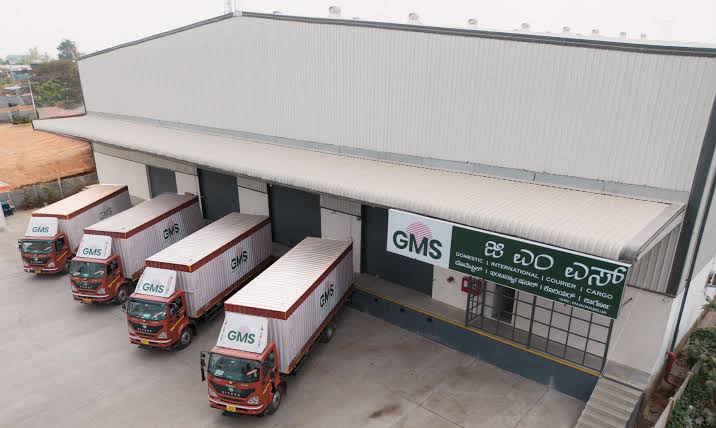
Established in 2009 and headquartered in Bangalore, GMS Worldwide Express Pvt Ltd operates as an express distribution services provider covering both ground and air delivery modes across India. The specific service need it addresses — time-sensitive document and parcel movement for individuals and businesses — is one that every functioning commercial entity in India experiences on a recurring basis. What distinguishes the GMS Worldwide Express Pvt Ltd franchise from a generic courier operation is the combination of network depth, a premium time-definitive delivery tier, and a franchise model that has scaled to over 1,200 units across 16 years of active franchising. At 75 new units added per year on average, this is not a brand in early growth — it is a mature network with the infrastructure and operational standardisation that allows franchisees to enter a competitive logistics market with meaningful structural advantages rather than starting from zero.
Why Demand for This Service Is Structurally Growing in India
The growth in courier and express delivery demand in India is not a cyclical trend — it is the product of three compounding structural shifts that are each still accelerating. First, e-commerce adoption has expanded far beyond metro consumers. Sellers and buyers in Tier 2 and Tier 3 cities now participate in digital commerce routinely, generating forward and reverse logistics volumes that did not exist at scale five years ago. Second, GST formalization has pushed a significant portion of India’s small and mid-size business activity into documented, invoice-driven commerce, which requires physical document and parcel movement as a matter of compliance — delivery receipts, tax invoices, and contract documents that need to move reliably between parties. Third, the shift of corporate functions toward outsourced service providers has increased the volume of business-to-business shipments that move through organised courier networks rather than internal dispatch arrangements. None of these drivers is reversing. Each creates a larger addressable market for organised, technology-enabled courier services with every passing year.
The Franchise Advantage Over Going Independent in This Service Category
An independent courier operator entering the market today faces a specific and solvable problem: they can acquire vehicles and staff, but they cannot manufacture the network coverage that a shipper’s client expects. A corporate client who needs a document delivered to a recipient in a different state does not want three logistics providers for three legs of that journey — they want one accountable partner with nationwide reach. Building that reach independently requires years of partnership development and capital investment that most individual operators cannot sustain. The GMS Worldwide Express Pvt Ltd franchise provides immediate access to a nationwide delivery network, a tracked technology platform with real-time consignment visibility, and the GMS Gold premium tier for time-definitive deliveries — capabilities that would take an independent operator years and substantial capital to replicate. Beyond network access, the franchise provides billing infrastructure, brand-level client credibility, and operational training — each of which has a real cost when built from scratch and a lower cost when inherited through a franchise agreement.
Territory, Market Sizing, and the Opportunity in Indian Cities
A courier franchise territory is typically defined by a commercial zone or PIN code cluster — enough density to generate self-sustaining volume without being so large that coverage becomes unmanageable for an owner-operated business. In a Tier 2 Indian city with a functioning commercial district, the potential client base includes individual senders, e-commerce sellers shipping outbound, import businesses managing inbound, SMEs with regular document movement needs, and institutions — hospitals, educational bodies, legal practices — that generate consistent parcel and document flow. The realistic market penetration in the first two years depends primarily on the franchisee’s outreach intensity and service reliability track record in their zone. A franchisee who builds ten to fifteen active corporate accounts in the first 12 months and serves them with consistent delivery performance typically sees referral-driven account growth accelerate in year two without proportional additional acquisition effort.
Competitive Landscape: Who Else Serves This Market
The Indian courier market contains three distinct competitive tiers. At the top end, large national operators — Blue Dart, DTDC, DHL — serve enterprise accounts with complex SLA requirements, dedicated account management, and premium pricing that most SMEs and individual shippers find expensive relative to their volume. At the bottom end, unorganised local delivery operators offer low prices with inconsistent reliability and no technology layer — suitable for informal commerce but unsuitable for businesses where delivery proof and consignment tracking are requirements. GMS Worldwide Express Pvt Ltd operates in the middle segment: organised, technology-enabled, and price-competitive for the SME and individual shipper who needs reliability and accountability without the enterprise tier’s pricing structure. This segment is where volume growth in Indian logistics is most concentrated, because it matches the scale at which India’s expanding commercial middle is operating. Large players do not pursue it profitably at that price point; unorganised players cannot serve it reliably. That gap is where the GMS franchise network has built its 1,200-unit base.
The Recurring Revenue Advantage of This Business Model
Courier and express delivery revenue is transactional by nature — each shipment generates a fee — but the commercial reality of a well-run franchise is that established accounts behave like recurring revenue because the same clients ship repeatedly. An e-commerce seller dispatching 50 parcels a week, a legal firm moving documents between offices daily, a manufacturer sending samples to buyers on a regular cycle — these are not one-off clients. They are accounts whose volume compounds over the life of the relationship. The long-term value of a GMS Worldwide Express Pvt Ltd franchise is therefore a function not just of monthly transaction count but of account depth: how many clients have transitioned from occasional users to reliable volume generators, and how well the franchisee has insulated those accounts from competitor approaches through consistent service delivery. A franchise with 20 deep corporate accounts generates more predictable monthly revenue — and more defensible franchise value — than one with 200 occasional individual senders at the same aggregate volume.
Who Captures the Most Value From a Gms Worldwide Express Pvt Ltd Franchise
The franchisee who builds lasting value in this network combines three characteristics: existing credibility in the local business community, the operational discipline to maintain service standards as volume grows, and the commercial instinct to focus early energy on account types that generate repeat volume rather than one-off transactions. Logistics entrepreneurs, salaried professionals with prior B2B sales or operations experience, and family-backed investors with established trade relationships in their local market consistently outperform investors approaching the GMS Worldwide Express Pvt Ltd franchise as a passive income source. The monthly revenue range of INR 50,000 to INR 2.5 lakh reflects the genuine spread between a franchise at early-stage account building and one that has assembled a stable corporate client base — and the franchisee’s personal involvement in account management is the primary variable that determines where within that range a specific unit operates. The break-even window of 6 to 12 months is achievable for franchisees who enter with active outreach from day one; it extends for those who wait for inbound volume to build without directed effort.
Accepting franchise applications in 32 states & UTs

How does Gms Worldwide Express Pvt Ltd compare to starting an independent practice in this service category?
An independent courier operator starts without network coverage, technology infrastructure, or brand recognition — three assets that take years and significant capital to build. The GMS Worldwide Express Pvt Ltd franchise provides immediate access to all three, alongside an operating framework drawn from 16 years and over 1,200 franchise deployments. The franchise fee replaces the cost and time of building those foundations independently, which is the core economic argument for the franchise model over independent entry in this category.
What is the addressable market size for Gms Worldwide Express Pvt Ltd's services in a typical Indian city?
In any Tier 2 Indian city with active commercial, e-commerce, and institutional activity, the addressable market for organised courier services encompasses thousands of potential individual and business senders. The practical question for a franchisee is not total market size but reachable account density within their defined territory — the number of SMEs, sellers, institutions, and regular individual shippers who can be converted into active accounts through direct outreach and consistent service delivery in the first 12 to 24 months.
Does Gms Worldwide Express Pvt Ltd compete with large corporate service providers or serve a different segment?
GMS Worldwide Express positions itself in the organised mid-market segment — above unorganised local operators in reliability and technology capability, and below the enterprise tier in pricing complexity. Large national courier brands primarily target enterprise accounts with dedicated account management and SLA-driven contracts. GMS serves SMEs, individual senders, and mid-size institutional clients who need reliable, tracked delivery at competitive price points — a segment the enterprise tier does not pursue efficiently and the unorganised tier cannot serve consistently.
What is the client retention rate in the Gms Worldwide Express Pvt Ltd franchise network?
Network-level client retention figures are best confirmed directly with GMS Worldwide Express during the due diligence process. In organised courier franchises generally, retention is strongly correlated with service consistency and the franchisee's personal responsiveness when delivery exceptions arise. Franchisees who treat client relationship management as an ongoing discipline — not just a client acquisition activity — typically maintain account relationships over multiple years, which is what drives the compounding revenue growth that distinguishes high-performing units from average ones.
How is Gms Worldwide Express Pvt Ltd's territory exclusivity structured?
Territory allocation and exclusivity terms are defined in the franchise agreement and should be confirmed directly with the brand. At 1,200 operational units across India, territory boundaries in metro areas may be more tightly drawn than in Tier 2 or Tier 3 cities where network density is lower. Prospective franchisees should clarify the specific geographic boundary of their proposed territory, how it is enforced as the network continues to expand, and whether exclusivity applies to both B2C and B2B client acquisition within the defined zone.
Disclaimer: All scores, rankings, and estimates on ForeFind are independently produced editorial assessments using publicly available data and validated brand-submitted information. They are not verified facts, financial advice, or investment recommendations. Full Disclaimer.
