



Gaksung Global Pvt. Ltd. Franchise: Running a Health and Beauty Centre and What Daily Operations Require
The Gaksung Global Pvt. Ltd. franchise brings a therapy modality — Low-Level Laser Therapy combined with thermal treatment — that remains relatively uncommon in the Indian organised wellness market, giving each centre a differentiated service proposition in markets where conventional physiotherapy and general wellness clinics are the norm. With between 100 and 200 operational units built over 13 years, the network has passed the scale threshold where the operational model can be examined with real confidence rather than speculation. For an investor thinking through what it actually takes to run one of these centres each day, the picture is specific and worth understanding in detail.
What Gaksung Global Pvt. Ltd. Offers and Who Its Clients Are
Gaksung Global’s service offering centres on Low-Level Laser Therapy (LLLT) and thermal therapy, delivered through proprietary equipment manufactured by the Korean parent company. These therapies are applied across a range of lifestyle and chronic conditions — joint pain, musculoskeletal discomfort, circulatory issues, and general vitality management — positioning the centre at the intersection of clinical wellness and alternative therapy. The client base is broad by design: the brand has explicitly structured its outreach to serve families across income levels, which means a Gaksung centre in a residential neighbourhood draws patients from both middle-income households managing chronic pain and working adults seeking non-pharmaceutical recovery support. What brings clients back is the therapy’s course-based nature — LLLT protocols are typically structured over multiple sessions, meaning a new client who begins treatment is already committed to several return visits before any outcome can be assessed. That built-in return frequency is the structural foundation of the centre’s recurring revenue.
A Day in a Gaksung Global Pvt. Ltd. Centre
Operations begin with equipment checks — the LLLT machines and thermal therapy devices require daily verification before patient sessions begin. The morning schedule typically runs back-to-back therapy sessions for clients midway through their treatment courses, with consultation slots reserved for new patient assessments. A trained therapy operator manages equipment setup and session delivery for each client, following the protocol prescribed at intake. The franchisee’s direct role during treatment hours is supervisory and client-relationship-oriented rather than hands-on technical — verifying that session records are updated, that clients are being communicated with about their progress, and that any complaints or concerns are addressed before they escalate. Retail product interactions — clients purchasing home-use therapy products like the Champ Belt or Champ Beam for between-session maintenance — occur throughout the day and are handled by front-desk or support staff. End-of-day close covers session documentation, payment reconciliation, inventory movement records for any dispensed products, and appointment confirmation for the following day’s schedule.
Service Quality, Standards, and the Brand Promise
Quality in a laser and thermal therapy centre is defined by two non-negotiable elements: correct equipment operation and accurate client assessment at intake. An LLLT session delivered with miscalibrated parameters or applied to a contraindicated condition does not just fail to help — it creates a liability and damages the centre’s reputation. Gaksung Global’s standard operating protocols govern both dimensions: they specify intake assessment criteria, contraindication screening, session parameters by condition type, and documentation requirements for each client record. The franchisor’s R&D heritage — drawing on the Korean parent company’s manufacturing expertise — means the protocols are grounded in the therapy’s technical literature rather than constructed at the franchise level. Network-wide quality is maintained through training compliance requirements and periodic review of centre-level practices. Franchisees who follow the intake and session protocols consistently produce the client outcomes that generate referrals; those who abbreviate the assessment process to move clients through faster tend to see higher dropout rates mid-course.
Appointment Management, Client Communication, and Retention
Because therapy courses run across multiple weeks, appointment management in a Gaksung centre is less about filling empty slots and more about maintaining course completion rates. A client who begins a 12-session protocol but drops out at session six has not achieved the outcome they were promised — and their likelihood of returning or referring others is low. The franchisee’s communication responsibility between sessions is therefore clinically motivated as much as commercially: checking in on how a client is responding, reminding them of upcoming appointments, and addressing concerns before they become reasons to stop attending. Centres that have built this communication rhythm into their standard operating process — through staff follow-up calls or structured messaging — show materially better course completion rates than those where client communication is reactive rather than proactive. New client acquisition in the Gaksung model is supported by the brand’s demonstration centre approach: free or low-cost introductory sessions that allow prospective clients to experience the therapy before committing to a full course.
Staff: Hiring Qualified Professionals and Keeping Them
A Gaksung centre operating in the 5 to 20 staff range requires therapy operators who are trained in LLLT and thermal therapy protocols, a patient coordinator managing scheduling and communication, and front-desk support for retail and administrative functions. Unlike physiotherapy or dental franchises, the therapy operator role does not require a regulated clinical degree — candidates with a background in paramedical sciences, massage therapy, or allied health can be trained to the required standard through the brand’s programme. This broadens the recruitment pool considerably in Tier 2 and Tier 3 cities, where BPT or medical graduates are scarce but paramedical candidates are available from local colleges. The poaching risk exists here as it does across the wellness sector: a well-trained therapy operator who has built client rapport is valuable to competing centres. Franchisees who acknowledge this by offering consistent working hours, structured career progression, and performance-linked pay experience lower attrition than those who treat operator staff as easily replaceable.
Products, Inventory, and Retail Revenue
Gaksung’s proprietary product range — including the Champ Beam, Champ Belt, and Champ 4 Beam devices — gives franchisees a retail revenue stream that is directly integrated with the therapy service rather than bolted on. A client completing a treatment course for joint pain who responds well to in-clinic LLLT is a natural buyer of a home-use device that allows them to maintain the benefit between clinic visits or after their course concludes. That clinical recommendation pathway — from assessed outcome to product suggestion — produces conversion rates considerably higher than generic wellness product retail, because the purchase is grounded in the client’s own experience rather than in marketing claims. Inventory management is relatively straightforward given the product range’s focus: the devices are durable goods rather than consumables, so stock levels are managed around anticipated retail demand rather than daily usage. Franchise guidelines cover recommended stock levels and reorder processes, keeping the inventory management burden manageable for an owner-operated centre.
Who Runs a Gaksung Global Pvt. Ltd. Centre Successfully
The franchisees who build the strongest Gaksung Global Pvt. Ltd. centres share a specific quality: they treat each client’s therapeutic outcome as a direct reflection of their own operational standards, not as an outcome determined solely by the equipment. They are present when new clients are assessed, they review course completion rates actively, and they understand that in a therapy category where outcomes take weeks to manifest, patient trust is earned through consistent communication as much as through the treatment itself. Word of mouth in the communities where Gaksung centres operate is the dominant acquisition channel — a client who achieves visible improvement tells family members, colleagues, and neighbours in ways that convert faster than any paid promotion. Absentee ownership produces below-average retention in this format because the quality of client communication and course supervision degrades the moment no one with accountability is present to enforce the standard.
Accepting franchise applications in 35 states & UTs
How much space does a Gaksung Global Pvt. Ltd. franchise centre require?
The Gaksung Global franchise requires between 1,000 and 3,000 square feet, which accommodates multiple therapy treatment stations, a consultation and intake area, a reception and retail zone, and back-office space. The larger end of the range allows for simultaneous multi-client sessions, which is where the centre's revenue per hour scales most efficiently. Both residential and commercial-residential hybrid locations are suitable, with accessibility and ground-floor visibility being the most important site-selection factors.
What equipment and fit-out does Gaksung Global Pvt. Ltd. provide as part of the franchise?
The franchise package includes the LLLT machines and thermal therapy devices manufactured by the Korean parent company, which are central to the brand's treatment offering. These are proprietary systems not available through general medical equipment suppliers, making the franchisor the primary equipment source for franchisees. Interior fit-out follows brand guidelines to ensure a consistent patient environment across the network, and the franchisor provides setup guidance for configuring the treatment area layout within the available space.
What training does Gaksung Global Pvt. Ltd. provide for franchisees and their staff?
Training covers the technical operation of LLLT and thermal therapy equipment, client intake and assessment protocols, contraindication screening, session documentation, and retail product recommendation practices. The programme is designed to qualify therapy operators who do not hold prior clinical degrees, broadening the staffing pool for franchisees in smaller cities. Ongoing access to the franchisor's operational guidance supports staff who encounter unusual client presentations or equipment queries after the initial training period.
Can a Gaksung Global Pvt. Ltd. centre be run by a manager without the owner being present daily?
A capable centre manager can handle scheduling, staff supervision, and daily administrative operations, and many Gaksung franchisees do delegate these functions. However, the quality of new client intake assessments, course completion monitoring, and client relationship management is most consistent when the owner maintains a visible presence during peak operating hours. Centres where the owner is entirely absent from the clinical environment tend to develop protocol drift over time — small deviations in intake rigour or session quality that compound into retention problems.
How does Gaksung Global Pvt. Ltd. support franchisees with local marketing and client acquisition?
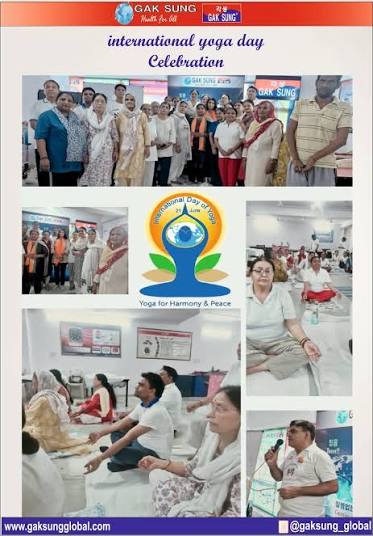
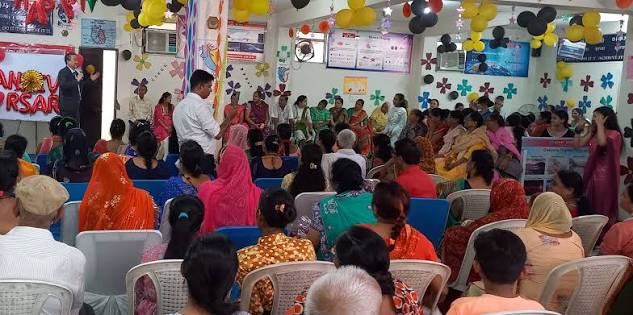
The brand's approach to local acquisition is built around demonstration sessions — introductory therapy experiences that allow prospective clients to assess the treatment before committing to a full course. This model is particularly effective for LLLT, where the therapy's benefits are unfamiliar to most first-time visitors and are best communicated through direct experience. The franchisor provides marketing materials, campaign guidance, and support for community outreach activities. Franchisees who combine the demonstration model with consistent follow-up communication convert a meaningfully higher proportion of introductory visitors into enrolled clients than those who rely on passive awareness advertising alone.
Disclaimer: All scores, rankings, and estimates on ForeFind are independently produced editorial assessments using publicly available data and validated brand-submitted information. They are not verified facts, financial advice, or investment recommendations. Full Disclaimer.
