



Extra Care Physiotherapy Pvt. Ltd. Franchise: Investment, Membership Model and Return on Capital in India
Physiotherapy as an organised franchise category in India is still in relatively early consolidation, which makes the Extra Care Physiotherapy Pvt. Ltd. franchise — with over 50 operational units and 16 years of franchising behind it — one of the more established reference points for investors evaluating this space. The brand’s track record across North India provides a tested financial model to analyse, rather than projections built on category theory alone.
About Extra Care Physiotherapy Pvt. Ltd.
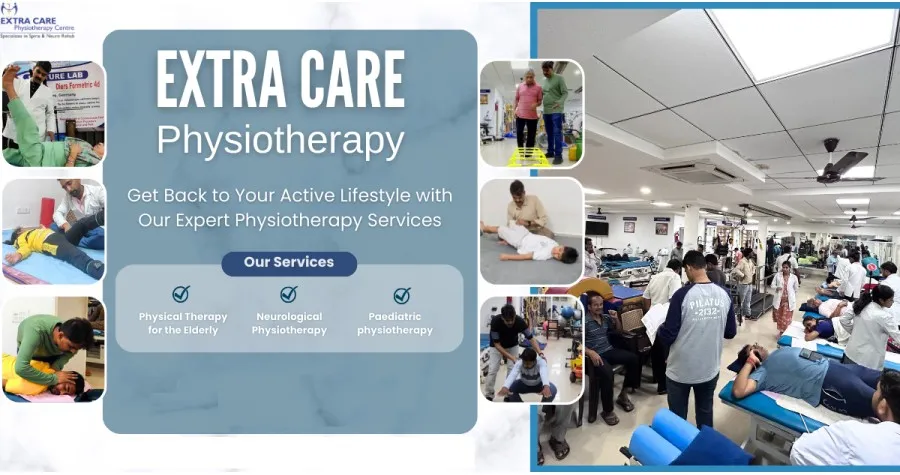
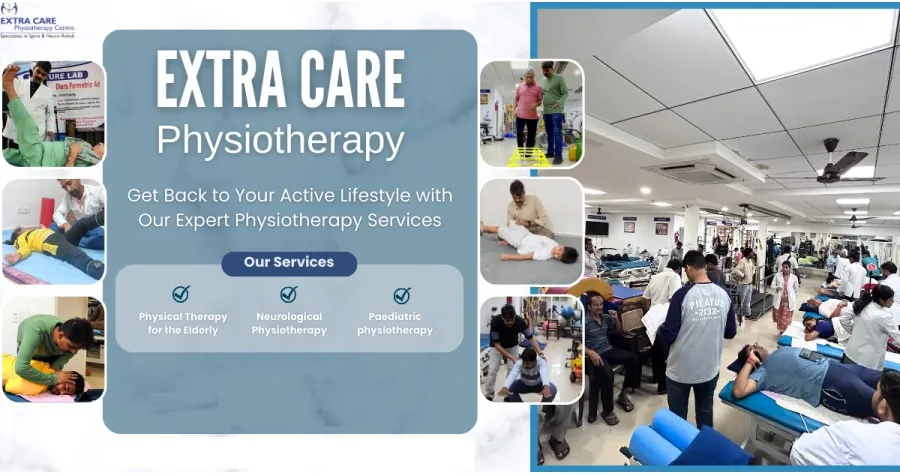
Extra Care Physiotherapy delivers drug-free physical rehabilitation and therapeutic treatment across a wide clinical range: orthopaedic recovery, neurological rehabilitation, pregnancy and post-delivery care, elderly mobility management, stress-related disorders, and work-induced musculoskeletal conditions. The patient base spans age groups and income levels — from post-surgical patients referred by orthopaedic surgeons to working adults managing chronic back pain — which gives each centre a diversified demand profile rather than dependence on a single patient type. The brand’s ISO 9001 certification, achieved at its Lucknow origin centre, is a quality signal that carries weight in clinical markets where patients are increasingly asking about accreditation before choosing a provider. That kind of credential doesn’t emerge from franchise ambition — it is earned through sustained operational discipline, and its presence across the network reflects a quality management orientation that distinguishes Extra Care from less structured physiotherapy operators.
Revenue Model: Walk-In, Membership, or Subscription
Physiotherapy revenue is built on treatment course completion rather than single-session transactions. A patient presenting with post-surgical knee rehabilitation, for example, is not a one-visit client — they are a 12 to 24 session revenue relationship, attending multiple times per week over several weeks. This course-based model means that new patient acquisition converts immediately into extended revenue commitment, which is financially more favourable than a walk-in beauty service where each visit must be resold. Session packages — where patients pay in advance for a defined course of treatment — are the dominant revenue structure in organised physiotherapy, and they provide the centre with working capital float and reduced cancellation risk. The proportion of revenue that is genuinely recurring (patients returning for maintenance sessions or new conditions) grows as the centre builds its local reputation, but the core financial engine is new course enrolments rather than subscription renewals in the retail-wellness sense.
Investment Breakdown and Ongoing Cost Structure
The INR 10 lakh to 20 lakh investment range for an Extra Care Physiotherapy franchise funds a meaningfully equipped clinical facility. Physiotherapy equipment — electrotherapy units, ultrasound machines, traction tables, exercise equipment, parallel bars, and hydrotherapy accessories — represents a substantial share of the setup budget. A 500 to 1,000 square foot space fitted to clinical standards, with treatment cubicles, a reception area, and an exercise zone, absorbs the balance alongside the brand licence and initial training costs. Monthly cost structure is dominated by staff salaries — qualified physiotherapists command INR 25,000 to 55,000 per month in Tier 2 cities depending on experience — with lease, equipment maintenance, and utility costs forming the secondary fixed lines. The indicative monthly revenue range of INR 3.9 lakh to 19.5 lakh reflects real variance across locations: a high-volume centre in a medically dense urban neighbourhood with active referral relationships operates at a fundamentally different revenue trajectory than a centre that is still building its doctor referral network in its first year.
Client Retention and Lifetime Value
The lifetime value calculation in physiotherapy differs from most health and beauty categories because a single patient can generate multiple distinct revenue relationships over their lifetime. A patient who first presents for post-surgery shoulder rehabilitation returns years later for lower back management, then again for age-related mobility support. Each new condition restarts a course-based revenue relationship. Beyond individual patient lifetime value, the referral mechanics of physiotherapy are unusually favourable: patients who experience measurable functional improvement — and physiotherapy outcomes are often visible and attributable — become active advocates within their household and social circle. In residential catchments, a centre that achieves a reputation for delivering genuine functional recovery generates a self-reinforcing referral pipeline that costs far less to maintain than paid patient acquisition. The retention investment that matters most is clinical outcome quality, not loyalty programme design.
Staffing Costs and the Quality-Margin Tension
A physiotherapy centre’s clinical quality is inseparable from its physiotherapist’s skill level — there is no product standardisation that compensates for a practitioner who misreads a patient’s condition or applies an inappropriate modality. Extra Care Physiotherapy requires BPT-qualified physiotherapists at minimum, with MPT holders commanding higher salaries but delivering specialist capability in areas like neurological rehabilitation or sports injury that broadens the centre’s patient eligibility. The staffing challenge in Tier 2 cities is finding BPT graduates willing to work in a structured franchise environment rather than establishing independent practice, and retaining them once they have built patient relationships at the centre. Extra Care’s training infrastructure — which draws on 16 years of protocol development — gives new staff a clinical framework that reduces the ramp-up period, but it does not eliminate the fundamental tension: the physiotherapists who are most effective at building patient loyalty are also the most attractive to competing employers and the most likely to consider independent practice. Franchisees who structure compensation with performance-linked components, and who invest in creating a professionally stimulating environment, experience meaningfully lower staff churn than those who treat salaries as the sole retention mechanism.
Regulatory and Compliance Considerations
Extra Care Physiotherapy franchisees operate under two primary regulatory frameworks. Clinical Establishment Act registration is mandatory and state-administered — the process, fee schedule, and inspection requirements vary across states, and franchisees in markets outside Uttar Pradesh should verify local implementation specifics before committing to a timeline. PCPNDT Act compliance applies to any centre operating diagnostic imaging equipment, which becomes relevant if the franchise setup includes ultrasound or similar tools. Beyond these statutory requirements, maintaining ISO-aligned quality management practices — which Extra Care’s operational heritage supports — positions the centre favourably for institutional referral relationships with hospitals and insurance panels, opening revenue channels that an unaccredited independent physiotherapy clinic cannot easily access. The franchisor’s compliance documentation framework reduces the administrative burden on new franchisees navigating these requirements for the first time.
Who This Investment Suits
The Extra Care Physiotherapy franchise is most profitable in the hands of an investor who either holds clinical qualifications in physiotherapy or has direct experience managing clinical staff in a healthcare environment. Experienced professionals from allied health fields — occupational therapy, sports medicine, hospital administration — who understand the dynamics of patient management and clinical team supervision enter with a meaningful operational advantage over investors coming purely from commercial backgrounds. The investment profile also suits small healthcare operators who have run single-practitioner setups and want to move to a structured, branded model with standardised protocols and franchisor support. Investors who underestimate how directly staff management quality translates into patient retention — and therefore into revenue stability — consistently find the upper boundary of the break-even range more relevant to their experience than the lower one.


How much does it cost to open an Extra Care Physiotherapy Pvt. Ltd. franchise?
The investment range of INR 10 lakh to 20 lakh covers the brand licence, clinical equipment, centre fit-out across 500 to 1,000 square feet, and initial training. The position within that range depends primarily on equipment specification and leasehold improvement costs in the chosen location. Investors should additionally plan for working capital to cover the fixed cost base during the patient ramp-up period, which the setup investment does not include.
What is the expected monthly revenue from an Extra Care Physiotherapy Pvt. Ltd. centre?
Indicative monthly revenue ranges from INR 3.9 lakh to 19.5 lakh, with actual performance determined by patient volume, session frequency, procedure mix, and the strength of the centre's referral relationships with local orthopaedic surgeons, neurologists, and general practitioners. Centres that build active doctor referral networks tend to reach the upper portion of the revenue range faster than those relying primarily on direct patient acquisition.
How many clients does an Extra Care Physiotherapy Pvt. Ltd. centre need to reach break-even?
Break-even in a physiotherapy centre is a function of active courses rather than individual patient visits. A centre covering monthly fixed costs of INR 3 to 5 lakh through session package revenue needs to maintain a consistent pipeline of active treatment courses — typically 20 to 40 concurrent patient courses depending on session fees and treatment frequency. Centres that establish referral relationships with two or three local medical practitioners within the first six months significantly shorten the path to break-even compared to those building patient volume through direct consumer marketing alone.
What staff qualifications does Extra Care Physiotherapy Pvt. Ltd. require?
The clinical minimum is a BPT (Bachelor of Physiotherapy) degree for practising physiotherapists, with state council registration where applicable. Centres offering neurological rehabilitation or sports-specific programmes benefit from MPT-qualified practitioners with relevant specialisation. Support staff — physiotherapy assistants and patient coordinators — require training in treatment support protocols and patient management but do not require clinical degrees. Extra Care's training programme covers both clinical protocols and operational standards for all staff levels.
What licenses are required to open an Extra Care Physiotherapy Pvt. Ltd. franchise in India?
Clinical Establishment Act registration is the primary statutory requirement and is processed at the state level. Franchisees should initiate this process early, as timelines vary by state and inspection scheduling can add weeks to the setup phase. PCPNDT Act compliance applies if the centre operates diagnostic imaging equipment. The Extra Care Physiotherapy franchise framework provides guidance on compliance documentation, reducing the administrative complexity for investors who have not previously navigated clinical establishment registration in their target state.
Disclaimer: All scores, rankings, and estimates on ForeFind are independently produced editorial assessments using publicly available data and validated brand-submitted information. They are not verified facts, financial advice, or investment recommendations. Full Disclaimer.
