



What Cafe Creme Is and How It Got Here
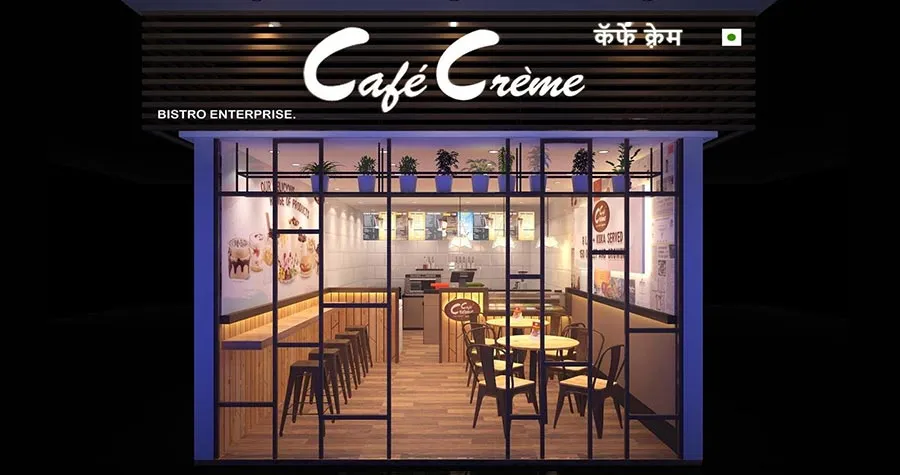
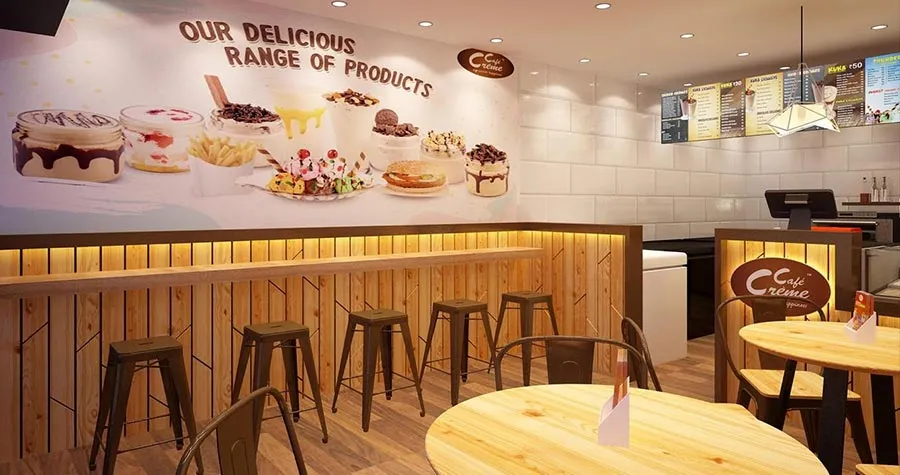
Cafe Creme built its identity around a specific pairing that Indian café-goers responded to quickly: cold coffee and chocolate-based desserts served in a casual, contemporary setting rather than a formal sit-down restaurant. Over fifteen years of franchising, the brand expanded its original beverage-and-dessert concept into a wider catalogue that now includes specialty cold coffee variants, layered ice-cream preparations, chocolate-based sandwiches, and fusion fruit drinks, broadening what started as a narrow menu into something that can carry a full visit rather than a quick single-item stop. The network has grown to somewhere between 100 and 200 outlets, a scale that suggests the format travels reasonably well across different city types rather than being tied to one specific kind of location. Walk into an outlet today and the format reads as a compact, modern café designed for both a quick solo coffee and a slightly longer dessert outing with friends or family, built to serve a wide age range rather than skewing toward one customer segment.
A Franchisee’s Typical Operating Day
The day begins with prep work that sets the tone for everything after: stocking syrups, prepping fruit for fusion drinks, checking ice-cream inventory, and making sure the cold beverage station is ready before the first customer walks in. Once open, the franchisee is managing two parallel demands simultaneously, walk-in customers ordering at the counter and delivery aggregator orders that need to be assembled and packed quickly enough to avoid melted or separated beverages by the time they reach the customer. Afternoon and evening hours tend to bring the heaviest footfall, particularly from younger customers and groups looking for a casual hangout spot, and this is when counter speed and drink consistency get tested hardest. Much of the franchisee’s personal time goes into floor supervision rather than direct service, watching ticket times, stepping in when a queue builds, and making sure quality does not slip during the rush. Closing involves inventory counts and prep planning for the next day, which matters more here than in a simpler quick-service format given the wider range of ingredients the menu depends on.
The Kitchen, the Menu, and the Supply Chain
Cafe Creme runs on a hybrid production model rather than either fully fresh-daily or fully centrally supplied. Core ingredients, including proprietary syrups, sauces, and chocolate preparations tied to signature menu items, typically come through the franchisor’s supply chain to protect taste consistency across outlets, while fresh produce like fruit for seasonal shakes and dairy for daily prep is usually sourced locally. This split works in the franchisee’s favour in a Tier 2 city, since it limits dependence on long-distance cold-chain logistics for perishables while still keeping the signature flavour profile consistent through centrally supplied concentrates. The practical risk point is timing: a franchisee needs a reliable local dairy and produce vendor relationship to avoid quality dips, while also planning order cycles for franchisor-supplied items around delivery timelines that can run longer outside metro distribution hubs.
Location: What Works and What Kills the Business
A Cafe Creme outlet’s success depends less on ground-floor visibility alone and more on what kind of footfall passes by consistently throughout the day. Locations near colleges, coworking spaces, or dense residential markets tend to perform best, since the format relies on repeat, casual visits rather than one planned occasion per customer. A site surrounded by two or three similar cold-beverage or dessert outlets within a few hundred metres dilutes the available customer base meaningfully, which makes competitive mapping during site selection more important than headline footfall numbers. Delivery rider access also matters in ways easy to overlook on a first site visit: a location with no convenient two-wheeler parking or a difficult approach road quietly loses aggregator orders to competitors with simpler pickup logistics. In practice, the right site is one where customers can drop in casually and riders can collect orders without friction, rather than simply the busiest-looking street corner.
Staff: Hiring, Training, and the Retention Problem
With staffing needs running from two to eight people, a Cafe Creme outlet typically employs a mix of counter staff, a beverage station handler, and part-time support during peak hours. In smaller cities, franchisees commonly recruit from local hospitality training institutes, college students looking for part-time shifts, or experienced hands from other regional QSR outlets. The wider menu here, compared to a single-product format, means training takes longer and turnover costs more in practical terms: every departure means a temporary dip in drink consistency and service speed while a replacement gets up to standard, which shows up directly in customer experience during the retraining window. Franchisees who manage this well typically keep a small pool of cross-trained staff who can cover multiple stations, reducing how exposed the outlet is to any single person’s absence.
What the Franchisor Handles So You Do Not Have To
Cafe Creme takes on product formulation and recipe standardisation, supply of core proprietary ingredients, assistance with location selection and outlet design, and structured training covering operating procedures, inventory control, and accounting basics. This removes a substantial amount of product development and setup risk from the franchisee’s plate. What stays entirely with the franchisee is local execution: hiring and retaining staff, managing day-to-day cash flow, securing trade licensing and GST registration, building local vendor relationships for fresh ingredients, and creating the kind of customer rapport that turns a first-time visitor into a regular. The franchisor’s systems reduce uncertainty about what to sell and how to run the back end; they do not run the floor on the franchisee’s behalf.
Who Runs a Cafe Creme Franchise Successfully
The franchisees who do best are present at the outlet through peak hours most days, know their regular customers well enough to notice when someone has not visited in a while, and treat the standard operating procedures as a discipline rather than a loose guideline to adjust on a whim. This needs to be said plainly: the franchise is structured as an owner-operated business, and absentee investors consistently struggle with QSR-style formats at this scale, since a wider menu and multiple staff stations leave more room for quality drift than a thin-format business when nobody is actively watching the floor.
Accepting franchise applications in 20 states & UTs
How much space does a Cafe Creme franchise require?
Outlets typically need between 100 and 500 square feet, enough for a counter, beverage and dessert prep stations, and modest seating, depending on whether the format leans toward quick-service or a slightly longer dine-in experience.
How long does it take to set up and open a Cafe Creme outlet?
Setup is considered moderately complex given the wider menu and equipment needs, and most franchisees can expect their outlet operational within a few months of finalising the location, covering fit-out, equipment installation, and staff training.
What training does Cafe Creme provide before opening?
New franchisees and their teams go through structured training covering standard operating procedures, inventory control, accounting basics, and product preparation, with ongoing training available for staff across functions as the team grows.
Can a Cafe Creme franchise operate without the owner being present daily?
It is not designed to run that way. The format depends on active owner supervision to maintain consistency across a wider menu and multiple staff roles, and outlets run without daily oversight tend to see service quality slip.
How many Cafe Creme outlets are currently operating in India?
The network currently sits in the range of 100 to 200 outlets nationally, the result of steady, measured expansion over 15 years of franchising.
Disclaimer: All scores, rankings, and estimates on ForeFind are independently produced editorial assessments using publicly available data and validated brand-submitted information. They are not verified facts, financial advice, or investment recommendations. Full Disclaimer.
