


BULL MACHINES PRIVATE LIMITED Franchise: India’s Vehicle Market, Demand Drivers and Competitive Positioning
BULL MACHINES PRIVATE LIMITED in India’s Automotive Services Landscape
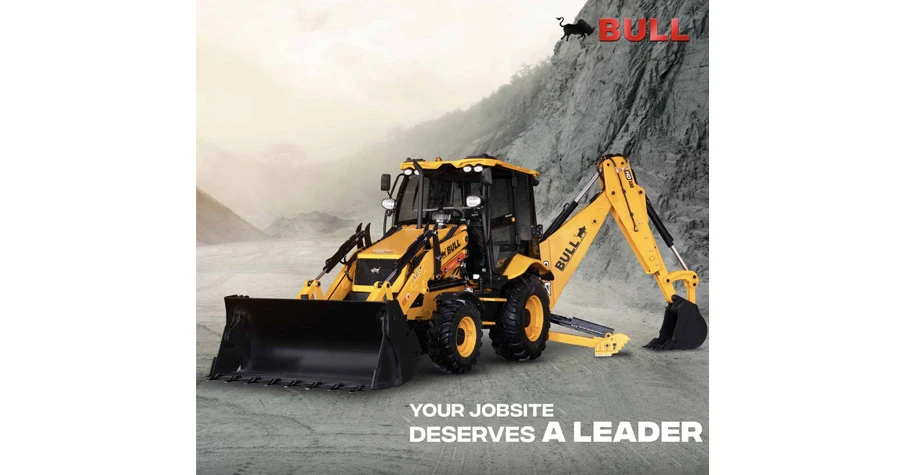
Within India’s sprawling automotive sector, the segment covering tractor attachments and commercial earth-moving implements occupies a narrow but structurally important niche. BULL MACHINES PRIVATE LIMITED franchise operations target precisely this space — the organised sales, service, and spares distribution of tractor-mounted equipment such as front-end loaders, backhoe loaders, and radial loaders. These are not passenger vehicles or two-wheelers. The customer base is primarily agricultural and construction-adjacent: fleet operators, infrastructure contractors, and individual farmers who depend on machinery uptime for their livelihoods. The gap this brand addresses is the absence of a consistent, manufacturer-backed service and parts channel in geographies where such equipment is actively deployed but rarely supported by anyone other than a local mechanic with limited parts access.
India’s Vehicle Population and Why Service Demand Is Growing
India’s mechanised farming and small-scale construction segments have expanded steadily over the past two decades, and with that expansion has come a large installed base of tractor-mounted attachments that require periodic maintenance, replacement parts, and trained service intervention. The nature of this equipment — hydraulic systems, articulating joints, ground-engaging tools — means that service intervals are not optional. A front-end loader operating in dusty agricultural conditions needs seal replacements, hydraulic oil changes, and structural inspections on a recurring basis. Without a nearby authorised dealer, operators default to unorganised workshops that may lack the correct parts or the technical knowledge to service hydraulic components correctly. The migration from these informal workshops toward branded dealer networks is accelerating as equipment values rise and downtime costs become more visible to operators who run these machines commercially. Tier 2 and Tier 3 cities — Nashik, Guntur, Sikar, Gorakhpur — sit at the centre of this shift, with growing equipment populations and almost no organised service presence.
Why a BULL MACHINES PRIVATE LIMITED Franchise Outperforms an Independent Workshop
An independent workshop competes on proximity and price, and rarely on anything else. It has no guaranteed access to genuine replacement parts, no manufacturer-issued diagnostic procedures, and no formal training pipeline for its technicians. A BULL MACHINES PRIVATE LIMITED franchise changes that equation structurally. Dealer authorisation from the OEM provides access to genuine parts — a critical differentiator when hydraulic components or loader frames require exact-specification replacements. Beyond parts, the manufacturer provides product and service training to incoming dealers and their service manpower, which means a new franchise location can reach operational competence faster than an independent operation built from scratch. For the end customer — a construction contractor or a farmer who cannot afford days of equipment downtime — the assurance of trained technicians working with correct parts carries real commercial value, and that value supports a price premium over unbranded alternatives.
Geographic Opportunity: Tier 2 Cities and the Unorganised Market Gap
The real white space in India’s tractor attachment service market is not in metros. Cities like Pune, Coimbatore, and Ludhiana already have a degree of organised dealer presence. The underserved demand sits further down the urban hierarchy — in districts where mechanised agriculture is growing but formal dealer networks have not followed. States with large agricultural economies and active infrastructure development, including Maharashtra’s interior, Rajasthan’s eastern districts, Andhra Pradesh, and parts of Bihar, represent territories where a single authorised dealer can command a wide service radius simply because no organised alternative exists. The zero-square-foot area requirement in the brand’s model — implying a service and spares operation rather than a showroom-heavy retail format — further reduces the barrier to establishing a presence in smaller markets where prime commercial real estate is limited.
EV and New Energy Vehicles: How BULL MACHINES PRIVATE LIMITED Is Positioned
The electric vehicle transition that dominates discussions of passenger car and two-wheeler markets has a different — and slower — trajectory in the tractor attachment and earth-moving equipment segment. The technical demands of hydraulic earth-moving implements, combined with the power requirements and duty cycles involved, mean that diesel-powered tractors remain the dominant platform for attachment use across most of India’s operational environment. The medium-term outlook for conventional equipment service demand is therefore more stable in this category than in passenger vehicles. That said, electric tractor development is advancing globally, and any franchise investor evaluating a multi-year horizon should track whether the manufacturer is developing service compatibility with emerging electric tractor platforms. For now, the current service model addresses a well-established and growing conventional equipment base.
Competitive Differentiation: Why Customers Choose BULL MACHINES PRIVATE LIMITED
Three factors drive repeat service business in any equipment segment: the workshop’s proximity to the customer’s operating area, confidence that the parts used are correct and durable, and the price point relative to the risk of using an inferior alternative. BULL MACHINES PRIVATE LIMITED’s franchise network is structured to address all three. Geographic coverage through a dealer network brings service access closer to where equipment actually operates. Manufacturer-supplied parts remove the uncertainty around component quality that plagues unorganised workshops. And the B2B orientation of the business model — serving fleet operators and contractors rather than individual retail customers — creates relationships that generate repeat revenue rather than one-time transactions. A contractor managing five backhoe loaders across a highway project does not want to source service from five different mechanics; a single authorised dealer who knows the equipment and stocks the parts is worth the relationship regardless of a modest price differential.
Who Builds a Profitable BULL MACHINES PRIVATE LIMITED Franchise
The ideal franchisee profile here is not the person with a mechanic’s background. It is someone with existing relationships in the fleet, construction, or agricultural equipment community — a former equipment financier, a retired government engineer, or an entrepreneur who has previously operated in the capital goods or infrastructure supply chain. Technical oversight can be delegated to trained service staff; what cannot be easily delegated is the ability to walk into a contractor’s site office and be taken seriously as a business partner. The brand data points to a staff requirement of five to fifteen people, reflecting the need for a mix of service technicians, a parts inventory manager, and frontline sales or relationship staff. In a Tier 2 city context, this team can be assembled from local ITI graduates for technical roles, while the relationship function typically sits with the franchisee or a senior hire. Location selection matters as much as the team: a workshop positioned on an agricultural belt highway or near a district-level equipment market will see organic walk-in demand that a commercially isolated site will not.
Accepting franchise applications in 6 states & UTs
How does BULL MACHINES PRIVATE LIMITED compare to OEM-authorised service centres in India?
BULL MACHINES PRIVATE LIMITED operates as the OEM itself — the manufacturer of the attachments being serviced — which means its authorised dealers are the primary service channel rather than a secondary tier beneath a larger brand. This is distinct from multi-brand service franchises that aggregate service from several manufacturers. The direct manufacturer relationship means parts availability and technical guidance come from a single source, simplifying the operational model for the franchisee.
Is a BULL MACHINES PRIVATE LIMITED franchise viable in Tier 2 and Tier 3 Indian cities?
Viability in smaller cities is higher for this category than for many others precisely because organised competition is thinner and equipment populations are growing. Districts with active agricultural mechanisation or infrastructure construction activity represent the strongest demand environments. A franchise in such a territory often operates with less local competition than it would face in a larger city, while serving a customer base with genuine recurring maintenance needs.
How does BULL MACHINES PRIVATE LIMITED handle the shift toward electric vehicles?
The tractor attachment category operates on longer technology transition cycles than passenger vehicles. Current demand is concentrated in diesel-tractor-compatible equipment, and this is unlikely to change materially over a short investment horizon. Franchisees should monitor the manufacturer's product roadmap for any compatibility developments with electric tractor platforms, but the near-term service opportunity rests on a large and growing conventional equipment base.
What is the addressable vehicle population in a typical BULL MACHINES PRIVATE LIMITED franchise territory?
Territory economics depend heavily on the local density of tractor ownership and construction activity. Agricultural districts in states like Uttar Pradesh, Maharashtra, Punjab, and Rajasthan typically support larger equipment populations. A prospective franchisee should map the number of registered tractors and active construction contractors within a reasonable service radius — typically fifty to eighty kilometres in a rural context — to estimate the realistic addressable base before committing to a location.
How does BULL MACHINES PRIVATE LIMITED's parts supply chain ensure quality and availability?
As a manufacturer with over two decades of production history and a customer base exceeding twenty thousand users across India, the brand maintains an established parts production and distribution system. Authorised dealers receive access to manufacturer-supplied components rather than sourcing from the open aftermarket, which reduces the risk of fitment errors and warranty disputes. Parts availability at the dealer level is a function of both the manufacturer's supply chain and the franchisee's inventory management — stocking fast-moving consumables locally reduces customer wait times and strengthens the dealer's service reputation.
Disclaimer: All scores, rankings, and estimates on ForeFind are independently produced editorial assessments using publicly available data and validated brand-submitted information. They are not verified facts, financial advice, or investment recommendations. Full Disclaimer.
