



British Youth International College Franchise
Franchise Quick Facts
| Brand Name | British Youth International College |
|---|---|
| Industry | Education / EdTech |
| Business Category | Online Skill Development & Training |
| Founded Year | 2015 |
| Franchise Started | 2018 |
| Total Franchise Outlets | 1–10 |
| Estimated Investment | INR 50,000 – 2 Lakhs |
| Franchise Fee | INR 1.5 Lakhs |
| Royalty Fee | 25% |
| Space Requirement | 3000–4000 sq. ft. (optional for hybrid setup) |
| Expected Payback Period | 1–2 Years |
1. What is British Youth International College?
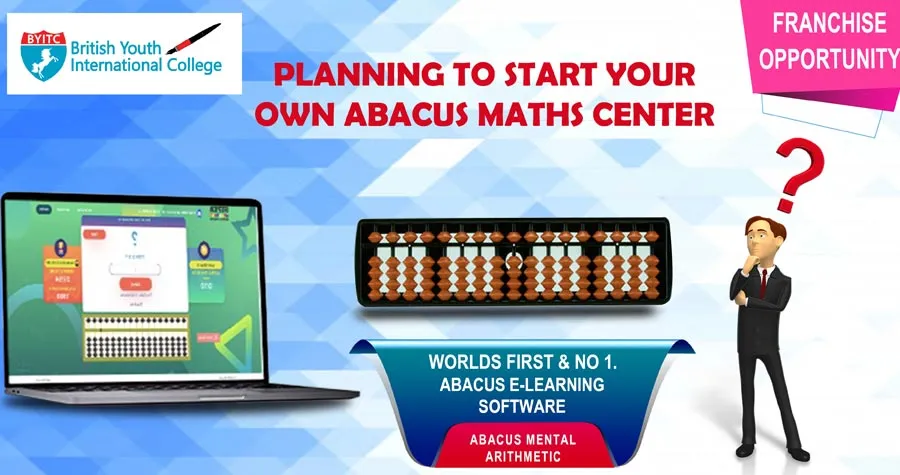
British Youth International College is an education and training platform focused on delivering skill-based programs for children through digital learning systems. It operates in the edtech and skill development sector, offering courses such as abacus mental arithmetic, English communication, and coding for students aged approximately 4 to 17 years.
The franchise represents a technology-driven education model primarily built around online course delivery.
2. How the Business Works
The business operates through an online learning platform supported by digital tools and course management systems.
Operational workflow includes:
- Student enrollment into online programs
- Access to digital learning modules and interactive sessions
- Assignment of homework and automated tracking
- Monitoring of student progress through system-generated reports
- Continuous engagement through structured curriculum
Revenue is generated through course fees, program subscriptions, and training services.
3. Products or Services Offered
Franchise partners offer structured learning programs across key areas:
Abacus Mental Arithmetic
- Digital abacus-based learning system
- Focus on calculation skills and cognitive development
English Learning Programs
- Spoken and written English training
- Communication and language development
Coding Programs
- Introductory and structured coding education for children
Teacher Training Programs
- Certification and training for abacus instructors
Digital Learning System
- Web-based learning platform
- Automated assignments and progress tracking
- Parent and teacher reporting tools
Programs are designed to combine academic learning with cognitive skill development.
4. How the Franchise Model Works
The franchise operates as a digital-first education business with optional offline support.
Franchisee Role
- Enroll students into online programs
- Manage student relationships and support
- Promote courses in local markets
- Coordinate with parents and learners
Franchisor Role
- Provide access to digital learning platform
- Deliver course content and structured curriculum
- Offer training for franchise partners
- Support marketing and operational processes
The model minimizes infrastructure dependency while leveraging centralized technology.
5. Franchise Cost and Investment Overview
The franchise is positioned as a low-investment digital education opportunity.
Cost Structure
- Total investment: INR 50,000 – 2 Lakhs
- Franchise fee: INR 1.5 Lakhs
- Royalty: 25%
Typical investment components include:
- Franchise onboarding costs
- Marketing and student acquisition
- Basic infrastructure (if offline support is added)
- Operational expenses
The model allows flexible scaling depending on market reach.
6. Space and Infrastructure Requirements
The franchise can operate with minimal physical infrastructure.
Requirements
- Area: Optional; 3000–4000 sq. ft. for hybrid centers
- Location: Not mandatory for fully online operations
- Infrastructure:
- Internet-enabled devices
- Basic office setup (optional)
- Staffing:
- Minimal staff required for coordination and support
The model is suitable for home-based or small office setups.
7. Training and Franchise Support
Franchise partners receive system-based and operational support.
Support Includes
- Training on platform usage and course delivery
- Access to digital curriculum and tools
- Marketing and branding assistance
- Student management systems
- Ongoing operational support
These systems help franchisees operate efficiently without complex infrastructure.
8. Revenue Model and ROI Factors
Revenue is generated through enrollment in digital learning programs.
Key Revenue Drivers
- Course enrollment fees
- Subscription-based learning programs
- Expansion into teacher training services
- Repeat enrollments and long-term learning plans
ROI Indicators
- Expected payback period: 1–2 years
Profitability depends on student acquisition, retention, and program pricing.
9. Brand History and Expansion
The organization was established in 2015 and began franchising in 2018. It operates in the digital education segment, focusing on skill development for children through technology-enabled learning systems.
Expansion is driven by increasing adoption of online education platforms.
10. Key Advantages of the Franchise
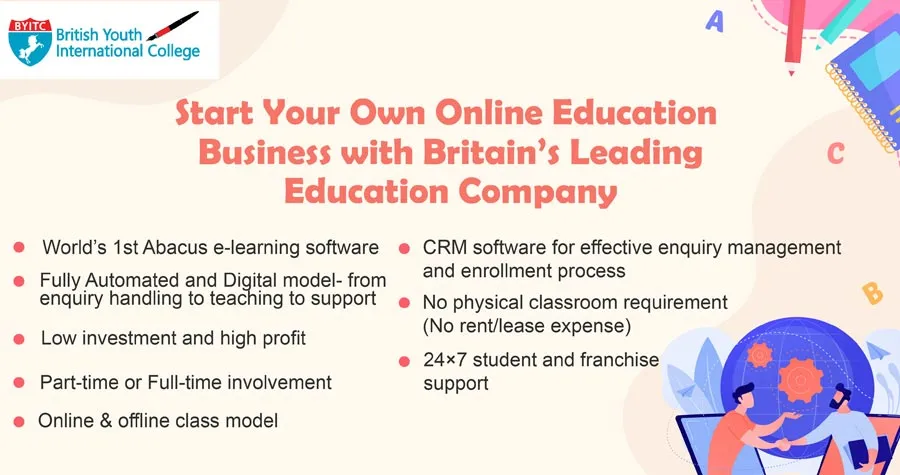
- Low investment compared to traditional education centers
- Digital-first model with minimal infrastructure requirements
- Growing demand for online learning and skill development
- Scalable business model across multiple regions
- Automated systems for learning and progress tracking
- Opportunity to operate from home or small office setups
Accepting franchise applications in 35 states & UTs

What is the investment required for British Youth International College franchise?
The investment typically ranges between INR 50,000 and 2 Lakhs, including franchise fees and initial operational costs.
How does the British Youth International College franchise business work?
The franchise operates as an online education platform offering courses in abacus, English, and coding. Revenue is generated through student enrollments and course fees.
What space is required for this franchise?
Physical space is optional, as the business can operate online. However, a larger setup may be used for hybrid learning centers.
How long does it take to recover the investment?
The expected payback period is approximately 1–2 years, depending on enrollment growth and operational efficiency.
How can investors apply for the franchise?
Interested investors can connect with the brand to evaluate onboarding requirements, investment readiness, and market potential.
Disclaimer: All scores, rankings, and estimates on ForeFind are independently produced editorial assessments using publicly available data and validated brand-submitted information. They are not verified facts, financial advice, or investment recommendations. Full Disclaimer.
