



Axis Consultants Franchise: Investment, Recurring Revenue Model and ROI in India
About Axis Consultants
An Axis Consultants franchise operates within the staffing and placement sector, specifically connecting English-proficient candidates with BPO employers — predominantly international operations requiring reliable, communication-ready talent. Founded in 2004 and based in New Delhi, the brand has spent two decades building placement relationships with BPO clients across Bangalore, Hyderabad, and key northern Indian markets. The business model is B2B at its core: the paying client is the employer, not the candidate. What makes this structurally interesting from a revenue standpoint is that BPO operators hire in cycles. A client that places ten candidates in one quarter is likely to return the following quarter as attrition, growth, or new project requirements generate fresh mandates — giving franchisees a repeating revenue pattern rather than a purely transactional one.
The Revenue Model: Recurring vs Project-Based Income
Placement businesses sit between pure project income and subscription-style recurring revenue. Each successful placement generates a fee — typically a percentage of the placed candidate’s first-year salary or a flat per-head rate — which means income is event-driven rather than monthly by default. However, the recurring dynamic emerges through client relationships: BPO operators with ongoing hiring needs return to the same placement partner repeatedly, making strong client retention the primary driver of revenue predictability. Franchisees who cultivate three to five active BPO clients with quarterly hiring requirements build something that functions like a retainer in practice, even if the contracts are structured placement-by-placement. The shift from chasing individual mandates to managing a portfolio of returning clients is the operational milestone that separates early-stage units from self-sustaining ones.
Client Acquisition: Cost, Timeline, and Franchisor Support
Acquiring the first BPO client typically takes longer than new franchisees expect. Corporate HR departments and BPO operations managers make vendor decisions carefully — they are entrusting their hiring pipeline to an external partner, and the evaluation process often includes reference checks, trial mandates, and a probationary period before full engagement. In practice, the timeline from first outreach to a signed placement agreement runs six to twelve weeks in most markets. Axis Consultants provides marketing support and brand credibility that gives franchisees a structured entry point for these conversations, particularly in markets where the Delhi-based brand already has recognition among BPO operators. The franchisee’s independent contribution is the local relationship work: identifying which BPO operations in their region are actively hiring, making direct contact with HR decision-makers, and following up consistently through the evaluation cycle. The franchisor does not manage this outreach on the franchisee’s behalf.
Investment Breakdown and Monthly Cost Structure
The INR 50,000 to 2 Lac investment range positions this as one of the lower-entry franchise opportunities in the business services category. The lower end of that range covers the franchise fee and initial setup for a franchisee who is personally handling all delivery and sales activity. The upper end accommodates a more structured launch — early marketing spend, system setup, and a buffer for the pre-revenue period before the first placements are completed. Because no physical space requirements are specified for delivery (the operational footprint is light), setup costs are concentrated in the franchise fee and working capital rather than fitout or lease deposits. Monthly costs post-launch include any royalty or service fees payable to the franchisor, staff salaries as the team grows beyond solo operation, and candidate sourcing costs. The cost-to-break-even calculation in placement businesses depends heavily on placement fee rates and monthly placement volume — franchisees should model conservatively, assuming two to four months before the first placement fee is earned.
Territory, Exclusivity and Market Sizing
Axis Consultants has explicitly identified Bangalore, Hyderabad, northern India, and the regions surrounding New Delhi as priority expansion markets — a geographic focus that reflects where BPO activity is concentrated in India. For a franchisee entering one of these markets, the addressable client base is meaningful: a city like Hyderabad or Bangalore hosts hundreds of active BPO operations ranging from large captive centres to mid-sized third-party operators, all of which have recurring hiring needs. Territory terms — including what exclusivity the franchisor grants and how it manages conflicts if two franchisees operate in overlapping markets — are part of the franchise agreement and should be verified directly before commitment. With the current network at 10 units, territory saturation is not an immediate concern, but franchisees entering high-density markets should confirm their boundary protections in writing.
Scaling Beyond Solo Operation
Most franchisees launch as the sole operator, handling both business development and candidate sourcing personally. The trigger for the first hire is typically workload rather than revenue — when active mandates exceed what one person can manage without candidate quality or response times slipping. In practice, this tends to happen when two or three concurrent client relationships are each generating regular placement requirements. The first role added is usually a recruitment coordinator: someone who can manage candidate pipelines, conduct initial screenings, and keep placement timelines on track. In Tier 2 cities, qualified coordinators with HR or recruitment backgrounds are accessible at salary levels that do not require large revenue to justify. As the team expands toward the upper end of the model’s staffing range, the franchisee’s day-to-day shifts from hands-on recruitment to account management and business development — a transition the franchisor’s operational standards are designed to support.
Who This Services Franchise Suits
The franchisee who builds quickly in this model is typically someone with prior exposure to HR, recruitment, or BPO operations — not necessarily as a business owner, but as someone who understands how corporate hiring decisions are made and who speaks the language of operations managers and HR heads. Retired professionals from corporate backgrounds, salaried employees with HR or staffing experience, and first-time entrepreneurs who have spent time in BPO environments all bring relevant context. The ability to have credible, peer-level conversations with BPO clients accelerates the early client acquisition phase considerably. Franchisees who enter without an existing professional network in their target market — and without prior exposure to corporate hiring processes — consistently take longer to reach their first placement and their first reliable client relationship, because every step of the learning curve runs in parallel with the revenue clock.
Accepting franchise applications in 17 states & UTs

How much does an Axis Consultants franchise cost in India?
The initial investment for an Axis Consultants franchise ranges from INR 50,000 to INR 2 Lac. This covers the franchise fee and initial setup costs, with the exact figure depending on the franchisee's intended operating scale and how much working capital buffer is built into the launch budget. Full investment details are confirmed during the formal inquiry process.
How long does it take to acquire the first paying client?
In the BPO placement category, the typical timeline from first contact to a signed mandate with a corporate client runs six to twelve weeks. This reflects the evaluation process most BPO operators run before engaging a new placement vendor. Franchisees with existing relationships in their local BPO market can compress this timeline considerably; those building from scratch should plan for the longer end of the window before the first placement fee is earned.
Does Axis Consultants provide leads or client introductions to new franchisees?
Axis Consultants provides marketing support and operates with brand recognition in key BPO markets including Bangalore, Hyderabad, and the Delhi region. This gives franchisees a credible starting point for client conversations. However, the direct work of identifying prospects, making contact, and converting them into active clients falls on the franchisee. Investors should discuss the specific lead generation structure with the franchisor during the inquiry process to understand exactly what is centralised and what is locally driven.
What is the typical monthly recurring revenue from an established Axis Consultants franchise?
Monthly revenue figures are available on inquiry and depend on placement volume, fee structures, and the number of active client accounts. In the BPO placement category, a franchisee managing three to five clients with regular quarterly hiring requirements generates materially different income than one relying on a single large account. The franchisor's financial disclosure documentation is the appropriate source for unit-level revenue benchmarks.
Can an Axis Consultants franchise be operated from home?
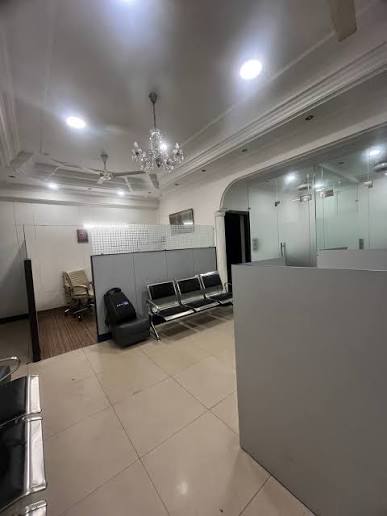
No. The Axis Consultants franchise is structured as a commercial-location operation and does not support home-based working. While the model carries no minimum area requirement, franchisees are expected to operate from a professional setting appropriate to the B2B nature of the business — particularly given that client-facing credibility matters in corporate placement relationships.
Disclaimer: All scores, rankings, and estimates on ForeFind are independently produced editorial assessments using publicly available data and validated brand-submitted information. They are not verified facts, financial advice, or investment recommendations. Full Disclaimer.
