



Advanced Institute of Accounts & Taxation Pvt.Ltd Franchise: Investment, Fee Structure and Return Potential in India
About Advanced Institute of Accounts & Taxation Pvt.Ltd
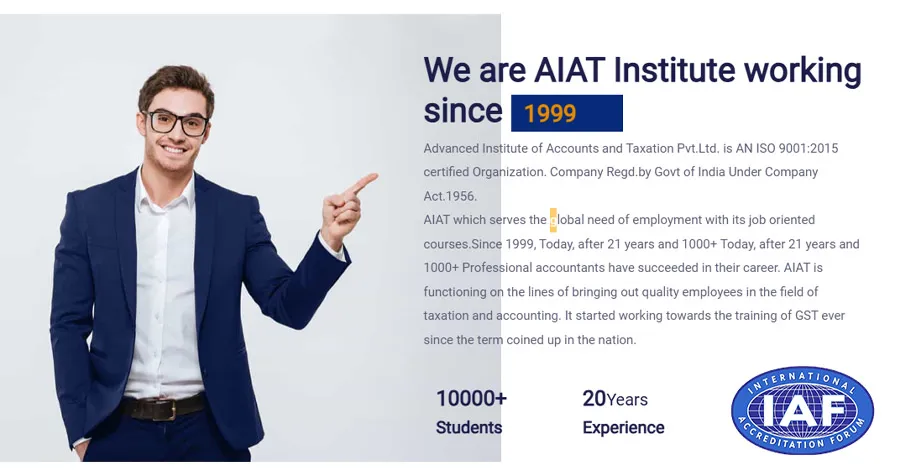
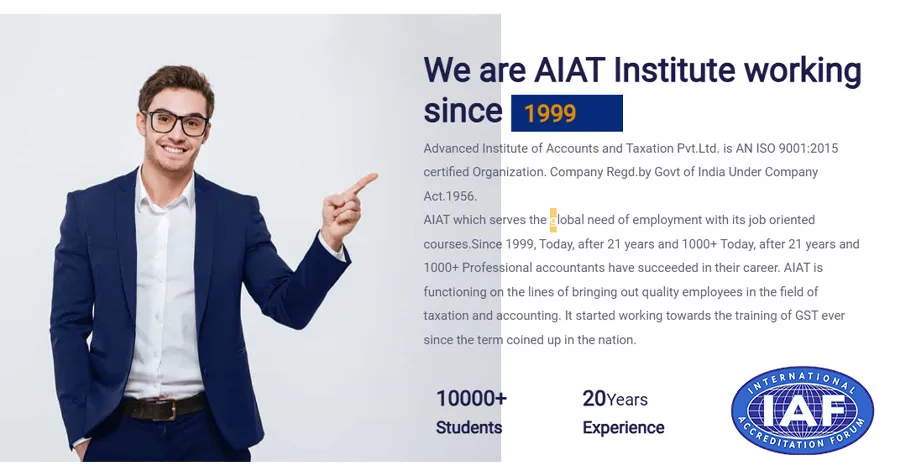
Accounting and taxation training occupies a durable corner of India’s vocational education market—one where demand is not trend-dependent but structurally anchored to the country’s permanent need for GST-compliant businesses, tally-literate bookkeepers, and export-import professionals. Advanced Institute of Accounts & Taxation Pvt. Ltd. (AIAT) has been delivering exactly this kind of career-directed instruction since the early 2000s, serving graduates, commerce students, and working professionals who need software proficiency and taxation knowledge to enter or advance within India’s accounting workforce. The institute holds ISO 9001:2015 certification and is registered under the Companies Act, signals that matter when a prospective student’s family is evaluating whether a certificate from this institution carries weight with employers. Over its operational history, AIAT has trained more than a thousand working accountants—a body of alumni whose employment outcomes constitute the most credible form of institutional validation available in the vocational training segment.
How Revenue Is Generated in an Advanced Institute of Accounts & Taxation Pvt.Ltd Centre
Revenue at an AIAT centre flows through several channels that stack on top of each other as enrollment matures. Admission fees provide the first inflow when a student registers; monthly or term-wise tuition from active students forms the recurring base. Additional income comes from assessment and certification charges, software training kit fees, and study materials—each adding a modest but meaningful increment to the per-student revenue figure. Because the courses are career-directed and relatively short in duration, a centre can run multiple batch cycles across the year rather than waiting for an annual academic calendar to reset. The accounting and GST training market has a broad student profile: fresh commerce graduates, working professionals seeking software upgrades, and small business owners who need to handle their own filings. This demographic diversity means a single centre can run morning batches for full-time students and evening batches for working adults simultaneously, improving daily seat utilisation and compressing the time needed to reach a revenue level that covers monthly fixed costs.
The Investment and What It Covers
At the entry level of the investment range, an AIAT franchisee secures the franchise license, curriculum access, and initial operational training—the foundational assets needed to begin enrolling students and delivering courses. As the investment approaches the upper end, the additional capital covers technology infrastructure: computers loaded with Tally Prime, Marg, Busy, and Advanced Excel, which are the software platforms the curriculum trains students on. These are not optional extras; without functional software stations, the practical training component cannot be delivered. Monthly recurring costs at this investment tier are lean—a small instructor team, commercial rent proportional to the local market, and any ongoing franchisor support or marketing contribution. Because the fixed cost base is genuinely modest, the centre does not need large absolute revenue to sustain itself monthly, which is what makes the estimated four-to-eight-month break-even window achievable for franchisees who open with a defined first batch rather than waiting for enrollment to arrive organically.
Enrollment Cycle, Seasonality, and Revenue Predictability
Two enrollment windows drive the majority of annual student intake for accounting and taxation training centres in India. The April-to-June period captures commerce graduates who have completed their Class 12 or undergraduate exams and are making immediate next-step decisions; this cohort is the highest-volume admission segment. The second window runs from October through January, when working professionals approaching year-end appraisals or new financial year planning seek certification upgrades. The months between these peaks—July through September and February through March—require the franchisee to manage costs against lower inquiry volumes. AIAT’s multi-course catalogue partially buffers this: a student enrolled in a three-month GST program may follow it with an Advanced Excel module, extending their fee-paying period beyond a single course. Additionally, the small business and self-employed owner segment enrolls more independently of the academic calendar, motivated by filing deadlines and regulatory changes rather than graduation timelines. Franchisees who actively cultivate this non-student segment reduce their dependence on the peak-trough admission cycle that affects centres serving only the fresh graduate market.
What the Franchisor Provides and Its Real Value
The practical question for any franchisee is whether the support received justifies the franchise fee relative to building independently. For AIAT, the answer hinges on two assets that are genuinely difficult to replicate without significant time investment. First, the curriculum: developing structured, employer-aligned course content across GST, industrial accounting, Tally Prime, Marg, Busy, export-import logistics, and Excel requires not just instructional design effort but active monitoring of software updates and regulatory changes—particularly as GST regulations and Tally versions evolve. The franchisor absorbs this maintenance cost centrally. Second, the ISO certification and two-decade institutional history: a new independent institute cannot purchase credibility with employers, but an AIAT franchisee inherits an institutional name that a working accountant or commerce graduate can verify before enrolling. Marketing templates, admission process guidance, and teacher orientation further reduce the operational learning curve in the months immediately after launch, when the franchisee’s attention is split across setup, hiring, and student acquisition simultaneously.
Risk Factors Specific to Education Franchises in India
Four risks warrant honest evaluation. GST and taxation policy changes in India are frequent—any shift in filing requirements, tax slabs, or software mandates directly affects course content relevance. AIAT’s curriculum maintenance function is the primary mitigation here, but franchisees should confirm how quickly course materials are updated when regulatory changes occur. Online accounting and tally tutorials have proliferated on YouTube and paid platforms, creating a low-cost alternative that some prospective students consider first; the counter-argument is certification and structured assessment, which self-taught online learners cannot easily obtain, and which employers continue to require for formal hiring. Teacher retention in software-specific accounting training is challenging because a qualified Tally or GST instructor has employment options in accounting firms and corporate finance departments, not just in education; scheduling that respects instructors’ time and offers predictable income reduces turnover meaningfully. Finally, student outcome risk: in a career-linked training market, poor job placement rates damage enrollment through referral reversal—satisfied graduates send peers; dissatisfied ones warn them away. Maintaining assessment rigour and tracking post-course employment are practical safeguards against this dynamic.
Who This Investment Suits
The Advanced Institute of Accounts & Taxation Pvt. Ltd. franchise consistently performs best in the hands of someone with a commerce or accounting background who understands the material well enough to evaluate instructor quality and answer prospective students’ career questions with genuine authority. This might be a retired accountant, a commerce graduate who has worked in taxation, or a CA firm employee who wants to build an independent income stream while leveraging domain knowledge built over years in the field. They are present in the centre during operating hours, particularly in the launch phase, and they invest in relationships with local commerce colleges and CA firms as referral sources before expecting digital marketing to fill their batches. Someone who views this investment primarily as a passive income mechanism—expecting a trained instructor and the brand name to handle enrollment without the owner’s active local presence—will consistently underperform relative to the break-even timeline the model is capable of achieving.
Accepting franchise applications in 7 states & UTs


Disclaimer: All scores, rankings, and estimates on ForeFind are independently produced editorial assessments using publicly available data and validated brand-submitted information. They are not verified facts, financial advice, or investment recommendations. Full Disclaimer.
