



98 Hair Studio Pvt Ltd Franchise: Investment, Membership Model and Return on Capital in India
Launched in 2015 and now operating across more than a hundred locations in India, the 98 Hair Studio franchise has built its market position around a specific and underserved consumer need: non-surgical hair restoration for men and women who want clinically credible results without the cost or recovery time of surgical intervention. For an investor evaluating the health and beauty category, the brand’s consistent unit growth — averaging fifteen new outlets annually over a decade — is the clearest available signal that consumer demand for this service is neither niche nor seasonal.
About 98 Hair Studio Pvt Ltd
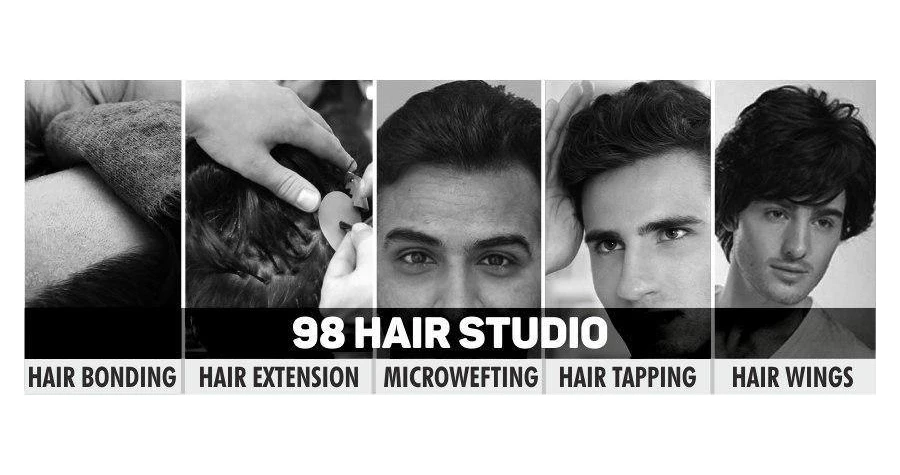
What 98 Hair Studio offers is not a standard salon service. The brand specialises in non-surgical hair restoration — a service category that sits between cosmetic dermatology and personal grooming, attracting clients who have typically exhausted over-the-counter solutions and are not yet ready for surgical options. Clients tend to skew toward working-age adults, both male and female, across upper-middle-income urban and suburban households. The studio format — 800 to 1,000 square feet in residential high-street locations — brings the service into accessible neighbourhoods rather than restricting it to clinic districts or malls, which broadens the catchment area considerably. The fact that the network crossed the hundred-unit threshold within ten years of founding reflects genuine repeat demand, not just franchise sales activity.
Revenue Model: Walk-In, Membership, or Subscription
Hair restoration is not a single-visit category. Clients who begin a non-surgical hair solution typically require ongoing maintenance — product replenishment, periodic reapplication, and follow-up consultations — which means the revenue structure leans toward repeat visits rather than one-time transactions. In practice, a well-run 98 Hair Studio centre generates income across three streams: initial solution packages sold to new clients, recurring maintenance visits from existing clients, and retail sales of associated hair care products. The maintenance and retail component is what stabilises monthly revenue; walk-in acquisition drives growth but is not the foundation of the financial model. Investors should understand that the unit economics improve meaningfully as the client base matures — a centre in its second year of operation is structurally more profitable than one in its first, assuming client retention is actively managed.
Investment Breakdown and Ongoing Cost Structure
The initial investment range covers centre fit-out, equipment procurement, opening product inventory, the brand licence fee, and the training programme for staff. Within an 800 to 1,000 square foot space, the fit-out requirement is moderate — treatment stations, reception infrastructure, and product display — without the heavy engineering costs associated with, say, a spa or a clinical facility. The equipment profile is specific to hair restoration techniques and is typically specified by the franchisor rather than sourced independently, which standardises quality but limits negotiating room on cost.
On the ongoing cost side, the dominant line item is staffing. A team of three to eight people — depending on location footfall — will include trained hair restoration technicians, a receptionist, and in busier outlets a senior technician or studio manager. Lease costs vary considerably by city and micro-market: a residential high-street location in a Tier 2 city will cost a fraction of an equivalent space in a Mumbai suburb, which is one reason the format works across geographies. Royalty and brand fees, product procurement from approved suppliers, and any technology or CRM platform costs round out the monthly structure. The revenue model is classified as low-margin at the unit level, which means cost control — particularly on staff and lease — has a disproportionate effect on take-home profitability.
Client Retention and Lifetime Value
Across health and beauty franchises, the gap between a profitable centre and a struggling one almost always traces back to how effectively the operator converts a first-time client into a long-term one. In hair restoration specifically, this dynamic is amplified: the service has an inherently ongoing nature, and a client who stays for three or more years generates multiples of the revenue from their initial package. Retention in this category is driven by three factors — the quality of the initial outcome, the consistency of the technician relationship (clients are reluctant to switch technicians once trust is established), and the ease of rebooking and maintenance scheduling. Centres that invest in a simple client management system and train staff to proactively schedule follow-up appointments consistently outperform those that rely on walk-in rebooking. The indicative monthly revenue range reflects precisely this variance: the upper end belongs to centres with strong retention systems, not simply higher footfall.
Staffing Costs and the Quality-Margin Tension
Hiring competent hair restoration technicians is the most operationally complex aspect of running a 98 Hair Studio centre. The techniques involved are not standard salon skills — they require specific training that the franchisor provides, but the baseline aptitude and work ethic of the hire determines how quickly that training converts into client-ready performance. In Tier 1 cities, experienced technicians command salaries that can significantly compress margins on lower-revenue months. In Tier 2 cities, the talent pool is thinner but compensation expectations are lower, creating a different kind of challenge: finding qualified candidates rather than affording them.
The tension this creates is structural. Cutting staff costs by hiring less experienced personnel tends to degrade service quality, which directly impacts the retention metrics that the financial model depends on. Operators who treat staffing as a variable cost to be minimised almost always see this reflected in their client attrition numbers within six to twelve months. The franchisor’s training programme reduces but does not eliminate this risk — the quality of the initial hire remains the franchisee’s responsibility.
Regulatory and Compliance Considerations
A 98 Hair Studio franchise operates under a relatively contained compliance footprint compared to clinical or medical aesthetics formats. The primary requirement is a trade licence from the local municipal authority, which governs commercial operation of a beauty or personal care establishment. Depending on the state, additional registrations under the Shops and Establishments Act may apply. Because the brand’s services are non-surgical and do not involve pharmaceutical products or clinical procedures, the more onerous licensing frameworks — Clinical Establishments Act registration, drug licensing — are not typically triggered. Franchisees should confirm local municipal requirements at the time of site selection, as requirements vary between states and even between municipal jurisdictions within the same state.
Who This Investment Suits
The 98 Hair Studio franchise is best matched to an investor who combines financial capacity with either direct beauty industry experience or a genuine willingness to be present in the business during its establishment phase. Experienced professionals transitioning from employment — particularly those with a background in healthcare, personal care, or retail service management — tend to adapt to the operational model quickly. Small retailers who have already run a customer-facing business and understand the mechanics of repeat-client relationships are similarly well-positioned.
Investors who consistently struggle with this format are those who underestimate how directly the franchisee’s daily involvement in staff management affects client experience and, by extension, retention. This is not a business that reaches its financial potential under fully delegated management in the first two years.
Accepting franchise applications in 20 states & UTs
How much does it cost to open a 98 Hair Studio Pvt Ltd franchise?
The total initial investment falls between INR 10 Lac and 20 Lac, covering fit-out, equipment, opening inventory, the brand licence, and training. The variance within this range is primarily driven by location — lease premiums in Tier 1 cities push fit-out and deposit costs higher, while Tier 2 and Tier 3 markets typically allow setup at the lower end of the range.
What is the expected monthly revenue from a 98 Hair Studio Pvt Ltd centre?
Indicative monthly revenue runs from INR 1.3 Lac to 6.5 Lac, a range that reflects the significant difference between a recently opened centre still building its client base and a mature outlet with strong retention and a full appointment calendar. Most franchisees reach the midpoint of this range within twelve to eighteen months of opening, assuming active client acquisition in the early period.
How many clients does a 98 Hair Studio Pvt Ltd centre need to reach break-even?
Break-even is estimated between nine and eighteen months. The timeline shortens when the franchisee focuses on converting initial clients into maintenance schedules rather than relying on continuous new-client acquisition. A centre with fifty to seventy active recurring clients — depending on average spend per visit and local cost structure — will typically cover its monthly operating costs and begin generating a return on the initial investment.
What staff qualifications does 98 Hair Studio Pvt Ltd require?
Technicians need to be trained in the brand's specific non-surgical hair restoration methods, which the franchisor delivers through its training programme. A background in cosmetology or hair care is advantageous at entry level. For a centre operating with three to five staff, the team typically includes one senior technician with full service capability, two to three junior technicians or trainees, and a client-facing receptionist who also handles product retail and appointment management.
What licenses are required to open a 98 Hair Studio Pvt Ltd franchise in India?
A trade licence from the relevant municipal authority is the primary compliance requirement. Shops and Establishments Act registration applies in most states. Because the format is non-surgical and does not involve pharmaceutical or clinical procedures, the licensing burden is lighter than for medical aesthetics or clinical wellness formats. Franchisees should verify state-specific requirements during the site selection stage, as some municipalities impose additional registration conditions on personal care establishments.
Disclaimer: All scores, rankings, and estimates on ForeFind are independently produced editorial assessments using publicly available data and validated brand-submitted information. They are not verified facts, financial advice, or investment recommendations. Full Disclaimer.
