



Hi-Tech Institute Of Advance Technologies Pvt Ltd. Franchise: Running an Education Centre and What Daily Operations Look Like
Hardware repair training occupies a specific and durable position in India’s vocational education market: the skills are hands-on, the employment outcome is immediate and local, and the demand for trained technicians exists in every city regardless of economic cycle. The Hi-Tech Institute Of Advance Technologies Pvt Ltd. franchise has built its network around this reality, delivering structured training in mobile, laptop, desktop, computer hardware, and networking repair across fifty centres since 2009. For an investor considering whether to run one of these centres, the more useful lens is operational—what the work actually involves, where the effort concentrates, and what the franchisor’s sixteen-year track record means in practice for a new franchisee.
What Hi-Tech Institute Of Advance Technologies Pvt Ltd. Teaches and Who Attends
The student who walks into a Hi-Tech centre is almost never a school-going child. The typical enrollee is a young adult—anywhere from eighteen to thirty-five—who wants a practical, employment-generating skill in the shortest viable timeframe. Some arrive after completing their twelfth standard and deciding against a conventional degree. Others are already working as informal repair technicians who want structured credentials to formalise what they already know. A third group includes working adults seeking a second income source through self-employment in device repair.
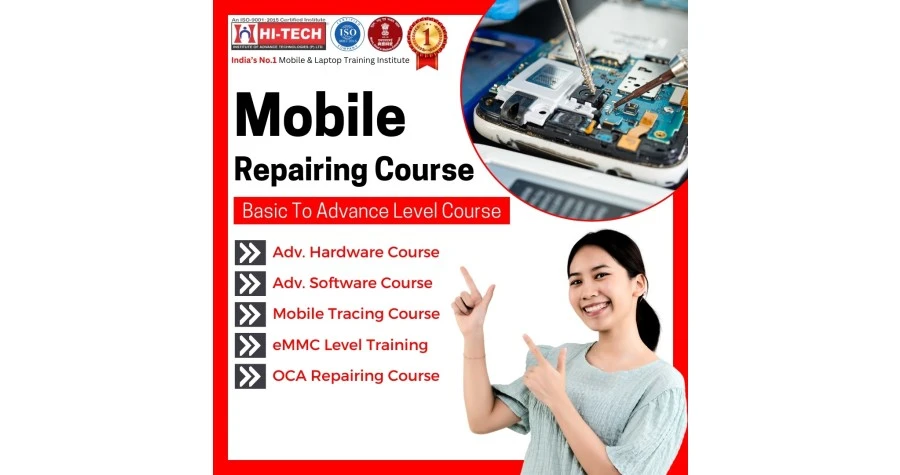
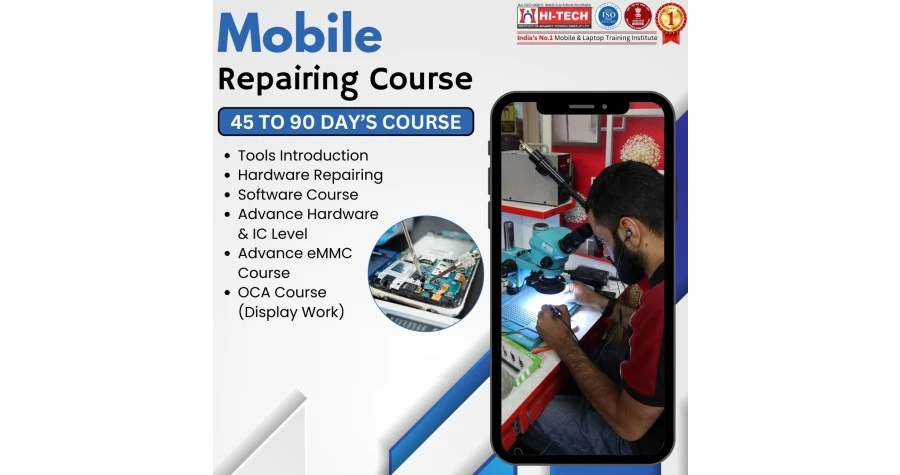
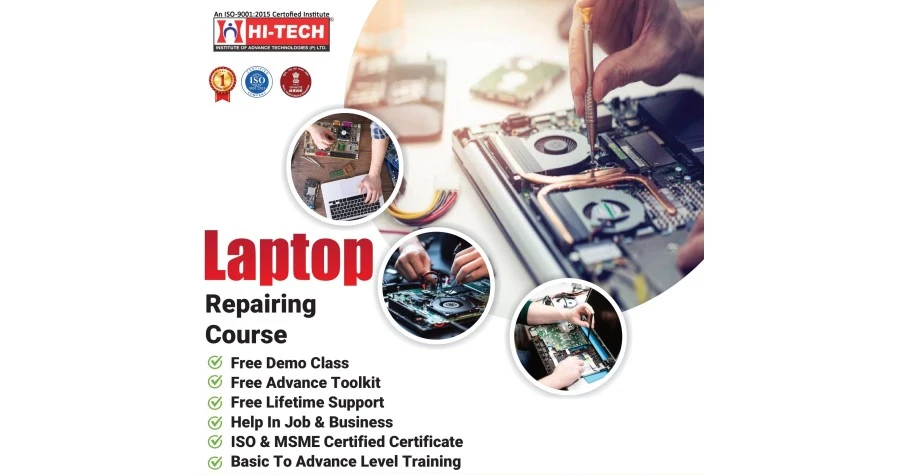
Courses span mobile repairing, laptop repairing, desktop and computer hardware, and networking—each with its own module sequence moving from component identification and circuit theory through to live device fault diagnosis and repair. The centre maintains specialised equipment for practical sessions: oscilloscopes, SMD machines, LCR meters, and IRDA stations that students work with under instructor supervision. Fast-track formats are available for students with professional constraints, which meaningfully expands the enrollable demographic beyond full-time learners. By completion, the expectation is not merely theoretical understanding but independent repair capability—the benchmark that governs how quickly graduates find employment or establish their own service operations.
Running a Hi-Tech Institute Of Advance Technologies Pvt Ltd. Centre Day to Day
Mornings at a functioning Hi-Tech centre typically begin with equipment checks before the first batch arrives. Oscilloscopes, soldering stations, and diagnostic tools need to be operational and calibrated—a session that begins with non-functional equipment wastes both instructor time and student fees, and creates exactly the kind of experience that generates negative word of mouth in the communities these centres depend on. The franchisee’s first thirty minutes of the day is almost always equipment and facility verification.
Across the operating week, batch organisation consumes significant management attention. Multiple cohorts run simultaneously at different stages—one group learning circuit theory while another works on live device diagnostics—and the instructor schedule must accommodate both without creating conflicts over equipment access. Teacher attendance, batch progress tracking, student assessment logging, and the documentation required for NSDC affiliation compliance all generate administrative load that accumulates if not managed consistently. Franchisees who build daily administrative habits from week one find the paperwork manageable; those who let it accumulate face catch-up sessions that disrupt their admission and outreach capacity precisely when those activities matter most.
Student Acquisition: How Parents Find and Choose Hi-Tech Institute Of Advance Technologies Pvt Ltd.
Unlike school-supplemental coaching where parents are the primary decision-maker, hardware repair training enrollments are largely self-directed. The prospective student is the buyer, and their evaluation criteria are direct: how quickly will I be employable, what does the certificate enable, and does the equipment in this centre look like what actual technicians use? Admission conversations at Hi-Tech centres are therefore practical rather than aspirational—the franchisee who can show a prospective student the working equipment, explain the placement support framework, and reference local graduates who are now employed or running their own shops converts at meaningfully higher rates than one who presents a brochure.
Month one enrollment expectations should be conservative—somewhere between eight and fifteen students across all active batches is a realistic target for a new centre with no local reputation yet established. By month six, a franchisee who has built relationships with nearby ITI institutions, posted visible centre signage, run local awareness sessions, and activated the franchisor’s marketing support programmes can sustain two to three concurrent batches. The national brand recognition that fifty operating centres generates provides a baseline of credibility, but local enrollment is almost always driven by personal referral from someone who has seen a graduate’s outcome firsthand.
Teacher Hiring, Training, and the Retention Challenge
Hardware repair instruction requires a profile that is genuinely uncommon in smaller cities: someone with deep practical experience across multiple device types who can also explain diagnostic reasoning to learners who have never held a circuit board before. Franchisees in Tier 2 and Tier 3 cities typically find viable candidates from three sources—experienced independent technicians who want stable income alongside their own repair work, ITI graduates with electronics backgrounds who have two or more years of field experience, and occasionally Hi-Tech alumni from other centres who return to teach after establishing their repair careers.
The franchisor provides a training framework that covers both the curriculum delivery methodology and the specific technical protocols used across the network’s courses. A new instructor with solid practical skills typically needs three to four weeks of guided preparation before independently managing a batch—covering equipment operation protocols, the course module sequence, assessment documentation, and the classroom management dynamics that arise when students work with expensive live devices. Retention is the persistent challenge: a skilled repair technician who can teach has ready alternatives in the market. Franchisees who offer consistent scheduling, transparent salary structures, and some scope for the instructor to maintain their own client work on the side retain their best staff considerably longer than those who impose rigid exclusivity without proportionate compensation.
Infrastructure, Technology, and Centre Setup
The physical setup at a Hi-Tech centre is more equipment-intensive than most vocational training formats at a comparable investment level. A functional training space must house specialised diagnostic and repair equipment across multiple workstations, with adequate power supply, anti-static workbench surfaces, and storage for components and spare parts used in practical sessions. The classroom and practical areas need clear spatial separation—theory instruction is difficult to conduct effectively over the noise of active repair sessions happening simultaneously.
The franchisor specifies equipment standards and provides guidance on centre layout, but procurement and installation are the franchisee’s responsibility. This is where investment allocation decisions matter: underspecifying the equipment to reduce upfront cost produces a training environment that experienced students recognise as substandard within their first week. The franchisor’s sixteen years of operating experience across fifty centres provides a clear picture of what equipment configuration produces functional training outcomes—franchisees who follow those specifications consistently rather than substituting cheaper alternatives tend to avoid the quality complaints that damage early enrollment momentum most severely.
Ongoing Support After the Centre Opens
Hi-Tech’s support framework after opening reflects the operational maturity that comes from running fifty centres across sixteen years. Daily operational assistance is available through the franchisor’s support channels—a meaningful commitment that distinguishes this network from smaller franchise operations where support is responsive rather than proactive. Academic audits examine curriculum delivery quality against the standards that NSDC affiliation requires, with franchisees receiving structured feedback rather than simply a compliance pass or fail.
Curriculum refreshes are particularly significant in hardware repair training, where device technology changes faster than almost any other vocational education category. A course module that was current for mobile repair two years ago may not address the chipset architectures and diagnostic software used in today’s devices. The franchisor manages these updates centrally and distributes revised content to operating centres, ensuring that students completing the programme are trained on current technology rather than a curriculum that reflects the market as it existed when the centre opened. Marketing support, placement network engagement, and business development guidance through the Hitech Business Support-Advantage programme round out an ongoing support structure that actively engages franchisees beyond the initial setup period.
Who Runs a Hi-Tech Institute Of Advance Technologies Pvt Ltd. Centre Successfully
The franchisees who build consistently full Hi-Tech centres typically share a practical background in electronics, IT, or hardware services—not necessarily as instructors, but as people who understand what device repair employment actually looks like and can speak about it credibly to prospective students evaluating their options. Combined with active local employer relationships—service centres, electronics retailers, mobile repair shops—that provide placement pathways for completing students, this background produces a centre that fills through referral as much as through formal marketing within twelve to eighteen months of opening. The Hi-Tech Institute Of Advance Technologies Pvt Ltd. franchise consistently underperforms in the hands of investors who treat it as a managed asset rather than an owner-operated centre, assuming that staff and curriculum will generate enrollment without the franchisee’s sustained daily involvement in admission conversations, student progress, and community-level reputation building.
Accepting franchise applications in 12 states & UTs
How much space is required to open a Hi-Tech Institute Of Advance Technologies Pvt Ltd. centre?
A functional Hi-Tech centre requires between 1,000 and 1,800 square feet of commercial space, with the actual requirement driven by the number of equipment workstations the franchisee intends to operate simultaneously. The space must accommodate both a theory instruction area and a practical repair zone with sufficient clearance between workstations for students to work safely on live devices. Centres that attempt to compress both functions into a single undivided space consistently report operational friction—practical session noise and movement interfere with theory instruction in ways that affect student experience and retention.
How long does it take to set up and open a Hi-Tech Institute Of Advance Technologies Pvt Ltd. franchise?
From lease signing to first enrolled batch, a well-managed setup process typically takes eight to twelve weeks. The critical path includes interior fit-out and workstation installation, specialised equipment procurement and testing, instructor recruitment and training orientation, and the local marketing activity needed to generate admission enquiries before opening day. Equipment procurement is usually the longest lead-time item—sourcing oscilloscopes, SMD machines, and other diagnostic tools to the franchisor's specifications takes longer than standard furniture or technology purchases. Franchisees who begin instructor recruitment and local outreach before the physical setup is complete tend to open with a stronger initial batch than those who treat each phase sequentially.
What curriculum and teaching materials does Hi-Tech Institute Of Advance Technologies Pvt Ltd. provide?
The franchisor provides structured course modules across all five training disciplines—mobile repairing, laptop repairing, desktop repairing, computer hardware, and networking—covering both theoretical content and practical session protocols. Assessment tools, student progress documentation frameworks, and the materials required for NSDC affiliation compliance are included within the curriculum package. Course content is updated by the franchisor when device technology or repair methodology evolves significantly, ensuring that franchisees are delivering current content rather than material that reflects a previous technology generation. Instructors receive training on the curriculum delivery methodology as part of their onboarding.
Can a Hi-Tech Institute Of Advance Technologies Pvt Ltd. centre be run without the owner being present daily?
This is an owner-operated model in practice, not just in designation. The quality of a hardware repair training centre—equipment maintenance, instructor accountability, student progress monitoring, admission conversion—reflects directly on how consistently the owner engages with daily operations. Franchisees who attempt to manage at a distance through employed centre managers in the first twelve to eighteen months consistently see slower enrollment growth and higher staff turnover than those who maintain daily presence. Delegation becomes more viable once systems are embedded, staff are stable, and the centre has established a local reputation—but that foundation requires sustained owner involvement to build.
How many Hi-Tech Institute Of Advance Technologies Pvt Ltd. centres are operating in India currently?
Fifty centres are currently active across the Hi-Tech network, making it one of the larger organised hardware repair training franchises operating in India. This scale provides franchisees with genuine brand recognition benefits—students researching training options in their city are more likely to encounter the Hi-Tech name through online searches, alumni networks, and employer references than they would be for a smaller network. The geographic distribution of existing centres, and the territories available for new franchisees, is confirmed through the brand's direct inquiry process.
Disclaimer: All scores, rankings, and estimates on ForeFind are independently produced editorial assessments using publicly available data and validated brand-submitted information. They are not verified facts, financial advice, or investment recommendations. Full Disclaimer.
