



Dr Lal PathLabs’s Position in India’s Growing Health and Beauty Market
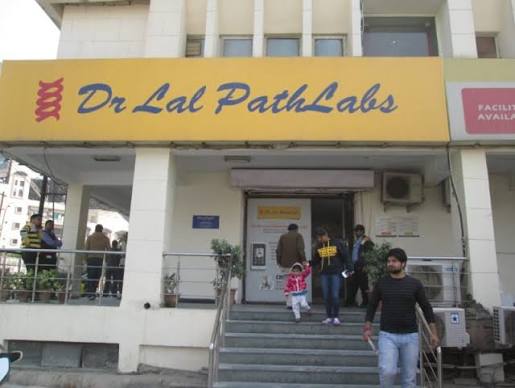
Within the diagnostic labs sub-category of India’s health and beauty sector, Dr Lal PathLabs franchise occupies the organised, branded end of a market that has historically been dominated by single-owner neighbourhood labs with no standardised reporting or accreditation. Its presence across roughly 2000 centres nationally is not simply scale for its own sake; it reflects a genuine shift in how Indian households choose where to get tested, moving away from the nearest unbranded lab toward a name they recognise from a previous visit, a doctor’s recommendation, or a relative’s experience. The format itself, a small-footprint collection centre rather than a full diagnostic laboratory, is built to serve high-frequency, low-ticket testing demand: routine blood panels, doctor-prescribed screenings, and annual health check-ups that don’t require the patient to travel to a central lab. That density of 2000 operational points is itself a signal that the underlying demand for organised diagnostic access exists in far more pin codes than most other Health & Beauty sub-categories have managed to reach.
Why Spending on Health and Beauty Is Growing in India
Urban and semi-urban households are spending a larger share of discretionary income on health monitoring than they did a decade ago, partly driven by rising awareness around lifestyle diseases like diabetes and hypertension, and partly by employer-mandated annual health checks becoming standard across white-collar jobs. This shift runs parallel to the broader wellness economy trend visible across grooming, fitness, and skincare categories, where branded formats are steadily displacing unorganised local providers. In diagnostics specifically, the push comes less from aspiration and more from necessity: insurance providers increasingly require documented test results, and doctors are prescribing more preventive panels than reactive ones. For a brand like Dr Lal PathLabs, this means demand isn’t seasonal hype tied to festive spending, it’s a structural increase in how often the average Indian family interacts with a diagnostic centre each year.
Why a Dr Lal PathLabs Franchise Outperforms an Independent Centre in This Category
An independent diagnostic lab in a Tier 2 town has to build its own reputation for accuracy from zero, test by test, often over several years before patients trust it enough to return without a doctor’s specific push. A Dr Lal PathLabs franchise starts that trust relationship already partly built, since the brand’s accreditation history and national presence precede the local centre’s own track record. Beyond reputation, the franchise model brings standardised testing protocols and centralised reference lab support, meaning a sample collected in a small-town centre is processed against the same quality benchmarks as one collected in a metro, which an independent lab working with local reference labs of inconsistent quality cannot always guarantee. Bulk procurement of consumables and reagents across a network of this size also gives franchisees a cost advantage on recurring inputs that an independent operator buying in small quantities cannot match, which matters directly in a Low revenue-model category where margins on individual tests are thin.
Geographic Opportunity and Target Locations
With 2000 centres already operational, the most saturated demand sits in established metro neighbourhoods and larger Tier 1 markets, where competing diagnostic brands have also built density. The stronger remaining opportunity lies in Tier 2 and Tier 3 cities and the denser residential pockets of Tier 1 suburbs, where organised diagnostic access still lags behind population growth and local clinics continue to refer patients to whichever lab happens to be geographically closest rather than the most reliable. Locations near residential clusters with a meaningful base of salaried households, close to general physician clinics, or adjacent to mid-sized hospitals tend to generate steadier walk-in and referral volume than standalone commercial locations. Given the modest space requirement, even smaller catchment areas in growing residential colonies can support a viable centre, provided the local doctor network is engaged early.
Competitive Differentiation: Why Clients Choose Dr Lal PathLabs
A patient in a Tier 2 city choosing between a Dr Lal PathLabs franchise, a competing diagnostic chain, and a long-running independent lab is usually making that decision on a narrow set of factors: perceived accuracy, turnaround time, and whether the report will be accepted without question by their doctor or insurer. Dr Lal PathLabs’s accreditation history, including recognition from international and national quality bodies, gives it a credibility marker that an independent lab, however well-regarded locally, typically cannot point to on paper. For patients managing chronic conditions who need repeat testing over months or years, consistency in reference ranges and reporting format across visits becomes a practical reason to stay with the same brand rather than switching between providers. This is less about marketing appeal and more about a patient’s accumulated confidence that a result from this brand will hold up wherever it’s presented next.
The Wellness Economy and Long-Term Category Outlook
India’s organised diagnostics segment is still in a relatively early stage of formalisation compared to more mature Asian markets like South Korea or urban China, where branded diagnostic and wellness chains have long replaced unorganised local providers across most price tiers. That gap is precisely what supports the long-term investment case for this category: as health insurance penetration deepens and preventive testing becomes more habitual rather than occasional, the addressable market for organised diagnostic centres expands faster than new centres can be opened. Dr Lal PathLabs’s expansion pace, adding well over a hundred new units annually across its operating history, reflects a network still scaling into underserved demand rather than one approaching saturation. For an investor evaluating the category, this suggests a multi-year runway before the easier locations are taken and competitive intensity rises meaningfully.
Who Builds the Most Valuable Dr Lal PathLabs Centre
The franchisees who build the strongest local reputation are the ones who treat every patient interaction as a small trust transaction rather than a transaction, full stop. Operational discipline around sample handling, documentation accuracy, and turnaround time matters, but in a category where the product is invisible until the report is in hand, client trust functions as the centre’s real asset, more durable than any single marketing push. A franchisee who personally stays close to service standards, particularly around accuracy and timely reporting, tends to convert first-time patients into the kind of repeat clients who bring family members along on their next visit.
Accepting franchise applications in 5 states & UTs



How does Dr Lal PathLabs compare to other health and beauty franchises at this investment level?
At a similar entry investment, most other Health & Beauty franchise formats require a larger footprint or more elaborate fit-out, whereas Dr Lal PathLabs's compact 100 sq. ft. requirement and diagnostic-specific licensing pathway position it as a comparatively lean entry into organised healthcare retail rather than cosmetic or grooming services.
Is a Dr Lal PathLabs centre viable in Tier 2 and Tier 3 Indian cities?
Yes, and arguably more so than in saturated metro markets, since Tier 2 and Tier 3 cities often still rely on unorganised local labs, leaving meaningful room for a branded, accredited centre to capture patients who want consistency in reporting that local providers may not offer.
What consumer trend is driving demand for Dr Lal PathLabs's service category?
Rising preventive health awareness, increasing employer and insurance-mandated testing, and growing chronic disease management needs are together pushing more households toward regular diagnostic testing rather than occasional, illness-triggered visits.
How does Dr Lal PathLabs ensure service quality consistency across its franchise network?
Standardised sample collection protocols, centralised reference lab processing, and adherence to NABL and related accreditation requirements allow the brand to maintain comparable reporting accuracy across its centres, regardless of city size.
What is Dr Lal PathLabs's expansion strategy for India?
Based on its historical pace of adding well over a hundred new centres annually, the brand's expansion appears focused on deepening penetration into residential neighbourhoods and smaller cities where organised diagnostic access remains limited relative to population. For an investor weighing entry into India's diagnostics segment, a Dr Lal PathLabs franchise offers a way to participate in a category still early in its shift from unorganised to branded, backed by a network whose scale reflects sustained, rather than speculative, consumer demand.
Disclaimer: All scores, rankings, and estimates on ForeFind are independently produced editorial assessments using publicly available data and validated brand-submitted information. They are not verified facts, financial advice, or investment recommendations. Full Disclaimer.
