



ELBEX Courier and Cargo Franchise: Market Demand, Competitive Position and Growth Opportunity in India
The ELBEX Courier and Cargo franchise operates in a segment of the Indian logistics market that has grown not because of a single trend but because of several structural shifts converging simultaneously. With a tiered franchise network spanning unit, super, master, and regional levels, the brand has built an operational architecture that distributes accountability across geographic layers—a design choice that reflects how Indian logistics demand actually distributes, across hundreds of towns and commercial clusters rather than concentrated in a handful of metro centres. For an investor evaluating this opportunity, the strategic question is not whether the courier market is growing but whether this franchise structure captures that growth efficiently.
ELBEX Courier and Cargo and the Indian Services Franchise Opportunity
What ELBEX addresses is a service need that sounds simple and is operationally demanding: moving parcels, documents, and commercial shipments reliably across India’s fragmented geography, with documentation standards that formalising Indian businesses now require. The client segment that feels this most acutely is not the occasional individual sender but the small and mid-sized business whose commercial operations depend on outbound logistics working consistently—the regional manufacturer dispatching samples, the exporter managing inter-state documentation, the e-commerce seller fulfilling daily orders from a Tier 2 town.
The franchise model makes this service scalable at a depth that a centrally managed branch network cannot replicate. A unit franchisee operating within a designated local territory—whether a part of a town, a taluk, or a defined commercial cluster—brings local knowledge, client relationships, and accountability that a salaried branch employee cannot match. The tiered supervision structure, where unit franchisees operate within a system managed by super and master franchisees, creates operational density without requiring the brand to manage every local point directly. For the unit-level investor, this means operating within a structured support chain rather than as an isolated operator.
Why Demand for This Service Is Structurally Growing in India
Indian commerce has been through a formalization process over the past decade that has fundamentally changed what businesses need from logistics providers. The GST regime introduced documentation requirements for inter-state goods movement that did not exist at this scale before 2017—businesses that previously arranged informal transport now need e-way bills, GST invoices, and delivery confirmation as compliance obligations rather than operational preferences. That shift pulled millions of small businesses into formal logistics networks for the first time.
Simultaneously, digital adoption among Indian SMEs has raised client expectations across the board. A manufacturer who tracks their own supplier deliveries on a portal now expects equivalent visibility for their outbound shipments. A professional services firm that emails invoices and receives digital payments expects its courier partner to provide the same documentation standards. These expectations do not reverse when economic conditions soften—they are behavioral shifts embedded in how Indian businesses now operate. Courier franchise operators with the technology infrastructure and documentation capability to meet these standards are capturing clients that informal operators, still working on handwritten receipts, structurally cannot serve.
The Franchise Advantage Over Going Independent in This Service Category
Building an independent courier operation in India requires solving several problems simultaneously before the first corporate client commits volume: carrier relationships with enough scale to offer competitive transit rates, a tracking and documentation platform, brand credibility that corporate procurement managers can verify, and a geographic reach that extends beyond the operator’s immediate locality. Each of these is achievable independently. The cumulative time and capital cost of building all four puts the independent operator two to three years behind a franchise network entry in terms of competitive readiness.
An ELBEX Courier and Cargo franchise compresses that timeline by providing the carrier relationships, transit infrastructure, operational methodology, and brand association from day one. The tiered network structure adds a further advantage: unit franchisees connect to a supervision and support chain—super franchisees at district level, master franchisees above that—which provides operational guidance and escalation pathways that an independent operator must build entirely on their own. Training, marketing assistance, and advertising support are embedded in the franchise model, which means the franchisee spends the first operating months building client relationships rather than building infrastructure.
Territory, Market Sizing, and the Opportunity in Indian Cities
ELBEX defines territories at a granular level—unit franchisees operate within designated areas that can be as specific as part of a town, a taluk, or a cluster of villages. This granularity matters because it determines the addressable client base and protects the franchisee’s investment in building local relationships from being diluted by adjacent franchise points serving the same commercial clusters.
In a Tier 2 Indian city, a single franchise territory typically encompasses several hundred businesses with regular outbound shipping requirements alongside a consistent base of individual senders. Capturing five to eight percent of the available corporate accounts within two years of operation, combined with steady individual volume from a well-located commercial space, creates a financially sustainable business from a single territory. The realistic planning benchmark for a new franchisee is not maximum market penetration in year one but rather a stable base of ten to fifteen corporate accounts generating consistent monthly bookings—enough to cover operating costs and yield a positive return while the client base continues building.
Competitive Landscape: Who Else Serves This Market
Three competitive tiers operate in the Indian courier market, and they rarely compete directly for the same clients. Enterprise logistics operators—large nationals and international express carriers—dominate corporate accounts above a certain shipment volume threshold, with dedicated account teams, SLA contracts, and pricing structures that reflect that service intensity. At the other end, thousands of informal local operators compete on price with minimal documentation capability and variable reliability. Between them is the segment that has grown fastest as Indian commerce formalises: SMEs, regional exporters, e-commerce sellers, and professional services firms whose shipping needs are regular, documentation-sensitive, and volume-consistent without reaching enterprise scale.
ELBEX franchise operators serve this middle segment with an organised service standard that informal operators cannot match and with the local responsiveness and relationship depth that large carriers do not offer to smaller accounts. The franchisee who understands this positioning—and stops trying to compete with informal operators purely on price—builds a client portfolio with better retention characteristics and stronger margin than one built on undercutting the cheapest local alternative.
The Recurring Revenue Advantage of This Business Model
Courier services generate per-transaction revenue, but the behavioral pattern of corporate clients transforms that transaction model into something that approximates recurring income. A business that ships regularly does so because its operations require it—not because economic conditions are favorable or because it has discretionary budget to allocate. Once a corporate client has integrated an ELBEX franchise into its dispatch workflow, the bookings arrive as a function of the client’s own business activity rather than as deliberate purchasing decisions.
That embedded position is the long-term asset value of the franchise. A franchisee with fifteen stable corporate accounts generating consistent monthly volume owns a business that can be valued on forward-looking client retention, not just on trailing revenue. The difference in asset value between a franchise built primarily on corporate recurring volume and one built on unpredictable walk-in individual traffic is significant—and it is built through the franchisee’s client development and retention discipline over the first two to three operating years.
Who Captures the Most Value From a ELBEX Courier and Cargo Franchise
The investors who build the most defensible ELBEX franchise businesses share three attributes that do not appear in franchise disclosure documents but consistently determine outcomes in this category. First, they arrive with commercial relationships in the territory—contacts among local businesses, manufacturers, distributors, or exporters who can be converted into early corporate accounts without extended cold outreach. Second, they maintain service delivery discipline daily: accurate documentation, on-time pickups, proactive communication during shipment exceptions. Third, they manage their client portfolio actively, tracking volume trends by account and intervening before declining clients attrition quietly to competitors.
The combination of these three attributes—network, discipline, and active portfolio management—creates a franchise asset that compounds over time rather than plateauing at initial break-even. A franchisee who has embedded the service into fifteen or twenty local businesses’ logistics workflows, and who maintains those relationships through consistent execution, has built something that a new entrant entering the territory would take years to displace. That defensibility is the strategic case for the ELBEX Courier and Cargo franchise, and it is built through operating behaviour rather than through the brand association alone.



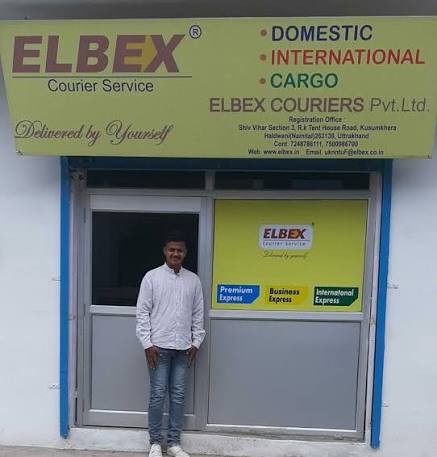
How does ELBEX Courier and Cargo compare to starting an independent practice in this service category?
An independent courier operator must build carrier relationships, tracking infrastructure, brand credibility, and geographic reach simultaneously before reaching competitive parity with an established franchise network—a process that typically takes two to three years. An ELBEX Courier and Cargo franchise provides all of these from day one, along with a tiered operational support structure that connects unit franchisees to super and master franchisees for guidance and escalation. The trade-off is a franchise fee and ongoing commission structure; the return is a substantially compressed path to operational readiness and a client base built on a verifiable brand rather than an unknown name.
What is the addressable market size for ELBEX Courier and Cargo's services in a typical Indian city?
In a Tier 2 Indian city with a population between 500,000 and one million, the corporate shipping client base typically includes several hundred businesses with regular outbound logistics requirements—manufacturers, distributors, exporters, professional services firms, and e-commerce sellers. The individual sender segment adds further volume, particularly during festive and commercial peak periods. A franchise capturing five to eight percent of available corporate accounts within its designated territory over two years, alongside consistent individual walk-in volume from a well-located commercial space, builds a financially viable and growing business.
Does ELBEX Courier and Cargo compete with large corporate service providers or serve a different segment?
The brand primarily serves the mid-market segment that enterprise logistics carriers do not prioritise and that informal local operators cannot serve with the documentation and tracking standards that formalising Indian businesses require. Growing SMEs, regional exporters, and professional services firms with regular but sub-enterprise shipping volumes represent the core addressable client base. These clients need organised, trackable service with a local point of contact—a combination that large carriers deliver inconsistently at smaller account sizes and that unorganised operators deliver rarely.
What is the client retention rate in the ELBEX Courier and Cargo franchise network?
Retention in Indian courier franchises is primarily a function of operational consistency and communication quality rather than price competitiveness. Corporate clients who have integrated a courier partner into their dispatch workflow face meaningful switching costs—staff retraining, documentation re-establishment, and reliability risk during the transition. Franchisees who maintain on-time pickup performance and communicate proactively when exceptions occur find that client attrition stays low once accounts have been active for three or more months. The franchisees with the strongest retention track records treat each corporate account's monthly booking volume as a metric to monitor and act on early, rather than a passive outcome of good service.
How is ELBEX Courier and Cargo's territory exclusivity structured?
Unit franchisees operate within designated territories that can range from a part of a town to a taluk or village cluster, with supervision provided by super franchisees typically based at district headquarters. The tiered structure—unit, super, master, and regional levels—means territory boundaries are defined within a layered operational hierarchy rather than as standalone geographic allocations. Prospective franchisees should confirm the specific boundaries of their designated territory, the commission and transhipment charge structure with their supervising super franchisee, and any conditions governing territory adjustments as the network grows. These commercial terms belong in writing before any agreement is executed.
Disclaimer: All scores, rankings, and estimates on ForeFind are independently produced editorial assessments using publicly available data and validated brand-submitted information. They are not verified facts, financial advice, or investment recommendations. Full Disclaimer.
