



Red Bean Hospitality Pvt. Ltd. Franchise: Market Position, Category Opportunity and Competitive Edge
Red Bean Hospitality Pvt. Ltd. and Where It Fits in India’s Food Franchise Landscape
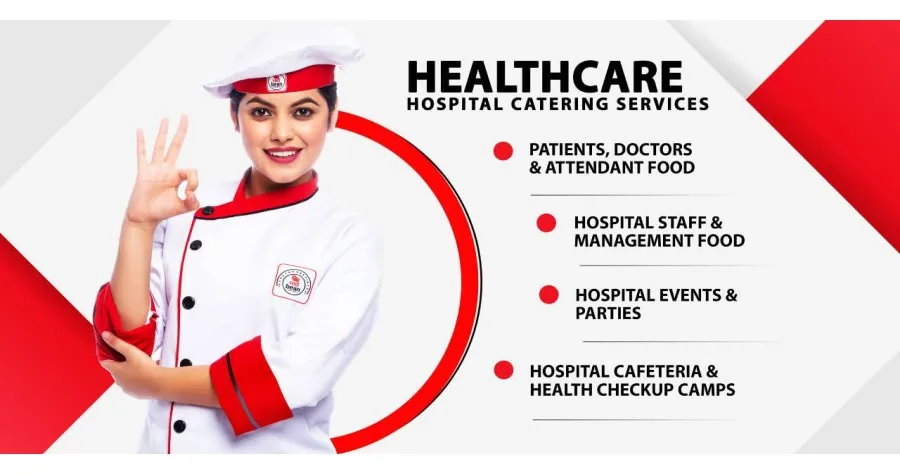
The Red Bean Hospitality Pvt. Ltd. franchise occupies a specific and credible position within India’s organised catering sector: a B2B and B2C operator with demonstrated strength in institutional catering — including hospital and healthcare facility contracts — alongside corporate and individual event services. This is not a QSR or cloud kitchen play. The model is built around service catering: volume meal supply to institutions, event food management, and individual catering contracts, all operating without a fixed consumer-facing premises. The zero square foot area requirement signals that revenue comes from client relationships and service delivery rather than footfall, which structurally changes how the business is built and sustained. With 50 to 100 operational units and eleven years of franchising behind it, the brand has a documented track record that early-stage competitors in the same investment range cannot offer. What makes this position defensible is the institutional catering specialisation — particularly healthcare — where client switching costs are high, compliance requirements create a barrier to entry, and contract relationships tend to be multi-year.
Why This Food Format Is Growing in India Right Now
Organised catering is expanding across India for structural reasons that are unlikely to reverse. Corporate India’s growth — particularly in mid-size cities — is generating sustained demand for institutional meal supply from employers who cannot or do not want to run in-house canteens. Hospitals and healthcare institutions, a specific focus area for Red Bean Hospitality, are expanding rapidly in Tier 2 markets, and patient and staff meal programmes at these facilities require FSSAI-compliant, documented, consistent food supply that informal local caterers are not positioned to provide reliably.
Simultaneously, the event economy — weddings, corporate functions, cultural events — has grown in volume and in the expectation of professional catering execution. Families and companies that previously used unverified local caterers are shifting toward branded operators whose processes are documented and whose accountability is formal. This shift from unorganised to organised food supply is not a trend specific to metros; it is running across Tier 2 and Tier 3 cities where rising incomes are raising expectations about food quality and hygiene standards. Red Bean Hospitality’s format captures this shift rather than competing with it.
What Red Bean Hospitality Pvt. Ltd. Does Differently From Independent Food Outlets
Independent catering operators face a credibility ceiling. Without documented quality systems, institutional clients — hospitals, corporate HR departments, educational institutions — will not shortlist them for significant contracts. Building that credibility independently takes years of client relationship development, references, and demonstrated compliance. A Red Bean Hospitality franchise transfers an established brand name and a history of institutional client delivery that an independent startup cannot manufacture in the short term.
The operational systems matter as much as the brand recognition. Catering at scale — managing meal programmes for hospitals or corporate campuses — requires process discipline around sourcing, preparation, portion control, and hygiene documentation that independent operators learn slowly and expensively through early operational failures. Franchisees enter with documented procedures and training that compress this learning curve significantly. The sourcing relationships the brand has developed with ingredient vendors also reduce procurement risk for new franchisees, who would otherwise spend considerable time and capital establishing supplier reliability from scratch.
The Investment Case: How Red Bean Hospitality Pvt. Ltd. Compares at This Price Point
At INR 5 to 10 lakh, the catering franchise category offers a range of options — most of them either early-stage concepts with thin operational history or single-format models with limited revenue channel diversity. Red Bean Hospitality sits in a different category: an established network averaging 6.8 new units per year, with a revenue model that spans institutional, corporate, and individual catering simultaneously. The indicated monthly revenue range of INR 1 lakh to 5 lakh reflects the genuine variance across units operating in different market sizes and with different levels of franchisee commercial activity — not a guaranteed floor.
The 9 to 18 month break-even window is consistent with well-managed catering franchise units in India. What distinguishes Red Bean Hospitality at this price point is that the network growth rate — nearly seven units annually — demonstrates that the system is actively being adopted by new investors who have assessed the model and committed capital. This is a more informative signal than a brand’s self-reported projections, because it reflects actual investment decisions made by people with the same information an incoming franchisee would have.
Geographic Opportunity: Where Red Bean Hospitality Pvt. Ltd. Is Expanding
A network of 50 to 100 units spread across India still leaves substantial geographic white space, particularly in mid-size cities where institutional catering demand is growing faster than organised supply. Cities with expanding hospital infrastructure — secondary cities in states like Rajasthan, Madhya Pradesh, Uttar Pradesh, Odisha, and the Northeast — represent strong opportunity for healthcare catering contracts that suit Red Bean Hospitality’s documented specialisation. Corporate catering demand in IT and manufacturing hubs outside the major metros — Coimbatore, Nashik, Vadodara, Bhubaneswar — is similarly underserved by organised branded operators.
Territory allocation terms should be confirmed directly with the franchisor, as early-mover advantage in a specific city or district can be meaningful in institutional catering where the number of major client accounts is finite and first-relationship advantage compounds. Franchisees who secure one or two anchor institutional contracts — a hospital, a corporate campus — in a new market establish a reference that makes subsequent contract acquisition significantly easier.
The Risks of This Category and How Red Bean Hospitality Pvt. Ltd. Mitigates Them
Raw material cost volatility is the most persistent financial risk in catering operations. Fresh ingredient prices fluctuate seasonally and with regional supply conditions, compressing margins on fixed-price institutional contracts when input costs rise. Red Bean Hospitality’s established vendor sourcing framework gives franchisees access to supplier relationships that provide some price predictability, but franchisees with fixed-term institutional contracts should build price review clauses into agreements to manage this exposure over time.
Delivery platform margin pressure — a primary risk for cloud kitchen and QSR formats — is structurally lower in institutional catering because the majority of revenue flows through direct client contracts rather than aggregator platforms. FSSAI compliance is non-negotiable and becomes more complex as order volumes increase; the brand’s documented processes reduce the compliance burden but do not eliminate the franchisee’s responsibility for ongoing adherence. Location dependency is largely absent in this model, which is a genuine structural advantage over formats that rely on premises footfall for revenue — but it transfers the business development burden entirely to the franchisee’s client acquisition capability.
Who Captures the Most Value From a Red Bean Hospitality Pvt. Ltd. Franchise
The franchisees who consistently reach break-even at the nine-month end of the range share a recognisable profile. They enter with existing relationships in the local corporate, healthcare, or events ecosystem — contacts who can be converted into catering enquiries and trial contracts within weeks of launch rather than months. They are operationally involved: present during service delivery, accountable to clients directly, and willing to manage staff performance in a hands-on way. They understand that institutional catering revenue is built through contract relationships that take time to establish but generate recurring income once secured, and they invest in business development from before the unit opens.
Graduate entrepreneurs and career changers who bring professional networks from prior corporate careers are often well-positioned for this format — their existing credibility with decision-makers in companies and institutions accelerates the B2B pipeline in ways that compensate for limited food industry experience. Franchisees who treat Red Bean Hospitality as a passive investment, delegating client development and operational oversight to hired staff without personal involvement, consistently take longer to break even and generate lower returns across the network.
Accepting franchise applications in 16 states & UTs


How does Red Bean Hospitality Pvt. Ltd. compare to other food franchises in the same investment range?
Most catering and food franchises in the INR 5 to 10 lakh range are either early-stage concepts or single-channel models. Red Bean Hospitality's combination of an established network, institutional catering specialisation, and multi-channel revenue structure — spanning healthcare, corporate, and individual clients — provides broader revenue diversification and a more durable business base than alternatives at this investment level. The 6.8 average annual new units also reflects active investor adoption, which is a meaningful differentiator from brands with theoretical models and limited actual franchisee uptake.
Does Red Bean Hospitality Pvt. Ltd. work in Tier 2 and Tier 3 cities in India?
The format is well-suited to Tier 2 cities with growing corporate sectors, hospital infrastructure, or active event calendars. Institutional catering demand in these markets is often unmet by organised operators, which gives an incoming franchisee less direct competition than they would face in a metro. Tier 3 markets require careful demand assessment — specifically whether the local corporate and institutional base is sufficient to sustain the contract volume the unit needs to cover fixed and variable costs.
What is the Red Bean Hospitality Pvt. Ltd. franchise expansion plan for the next two years?
Specific expansion targets and priority geographies should be discussed directly with the franchisor. The brand's consistent growth rate of nearly seven new units per year over its franchising history indicates an active and functioning expansion programme. Prospective franchisees in target markets benefit from initiating inquiry early, particularly in cities where institutional client accounts are finite and first-mover positioning in client relationships has lasting commercial value.
How does Red Bean Hospitality Pvt. Ltd. handle competition from food delivery aggregators?
The institutional and corporate catering model operates largely outside the delivery platform ecosystem. Revenue is generated primarily through direct client contracts — hospitals, corporate campuses, event organisers — rather than through aggregator-mediated orders. This structural difference means the brand is not materially exposed to platform commission pressure or algorithm-driven visibility changes that significantly affect QSR and cloud kitchen operators in the same investment range.
What support does Red Bean Hospitality Pvt. Ltd. provide for local marketing?
The brand's marketing support framework should be confirmed in detail with the franchisor. In institutional catering, the most effective local marketing is relationship-based: direct outreach to hospital procurement teams, corporate HR and facilities managers, and event management companies. The Red Bean Hospitality brand name and documented quality credentials provide a credibility foundation for these conversations that an independent operator would need years to build. Franchisees who invest personally in these client relationships from before launch typically build their pipeline faster than those who wait for inbound enquiries to develop organically.
Disclaimer: All scores, rankings, and estimates on ForeFind are independently produced editorial assessments using publicly available data and validated brand-submitted information. They are not verified facts, financial advice, or investment recommendations. Full Disclaimer.
