



WS Bakers Franchise: Market Position, Category Opportunity and Competitive Edge
WS Bakers and Where It Fits in India’s Food Franchise Landscape
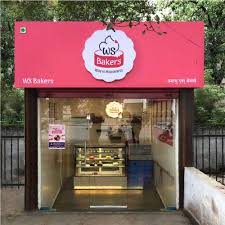
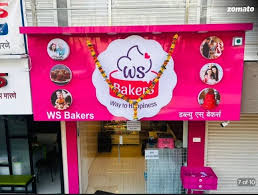
WS Bakers franchise operates as a 100% vegetarian cake, pastry, and confectionery chain based in Pune, with centralized production at a factory in Wagholi and a network of 50 to 100 retail stores delivering fresh products daily. The brand serves families and individuals across birthday celebrations, weddings, corporate gifting, and everyday occasions, from a 200 to 500 square foot retail format at the INR 2 to 5 lakh investment level. The 100% vegetarian positioning is not incidental — it is a deliberate commercial decision that targets a substantial Indian consumer segment for whom vegetarian certification is a purchase prerequisite. For gifting occasions, where the recipient’s dietary preferences are often unknown, a certified vegetarian bakery product removes the selection risk that conventional bakeries with mixed menus create. This positioning makes the WS Bakers consumer proposition defensible in a market where the vegetarian certification credential is both valued and increasingly demanded.
Why This Food Format Is Growing in India Right Now
Cake and pastry consumption in India has shifted from a purely occasion-driven category to a more frequent purchase behavior across urban demographics. Dual-income households with disposable income and limited time for home baking are purchasing branded bakery products for celebrations, gifting, office events, and casual consumption at a frequency that was uncommon a decade ago. This frequency increase is structural — it tracks rising incomes and the normalized culture of celebrating milestones with purchased specialty food products rather than home preparation.
The delivery infrastructure that has expanded across Indian cities simultaneously extends the addressable market for an urban bakery brand beyond its physical store radius. A WS Bakers franchise that has established strong Swiggy and Zomato platform presence reaches customers who have never passed the store front but who discover the brand through platform browsing for occasion cakes. The centralized production model at WS Bakers’ Wagholi factory supports this delivery demand by maintaining consistent product quality and daily fresh availability that walk-in-only formats managing production at the outlet level cannot always guarantee.
What WS Bakers Does Differently From Independent Food Outlets
The WS Bakers model’s most commercially significant differentiator is the centralized production factory combined with a distributed retail network — a supply chain architecture that independent outlet operators cannot replicate without the scale investment that a franchise network spreads across many units. Each WS Bakers franchise store receives products freshly produced at the Wagholi factory rather than managing independent in-store kitchen operations. This means the franchisee’s quality consistency depends on the franchisor’s production standards rather than on the skill of a local baker, which eliminates the production variability that is the most common source of quality inconsistency at independent bakeries.
The brand’s documented network of 50 to 100 stores across Pune provides franchisees with consumer recognition at launch that no independent can match without years of local marketing investment. When WS Bakers opened 100 stores in a single day, the brand created a metropolitan visibility event that generated consumer awareness across the city simultaneously — a collective launch impact that individual franchise units would not have generated independently. This network effect continues to benefit franchisees through shared brand visibility rather than requiring each outlet to build its own consumer recognition from zero.
The Investment Case: How WS Bakers Compares at This Price Point
At INR 2 to 5 lakh, WS Bakers franchise offers access to a 50-to-100 outlet network with centralized production infrastructure — an operational model that would cost multiples of the franchise investment to replicate independently. The factory production model removes kitchen equipment investment from the individual outlet setup cost, which is one reason the total franchise investment can be as low as INR 2 lakh while still delivering a commercially complete bakery retail operation. Most food franchise alternatives at this investment level require the franchisee to manage in-store production, which adds equipment capital and operational complexity that the WS Bakers supply chain model avoids.
The indicative monthly revenue range of ₹70,000 to ₹3.5 lakh reflects genuine performance variance driven primarily by the franchisee’s location quality and their development of the custom order and corporate gifting channels. The lower end is achievable at modest daily transaction volumes; the upper end requires active corporate and occasion order development alongside consistent walk-in retail. The investment’s return profile is most favorable for franchisees who treat the corporate and gifting B2B channel as a structured sales activity from their first operating week.
Geographic Opportunity: Where WS Bakers Is Expanding
The WS Bakers network’s current concentration in Pune reflects a depth-first market development strategy — building a dense network in one metropolitan area before expanding across geographies. For prospective franchisees, this raises a relevant question: whether the brand plans to expand its factory production capability to serve markets beyond Pune and what the supply chain logistics would look like for a franchisee in a city outside the Wagholi factory’s delivery radius. These are important due diligence questions that prospective franchisees outside Pune should address directly with the brand before committing.
Within Pune, the white space for new franchise locations follows the city’s residential expansion — new township developments, growing suburban commercial clusters, and residential society high streets where the target family demographic is concentrating. Territory allocation terms and the inter-franchise distance policy are confirmed during the franchise evaluation process, and given the 100-store density the brand has achieved in a single city, understanding these provisions is essential for franchisees evaluating specific location options.
The Risks of This Category and How WS Bakers Mitigates Them
Delivery platform margin pressure — aggregator commissions of 25 to 30 percent on orders — is a structural reality for any bakery brand that depends on Swiggy and Zomato for customer acquisition. WS Bakers’ direct ordering channel through its website and customer care number provides a zero-commission alternative for consumers who have already formed a brand relationship and prefer to order directly. Building this direct order base — through corporate accounts, regular gifting customers, and residential community relationships — is the franchisee’s most effective margin protection activity. Raw material cost volatility at the production level is managed by the WS Bakers factory rather than by individual franchisees, which insulates the franchise retail margin from the day-to-day commodity price fluctuations that in-store production operators face directly. FSSAI compliance for a retail distribution outlet is straightforward relative to a live kitchen; product-level compliance is managed at the factory. Location dependency remains the risk the franchise system reduces but does not eliminate, and the franchisee’s own assessment of their catchment’s consumer density is the final determinant.
Who Captures the Most Value From a WS Bakers Franchise
The WS Bakers franchisee who reaches break-even at nine months rather than fifteen typically has one distinguishing operational pattern: they identified and converted three to five corporate gifting accounts within the first 60 days of opening. A company ordering vegetarian cake boxes for 50 employees during Diwali, a housing society ordering a birthday cake for every resident celebration, or a school that uses WS Bakers for annual day events — each generates multi-unit orders that contribute revenue equivalent to weeks of individual consumer walk-in sales. The franchisee who pursues these accounts actively from their opening week, rather than waiting for walk-in demand to mature, builds a commercial base that carries the outlet’s monthly cost structure reliably through the first year. Family-backed investors who bring community relationships, young professionals with corporate networks, and first-time business owners who commit daily personal involvement to the outlet all fit the profile that realizes the WS Bakers franchise model’s full commercial potential.
Accepting franchise applications in 27 states & UTs
How does WS Bakers compare to other food franchises in the same investment range?
At INR 2 to 5 lakh, WS Bakers franchise offers a centralized production model — products supplied fresh from the Wagholi factory rather than requiring in-store kitchen management — that is operationally differentiated from live kitchen bakery franchises at the same investment level. The 100% vegetarian positioning addresses a defined and commercially significant consumer segment. The network's 50-plus store density in Pune provides consumer recognition and supply chain efficiency that most INR 2 to 5 lakh food franchise alternatives cannot match from an independent production base.
Does WS Bakers work in Tier 2 and Tier 3 cities in India?
The WS Bakers franchise is currently concentrated in Pune, where its centralized production factory serves the retail network. Prospective franchisees in Tier 2 cities should discuss directly with the brand how the supply chain logistics and product freshness standards would be maintained for a location beyond the current factory's established delivery radius. The vegetarian occasion cake category has genuine demand in Tier 2 cities, and if WS Bakers has or plans production infrastructure to serve those markets, the opportunity for first-mover positioning there is meaningful.
What is the WS Bakers franchise expansion plan for the next two years?
WS Bakers has built its network through rapid Pune-area expansion rather than gradual national scaling. Specific expansion targets, new territory openings, and any plans for factory capacity expansion to support markets beyond Pune are discussed during the franchise evaluation process. Prospective franchisees should raise the geographic expansion roadmap as a specific due diligence question, particularly if they are evaluating locations outside the brand's current operational footprint.
How does WS Bakers handle competition from food delivery aggregators?
WS Bakers operates both platform delivery through Swiggy and Zomato and a direct ordering channel via its website and customer care number. The direct channel generates zero platform commission on orders and builds a customer relationship that the franchisee can serve repeatedly for occasion and gifting purchases without re-acquiring through platform discovery. Franchisees who actively develop their corporate gifting and direct occasion order relationships build a revenue mix that is partially insulated from the margin compression that aggregator-heavy order portfolios create.
What support does WS Bakers provide for local marketing?
WS Bakers provides franchisees with brand materials, platform presence through the brand's digital channels, and the consumer recognition built across its Pune network. Local marketing activation — social media management for the specific store location, community gifting outreach, corporate account development, and residential society relationship building — is the franchisee's primary customer acquisition activity. The brand's existing consumer familiarity in Pune reduces the cold-start challenge for new outlets opening in areas where the brand is already recognized, giving franchisees a more favorable initial awareness position than a new independent entering the same market from zero.
Disclaimer: All scores, rankings, and estimates on ForeFind are independently produced editorial assessments using publicly available data and validated brand-submitted information. They are not verified facts, financial advice, or investment recommendations. Full Disclaimer.
